
What if the vinyl that looks grippiest isn’t the right choice for your room? When comparing safety flooring vs standard vinyl, appearance alone can’t tell you how a surface will perform when it’s wet, exposed to spills or cleaned frequently.
It’s understandable to feel unsure. Safety flooring and standard vinyl can look similar, product descriptions use different terms, and a textured finish doesn’t prove that a floor is suitable for a particular slip risk. The right choice depends on how the space is used, what may reach the floor and how it needs to be maintained.
This guide explains the practical differences and helps you match flooring to your room, whether you’re considering a busy commercial area or a lower-risk space. We’ll cover which slip-resistance evidence to check, why Pendulum Test Values and R-ratings aren’t directly interchangeable, and what to ask about cleaning and ongoing performance. We’ll also explain why subfloor condition and professional preparation matter: a sound surface beneath the vinyl is part of achieving a durable, well-finished result.
Key Takeaways
- In the safety flooring vs standard vinyl comparison, choose according to the room’s use and slip risks, not the product label alone.
- Check manufacturer information and relevant slip-test evidence. Surface texture and wear-layer thickness don’t establish slip resistance by themselves.
- Consider likely spills and the cleaning routine before deciding which flooring may suit your home or business.
- Use a checklist to assess room use, contaminants, maintenance, product evidence and installation needs.
- Account for the existing floor, levels and moisture concerns. Subfloor condition and preparation can affect the finished result.
Safety flooring vs standard vinyl: what is the difference?
Safety flooring is specified where slip risk needs particular attention; standard vinyl serves a broader range of applications. The key distinction isn’t simply the material: vinyl describes a flooring category, not a guaranteed level of slip resistance. For a useful safety flooring vs standard vinyl comparison, start with how the room is used, then check whether the product’s documented performance suits the conditions.
In brief: safety flooring is vinyl designed and specified to address slip risks in particular environments, while standard vinyl is a broad category of surfaces whose suitability depends on the product and the room. Neither label alone proves that a floor is right for every space.
Consider what reaches the floor as well as who walks across it. Water, food or other contaminants can change the conditions underfoot. Footwear matters, too: staff may wear work shoes, whilst householders could walk across the floor in socks. Cleaning routines also influence the choice, since the surface needs to suit the products and methods used to maintain it.
What does safety flooring mean?
Safety flooring is intended for spaces where slip risk needs specific consideration, such as areas that may become wet or contaminated. Some products incorporate particles into the surface construction to help provide grip, but designs and performance vary. Check the manufacturer’s technical information and relevant test evidence against the conditions on site. The words “safety flooring” alone don’t confirm that a product is suitable or meets a particular requirement.
What counts as standard vinyl flooring?
Standard vinyl covers a wide range of designs and surface characteristics, from smooth finishes to textured patterns. Sheet vinyl is supplied in rolls, while luxury vinyl tiles (LVT) come in individual tile or plank formats. Both are vinyl flooring, but their construction and stated performance differ between products. Vinyl Composition Tile (VCT) is another vinyl-based flooring type, with its own material characteristics and applications.
A textured appearance isn’t proof of a particular slip-resistance level. Before choosing, review the manufacturer’s technical information for the specific product, including any slip-test results and the conditions those results relate to. This helps you compare evidence rather than relying on broad labels or appearance alone.
For homes and businesses in Essex, start with the room’s day-to-day use and likely contaminants. GW Flooring supplies and installs vinyl, LVT and commercial safety flooring, with subfloor preparation where appropriate. Matching the product to the space and preparing the surface beneath it helps establish the basis for a suitable finished floor.
Safety flooring vs standard vinyl in everyday use?
Day-to-day performance depends on the exact product and how the room is used, not just whether the flooring is described as “safety” or “standard”. Compare the manufacturer’s evidence and care instructions with the practical demands of the space.
| What to compare | Safety flooring | Standard vinyl |
|---|---|---|
| Intended use | May suit areas where slip risk needs specific consideration, subject to product evidence and site conditions. | Used across a broad range of settings; suitability depends on the chosen product and room. |
| Slip evidence | Check the exact product’s stated test method, results and test conditions. | Don’t assume a textured finish means it has been tested for your wet or contaminated conditions. |
| Cleaning | Follow the manufacturer’s instructions for cleaning products, methods and equipment. | Check the same details; care requirements can differ between products and finishes. |
| Design choices | Review the available colours and finishes alongside the performance requirements. | Sheet vinyl and LVT offer different formats and design options; check the specific product details. |
| Specification checks | Confirm relevant technical data, test evidence and suitability for the site. | Review construction, wear-layer information, care guidance and any relevant slip-test results. |
Slip resistance: which evidence should you compare?
Ask for the manufacturer’s stated test method and results for the exact product under consideration. A figure needs context: check what was tested, under which conditions and whether those conditions reflect the room. Pendulum Test Values and R-ratings come from different test methods, so their figures aren’t directly comparable. A result also isn’t a guarantee of performance in every situation. Where documentation refers to BS EN 13845 or pendulum testing, confirm its relevance and applicability for that product and intended use. The National Floor Safety Institute standards describe US-focused traction standards, so don’t treat them as a substitute for evidence assessed against UK requirements.
Cleaning, appearance and wear in daily use
Texture and pattern influence the look of a floor, but they don’t tell the whole story about maintenance. Check whether the manufacturer’s care instructions suit the expected traffic, spills, cleaning products and equipment. A finish that works well in one room may be less practical where cleaning is frequent or contamination is likely.
Wear-layer thickness describes part of a product’s construction and should be considered alongside its other technical details. A wear-layer figure alone cannot determine whether flooring is suitable for a wet area or has the required slip resistance. For a balanced safety flooring vs standard vinyl comparison, assess the whole specification rather than ranking products by one number.
If you’re weighing up options for a home or business in Essex, local flooring advice and fitting can help you consider product information alongside the room and its existing floor.
Is safety flooring always the safer choice than standard vinyl?
No. Safety flooring isn’t automatically right for every room, and standard vinyl isn’t automatically unsuitable. The decision should reflect the actual slip risk, evidence for the specific product and requirements of the site. A broad label or generic “non-slip” claim can’t replace product-specific information that relates to the conditions where the floor will be used.
That’s the practical answer to safety flooring vs standard vinyl: assess the space first, then compare products against its needs. A surface intended for a dry, low-traffic room may not be appropriate where water or other contaminants regularly reach the floor. Equally, selecting safety flooring without considering the cleaning routine or product guidance doesn’t resolve every flooring concern.
When is safety flooring worth considering?
Consider it where recurring moisture, spills or particular work activities create a slip-risk concern. Before choosing, record how the room is used, what substances may reach the surface, who walks across it and how it’s cleaned. For commercial premises, bring the site risk assessment and the views of the people responsible for operations and health and safety into the product discussion.
Then check that the manufacturer’s evidence relates to the product being considered and is relevant to the site conditions. A test or certification from another market may help explain a testing approach, but it isn’t automatically proof of suitability in the UK. For example, UL 410 Standard for Slip Resistance is a US standard, so check how any such evidence relates to your own specification rather than treating it as a UK requirement.
When might standard vinyl be suitable?
In lower-risk settings, standard vinyl may be appropriate where the floor is generally dry and the main priorities are appearance, routine cleaning and general durability. A home study, for instance, has different day-to-day demands from a work area where liquids are regularly present. But don’t decide by room name alone: use, foot traffic and cleaning practices can vary even between similar spaces.
Check the technical information and care instructions for the exact vinyl product. Confirm that its stated properties suit the expected traffic, spills and cleaning methods. If the room’s conditions are unclear, change during the day or include areas where liquids may reach the floor, seek a professional review before selecting a surface. A flooring specialist can help assess the room and product information; the existing floor and preparation needs also matter to the finished result.
GW Flooring supplies and installs commercial safety flooring, vinyl and LVT in Essex, with subfloor preparation where appropriate. A considered assessment can help connect the product choice to the way your space is used.
How should you choose flooring for your room or business in Essex?
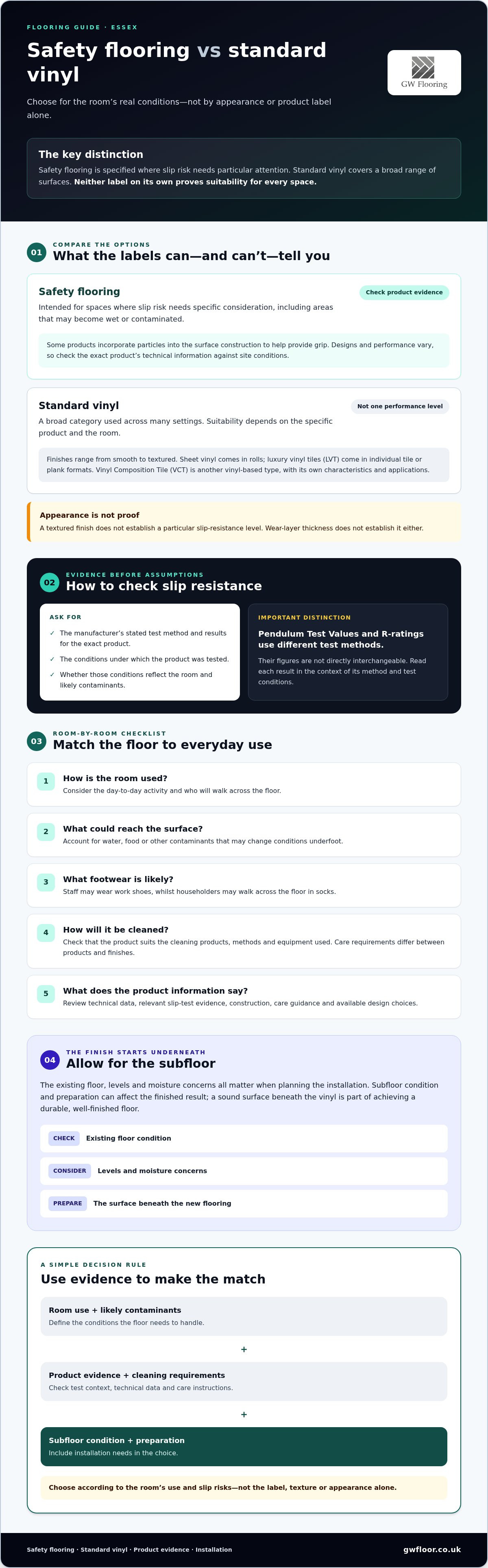
A practical checklist helps you compare safety flooring vs standard vinyl against the conditions on site, rather than choosing from appearance or a product label alone. Start with how the room works day to day, then check product documentation and installation needs.
Questions to answer before choosing a floor
- Identify the room’s use. Note who uses the space, how often and what activities take place there. At home, consider household routines and access needs. In a business, record how staff and visitors move through the area.
- Assess moisture and contaminants. Are water, food, cleaning residues or other spills likely to reach the floor? Think about where they occur and how regularly, rather than relying on the room name to indicate risk.
- Review the cleaning routine. Write down the cleaning products, methods and equipment used, and how often cleaning takes place. The flooring must suit that regime as well as the expected traffic.
- Check the available evidence. Review technical information for the exact product, including any stated test method, results, care instructions and suitability guidance. For commercial premises, involve the person responsible for site safety and specifications, and compare product evidence with the site’s risk assessment and operational requirements.
- Plan the installation. Consider access during the work, the condition of the existing floor and whether the subfloor may need preparation before fitting.
What to check in product and installation information
Keep the manufacturer’s documentation tied to the product you’re actually considering. Confirm what any slip-test results refer to, and whether the stated conditions are relevant to your room and cleaning practices. For a domestic space, design and ease of routine care may be central, but don’t overlook likely spills or the manufacturer’s instructions. For a commercial area, make sure the product information also fits the site specification and the needs identified by the responsible decision-maker.
Next, assess the existing floor. Uneven levels, damage or moisture concerns may affect what preparation is needed; the appropriate approach depends on the site. Screeding or plyboarding may be suitable in some circumstances, but a professional assessment can help establish what the subfloor requires before a new covering is fitted. Read our professional floor installation guide for more on why groundwork matters.
If you’re weighing up options for a property or business in Essex, discuss your flooring project with GW Flooring. A site-focused conversation can help bring room use, product information and preparation needs together before you decide.
What happens after selecting safety flooring or standard vinyl?
Choosing between safety flooring and standard vinyl is only one part of the job. A sound finished floor also depends on checking the site, confirming the product suits its intended use and preparing the existing surface properly. That groundwork helps the new covering sit as intended and supports a neat, durable finish.
Before fitting, the installer needs to assess the existing floor, including its condition and levels, and consider any moisture concerns. These findings help determine whether preparation is needed and which approach is appropriate. The details depend on the site, so methods shouldn’t be specified before the floor has been assessed.
Why subfloor preparation matters to the finished floor
An unsuitable or uneven base can affect the appearance of the finished surface and how it performs over time. Small variations may show through some floor coverings, whilst issues with the existing floor can complicate fitting. Preparation isn’t an optional cosmetic extra; it’s part of getting the foundation right.
Where assessment shows it’s appropriate, preparation may include screeding or plyboarding. The right choice depends on the floor’s condition and the requirements of the selected covering. For further context on the preparation and fitting process, see this LVT installation guide for Essex. Businesses planning a commercial project can also review GW Flooring’s commercial safety flooring installation service.
Getting advice and samples locally in Essex
It can be easier to judge colour, pattern and finish in the room itself. GW Flooring’s showroom-to-you service brings samples to homes or businesses, so you can consider options in their intended setting. The family-run business is based in Rayleigh and serves customers across Essex, with over 20 years of flooring experience informing its work. That experience is useful background, not a guarantee of a particular product’s performance.
Discuss the room, how it will be used and the practical demands of cleaning before settling on a floor. For commercial spaces, include relevant site requirements and product information in the conversation. This gives the assessment a clear purpose and helps connect the selected material with the condition of the floor beneath it.
If you’re planning a flooring project in Essex, contact GW Flooring to discuss your space and flooring options. There’s no need to settle the choice before the room and its requirements have been considered.
Choose a floor that fits your space
The best choice in the safety flooring vs standard vinyl comparison comes down to the room’s real use, likely slip risks and the evidence for the specific product. Check the manufacturer’s specifications and cleaning guidance, then consider the condition of the existing floor. Careful subfloor preparation matters just as much as selecting the right surface.
For homes and businesses across Essex, GW Flooring is a family-run business based in Rayleigh, with over 20 years of flooring experience. The team supplies and installs commercial safety flooring, offers a showroom-to-you sample service, and provides professional subfloor preparation where appropriate. That means you can discuss both the visible finish and the groundwork needed beneath it.
Ready to talk through your room, its practical demands and suitable flooring options? Contact GW Flooring to discuss your flooring project. A considered plan can help you choose a floor that fits your space.
Frequently Asked Questions
Is safety flooring more slip-resistant than standard vinyl?
Safety flooring is designed for settings where slip resistance needs particular attention, but the label alone doesn’t prove how a product performs. In the safety flooring vs standard vinyl comparison, check the exact product’s technical information, test method and results. Consider whether the test conditions reflect your room, including likely contaminants and cleaning routines. For a particular project, a flooring professional can help assess the site and review suitable product evidence.
Can standard vinyl be used in a bathroom or kitchen?
Yes, some standard vinyl products may be suitable, but suitability depends on the specific product, fitting details and conditions in the room. Check the manufacturer’s guidance for intended use, cleaning and moisture exposure. Don’t assume every vinyl floor has the same slip performance. If spills are frequent or the space has specific safety requirements, compare documented test evidence and seek advice before choosing a floor.
What is the difference between safety flooring and non-slip vinyl?
Safety flooring is selected for settings where slip risk needs careful consideration. “Non-slip vinyl” is a broad description, not a consistent test result or defined level of performance. Ask for technical data and slip-test information for the exact product, then consider whether it reflects the conditions in your space. Marketing terms or a textured appearance alone can’t establish suitability for a particular room or use.
How do I know which flooring is right for a commercial space?
Start by recording the activities in the space, likely spills or contaminants, foot traffic and cleaning routine. Involve the person responsible for site safety and the flooring specification, then compare product data and installation guidance with those requirements. An Essex business can discuss site conditions with a commercial flooring specialist, including GW Flooring, which supplies and installs commercial safety flooring. Don’t base the decision on appearance or a broad product category alone.
Does safety flooring need more maintenance than standard vinyl?
Not necessarily. Maintenance depends on the exact product, surface and conditions of use, so there’s no universal rule that safety flooring always needs more care. Texture, contamination and cleaning methods can affect the routine. Read each manufacturer’s cleaning instructions and check that the recommended products, methods and equipment are practical for the space. Consider how frequently the floor needs cleaning as part of your selection.
Can safety flooring be installed over existing vinyl?
Sometimes, but the right approach depends on the existing vinyl’s condition, the subfloor and the new product’s fitting instructions. A professional fitter should assess the surface, levels and relevant site conditions before recommending whether the old floor can remain or needs attention. Don’t assume an overlay is suitable without an inspection. Properly identifying preparation needs helps establish a sound base for the new covering.
Does safety flooring have to meet a specific British Standard?
There isn’t one standard that should be assumed to apply to every floor and project. The relevant specification depends on the setting and intended use. For slip-resistance assessment, the pendulum test method is set out in BS EN 16165:2021, Annex C. Ask which standards or test methods apply to the product and project, request supporting documentation, and verify current applicability before making a compliance claim.


