

Steam can seem like a quick way to lift stubborn dirt, but it may not be suitable for LVT. If you’re asking, “can you steam clean LVT flooring?”, the safest answer is no unless the current care instructions for your exact product explicitly allow it. Heat and pressurised moisture may affect the flooring, loosen adhesive or reach the joints. Check the product’s warranty and care guidance before trying an unfamiliar cleaning method.
It’s easy to see why the advice can be confusing. LVT is often described as water-resistant or waterproof, but those terms don’t automatically mean a floor can withstand steam. Products and installation systems differ, so check the guidance for your specific floor rather than relying on a general rule.
This guide explains the potential risks, how to clean LVT with regular sweeping or vacuuming and a lightly damp mop when permitted, and what to check if you’ve already used a steam cleaner. It also covers signs to look for and why the exact product instructions matter. A simple, product-approved routine can help you clean without unnecessary heat or moisture.
Key Takeaways
- Can you steam clean LVT flooring? Avoid it unless the care instructions for your exact product explicitly allow steam.
- LVT products and installation systems differ. Check the manufacturer’s guidance before choosing a cleaning method.
- For everyday care, compare steam with dry dusting and manufacturer-approved damp cleaning. Use only methods permitted for your floor.
- Before damp cleaning, remove loose grit and debris. Then follow the product instructions for water and cleaning products.
- If you’ve already steamed the floor, check the care guide and inspect the edges, joints and surface. One use does not automatically mean damage has occurred.
Can you steam clean LVT flooring? The safe answer
Avoid steam cleaning LVT unless the current instructions for your exact product explicitly permit it. A steam cleaner’s “low” setting does not confirm that it is safe for your floor. LVT products, installation systems and care instructions vary, so general advice cannot tell you what is suitable for a particular product.
A water-resistant or waterproof surface rating is not proof that a floor can withstand steam. Steam cleaners combine heat and moisture, and the effect on joints, edges or the underside of the flooring may depend on the product and how it was fitted. Luxury Vinyl Tile (LVT) is a vinyl flooring category made using polyvinyl chloride (PVC), but that general description does not establish how a particular product responds to heat or moisture.
Why does the answer depend on the exact LVT product?
Floor construction, joint design, adhesive and fitting method can all affect the care instructions. For example, the considerations for a floor with joints or edges may differ from those for another product or installation system. A wear layer protects the surface during normal use, but does not automatically make every LVT floor suitable for steam. Treat the manufacturer’s guidance as product-specific, not as a rule for all LVT.
Start by looking for the product care guide, original packaging or installation paperwork. If you cannot identify the floor, ask the flooring supplier or installer to help. A suitable, level subfloor and correct fitting contribute to a well-finished floor, but they do not replace the manufacturer’s cleaning instructions.
What should you check before cleaning?
Find the manufacturer and product name, then check the latest guidance for steam, water, detergents and cleaning tools. Look for explicit permission to use a steam cleaner. If steam is not mentioned, do not assume that it is allowed. Check whether the instructions name a suitable cleaner or set limits on water use.
- Steam: Is a steam cleaner explicitly permitted?
- Water: Does the guide specify damp mopping or other limits?
- Products and tools: Are any cleaners, mops or vacuum attachments recommended or ruled out?
If the instructions are missing or unclear, do not steam the floor. Use a cautious damp-cleaning method only if it follows the available product guidance. For unfamiliar equipment or cleaning products, ask the manufacturer or flooring supplier before use. This is a general precaution. Only the product’s current instructions can confirm what its manufacturer approves.
How steam, heat and moisture may affect LVT flooring
Steam combines heat with moisture, so its effects may extend beyond the visible surface. Depending on the LVT product and how it is fitted, heat may affect the material or adhesive, while moisture could enter at joints or edges. These are potential risks, not proof that every steam-cleaned floor will be damaged. The outcome can depend on the product, installation and level of exposure.
Water resistance describes how a floor may handle moisture in normal use. It does not confirm that the floor is approved for a steam cleaner. A claim about spills or surface water should not be read as permission to apply concentrated heat and vapour. The World Floor Covering Association also advises following manufacturer-recommended care methods for vinyl flooring, rather than assuming one method suits every product.
Can heat or vapour affect seams, edges or adhesive?
It is possible. Depending on the construction and fitting, heat could affect the flooring or adhesive, while moisture may find a path through joints or exposed edges. Click-fit flooring and adhered flooring have different joints and installation methods, so the considerations are not identical. A suitable, level subfloor is part of a sound installation, but its condition and the fitting system cannot be assessed from the surface alone.
If you notice a raised edge, movement, a changed joint or an altered surface after steaming, do not assume the cleaner caused it. Other factors may be involved, and the floor needs to be assessed before the cause can be identified. Stop using steam, check the care guidance and monitor the area. Visible changes are a reason to seek advice, not a diagnosis on their own.
Does a waterproof claim mean steam-safe?
No. “Waterproof” or “water-resistant” and “suitable for steam cleaning” describe different performance claims. A product may be designed to resist topical spills, but that does not establish how its surface, joints, adhesive or installation will respond to hot vapour. Only the current care instructions for the exact product can confirm whether steam is permitted.
Marketing descriptions are not a substitute for the care guide. Check the manufacturer’s documentation for explicit instructions about steam, cleaning tools and moisture. Do not infer approval if the guide does not mention steam. If you’re choosing or replacing a floor, consider installation details alongside appearance. GW Flooring supplies and professionally fits LVT in Essex. Explore its LVT flooring and fitting options as part of your research.
Steam cleaning versus safer ways to clean LVT
If you’re weighing up can you steam clean LVT flooring against a simpler routine, start with the care instructions for your exact product. Steam adds heat and moisture, so avoid it for routine cleaning unless the manufacturer explicitly permits it. Dry dusting adds no moisture, while a controlled damp clean may be suitable if the product guide allows it.
This comparison is general guidance, not a replacement for the flooring manufacturer’s care instructions. Check those instructions before using any cleaner, mop or vacuum attachment.
| Method | Heat or moisture exposure | Everyday suitability | Check the product instructions? |
|---|---|---|---|
| Steam cleaning | High heat and pressurised moisture | Generally avoid unless the exact manufacturer permits it | Yes, explicit approval is essential |
| Dry dusting or vacuuming | No added moisture or heat | Suitable for regular loose-dirt removal, using an appropriate tool | Yes, especially for vacuum settings and attachments |
| Manufacturer-approved damp cleaning | Limited moisture, no steam | May suit routine or occasional cleaning if allowed | Yes, check the cleaner, mop and water guidance |
What is the safest routine for everyday LVT cleaning?
Keep the routine simple. First remove grit and loose debris with a soft brush, dust mop or vacuum setting approved for your flooring. If the care guide allows damp mopping, use a well-wrung mop rather than leaving water on the surface. Follow the manufacturer’s directions for the cleaning solution, then remove excess moisture promptly with a clean cloth or mop if the guide recommends it.
Use a pH-neutral cleaner only if the product instructions recommend or permit it. A cleaner that works on one LVT floor is not automatically suitable for another. Regular dry cleaning also helps stop grit from being spread or ground across the surface during mopping.
Which products and tools should you avoid?
Do not use abrasive pads, scouring tools or unapproved cleaners. They could mark or dull the finish, while excess water may reach joints or edges. Vacuum attachments matter too. Avoid a brush or beater bar unless the manufacturer says it is suitable, as an unsuitable tool may scratch or scuff the floor.
If you cannot confirm whether a product or attachment is permitted, leave it out of your routine until you have checked the care guide or asked the flooring supplier. Checking first is safer than testing an unfamiliar method on the finished floor.
How to clean LVT flooring safely, step by step
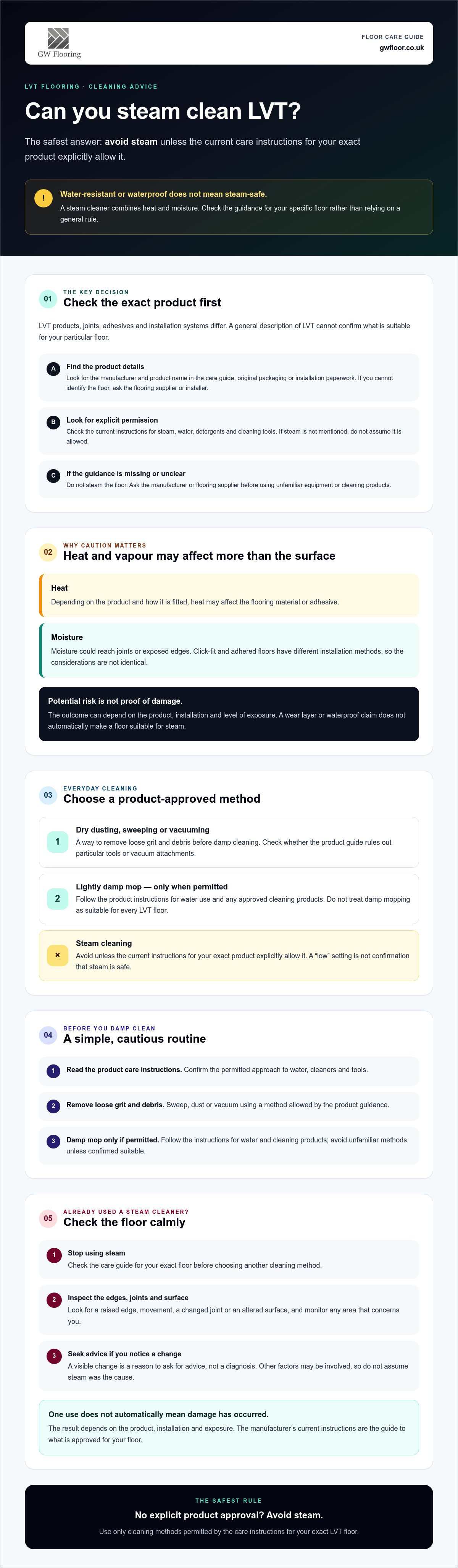
A gentle routine starts with the floor’s own care instructions, not a one-size-fits-all cleaning tip. If you’re still wondering “can you steam clean LVT flooring?”, do not use steam unless the exact product guide explicitly allows it. For routine care, follow these steps and keep moisture within the limits the manufacturer sets.
- Identify the floor and check its care guide. Find the manufacturer and product name on the paperwork or packaging. Check the current instructions for approved cleaning methods, products, tools and drying advice. If anything is unclear, ask the manufacturer or flooring supplier before proceeding.
- Remove loose dirt first. Pick up larger debris, then use a soft brush, dust mop or suitable vacuum setting to lift grit and dust. Check the guide for vacuum attachments, as an unsuitable brush or beater bar could mark the surface.
- Check for spills and marks. Blot spills with a soft cloth rather than spreading them or flooding the area. Use only cloths and cleaning products permitted by the care instructions. Avoid scrubbing hard at a stubborn mark.
- Damp clean only if allowed. If the manufacturer permits mopping, use a well-wrung mop and the recommended solution. Avoid leaving standing water, particularly near joints and edges.
- Dry as directed. Remove excess moisture with a clean, suitable cloth or mop if the product guide advises it. Follow any specific instructions about drying before walking on the floor or returning furniture.
The safest default is simple: identify the product, follow its care guide, then clean gently. That avoids relying on assumptions about what a particular LVT surface or fitting system can tolerate.
What should you do before mopping?
Pause before adding water. Check for grit, loose debris and visible spills, then remove dry dirt so you are not pushing it around with a damp mop. Use only a soft brush or vacuum setting suitable for the floor. If the manufacturer recommends testing an approved cleaning method in an inconspicuous area, follow that advice before treating the whole room.
How should you deal with marks and spills?
Blot fresh spills promptly, then follow the care guide for any further cleaning. Avoid forceful scrubbing, abrasive pads and unapproved stain removers, which may affect the finish. If a mark persists, check with the flooring manufacturer or a flooring professional instead of experimenting with stronger products.
If you’re choosing new LVT or want to understand the fitting considerations alongside care, explore LVT flooring options from GW Flooring, a flooring supplier and installer based in Rayleigh, Essex.
Already steam cleaned your LVT? What to do next
Don’t panic. One use of a steam cleaner does not automatically mean your LVT has been damaged. The outcome can depend on the exact product, how it was installed and how much heat or moisture reached the floor. Stop using steam for now, then check the product care guide for advice about steam exposure or what to do next.
Inspect the floor in good light, paying particular attention to edges, joints and areas where the cleaner stayed longer. Note anything that looks or feels different from before. Take clear photographs and make a note of when you steamed the floor and which cleaner or setting you used. That information can help the manufacturer, supplier or a flooring professional understand your concern.
What signs should you look for after using steam?
Check for visible lifting, movement, gaps between tiles or planks, unusual surface changes, or moisture that remains around edges or joints. These signs can have more than one cause, so their presence does not prove that steam caused damage. Equally, a floor that looks unchanged straight away should not be treated as confirmation that steam is suitable for future cleaning.
Avoid further steam or experimental treatments while you check the floor. Compare what you see with the product’s care guidance, and contact the manufacturer or supplier if you’re unsure. Do not assume a particular warranty outcome. Check the terms and advice for your exact product.
When should you ask a flooring professional for help?
Seek advice if a change persists, worsens or affects the joints and edges. A flooring professional can help assess what is visible, but the cause cannot be confirmed without considering the product and installation. Share your photographs, product details and notes about the cleaning method. Avoid pulling up tiles or applying extra heat or moisture while you wait for guidance.
For installation background, consult the guide to professional LVT flooring installation in Essex if you have it to hand. Installation details, including the fitting system and subfloor preparation, may be relevant when assessing a concern, but they do not establish the cause on their own.
GW Flooring supplies and professionally fits LVT, and is based in Rayleigh, Essex. If you’re local and would like to discuss LVT flooring, contact the team for practical guidance. They can help you consider the flooring and installation context without assuming that steam caused a problem or promising a particular outcome.
Protect your LVT with a gentler cleaning routine
So, can you steam clean LVT flooring? The safest approach is to avoid steam unless the care instructions for your exact product explicitly permit it. Water-resistant does not automatically mean steam-safe, and flooring products and fitting systems can differ.
For everyday care, remove loose grit first, then use only the cleaning products and tools allowed by the manufacturer. If you’ve already steamed the floor, do not assume it is damaged. Check the care guide and look for visible changes around the surface, joints and edges. If anything concerns you, ask the manufacturer, supplier or a flooring professional for advice.
Choosing LVT for your home? GW Flooring is a family-run flooring business with over 20 years of experience, supplying and professionally fitting LVT in Essex. Its showroom-to-you sample service brings options to your home or business, so you can consider them in your own space. Talk to GW Flooring about LVT for your home in Essex and discuss flooring options that suit your space and style.
Frequently Asked Questions
Can you steam clean LVT flooring if it is waterproof?
Not necessarily. “Waterproof” or “water-resistant” does not automatically mean an LVT product is approved for concentrated heat or steam. If you’re asking, “can you steam clean LVT flooring?”, check the current care instructions for the exact product before using a steam cleaner. If the guidance is missing or unclear, choose a gentle method specifically permitted for that floor, or ask the manufacturer or flooring supplier for advice.
What is the safest way to clean LVT flooring?
Start by removing grit and loose debris with a soft brush, dust mop or vacuum setting suitable for the floor. If its care instructions allow damp cleaning, use a well-wrung mop and an approved cleaner. Do not leave standing water, and dry the surface as directed. LVT products can have different requirements, so follow the guide for your exact floor rather than relying on general advice alone.
Can steam cleaning make LVT flooring lift?
Steam may create a risk of lifting, but lifting will not inevitably happen. The outcome can depend on the product, its joints, adhesive, fitting method and exposure to heat or moisture. If you notice movement or a raised edge, stop using steam and check the care instructions. Ask the manufacturer or a flooring professional for advice before attempting repairs or drawing conclusions about the cause.
Can you use a steam mop on Amtico or Karndean flooring?
Do not assume a steam mop is suitable for Amtico or Karndean, or for every product within either brand. Care instructions can vary by product and may change, so check the current guidance for the exact floor installed. If steam is not expressly permitted, use a cleaning method the manufacturer approves. If you cannot find a clear answer, contact the manufacturer or your flooring supplier for clarification.
What should you do if you have already steam cleaned LVT?
Stop using the steam cleaner and check the manufacturer’s care instructions. Look for visible changes such as movement, gaps or lifting, but do not assume steam is the only possible cause. Take clear photographs if you’re concerned, and note which cleaner and setting you used. Then ask the manufacturer, supplier or a flooring professional to assess the situation. GW Flooring supplies and fits LVT in Essex, and can discuss flooring concerns with local customers.
Can you use a wet mop on LVT flooring?
A damp mop may be suitable for some LVT floors, but follow the care instructions for your exact product. Avoid soaking the surface or leaving standing water, particularly around joints and edges. Use only cleaning products and tools the manufacturer permits. If the guide is missing or unclear, check with the supplier before mopping. A well-wrung mop helps control moisture, but does not replace product-specific guidance.
Does steam cleaning affect an LVT flooring warranty?
Warranty terms depend on the exact product, so do not assume steam cleaning is covered or automatically invalidates cover. Check the current warranty and care documents for your floor, and contact the manufacturer if the wording is unclear. Keep purchase and installation details available when asking. General online advice cannot confirm the terms that apply to your product, so rely on its documentation and the manufacturer’s response.


