
What if the best carpet for an allergy-conscious home is the one that’s easiest to keep clean, rather than the plushest underfoot? Choosing allergy-friendly carpet options in Essex means weighing comfort against practical details such as pile, material and everyday care.
It’s understandable to want a soft, welcoming room without making cleaning harder than necessary. Carpet can be more difficult to clean after spills and stains than some other flooring, so consider maintenance as part of your decision.
This guide explains which carpet features to consider, how to assess cleaning and underlay, and when another flooring type may suit your needs better. You’ll have a clearer basis for choosing a floor that fits your home and routine.
Key Takeaways
- Compare carpet fibres and pile styles with your household’s cleaning routine before choosing a finish.
- Find out how dyes and pesticide treatments may affect your material preferences.
- Consider the underlay and backing alongside the carpet, as these layers also matter when assessing materials and emissions.
- Read certification details carefully to understand what a label covers, rather than treating it as a blanket guarantee of allergy suitability.
Carpet suitability for people with allergies
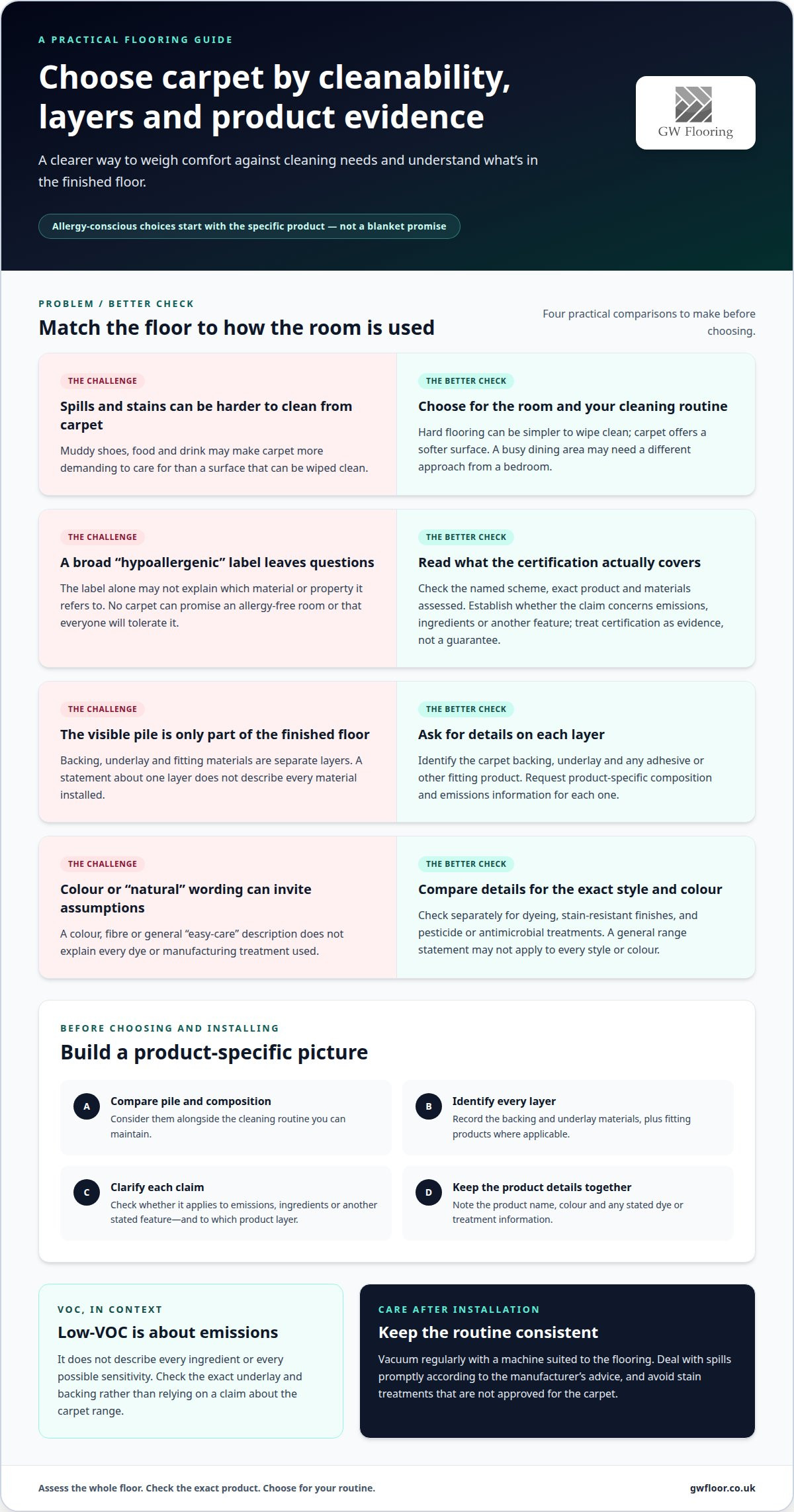
Carpet choice involves more than fibre: consider pile, cleaning, backing and installation materials together. No carpet can promise an allergy-free room, so focus on practical care and clear product information.
Low-VOC Underlays and Hypoallergenic Backings
Underlay and backing sit beneath the visible pile, so include both when assessing materials. Look for product information that identifies their composition and explains any low-VOC or hypoallergenic claims. Ask for documentation about the specific underlay and backing, not just the carpet face. A claim about one layer does not describe every material in the finished floor.
Carpet and Hard Flooring Suitability
Hard flooring can be simpler to wipe clean, while carpet offers a softer surface. Carpet can be more difficult to clean after stains and spills, so consider how your household handles muddy shoes, food and drink. A busy dining area, for example, may need different care from a bedroom. Choose based on how the room is used and the cleaning routine you can maintain.
Low-Emission and Allergy-Friendly Certifications
Certification can help you assess a product, but read what each label actually covers. Look for the named scheme, the materials assessed and whether the claim concerns emissions, ingredients or another feature. Check that the certificate or product documentation applies to the exact carpet. Don’t assume it also covers underlay, backing and fitting materials. Certification is useful evidence, not a guarantee that everyone will tolerate the product.
Checks Before Buying and Installing
Before choosing, compare pile and composition, review backing and underlay details, and identify any stated emissions or allergy-related claims. Ask for an explanation of the materials included in the finished floor. When comparing allergy-conscious carpet options in Essex, assess the product information and installation details, not just a general “hypoallergenic” label.
Plan care around the specific carpet: vacuum regularly with a machine suited to your flooring, and deal with spills promptly according to the manufacturer’s cleaning advice. Carpet choice alone can’t manage dust mites and other allergens, so keep the room’s cleaning routine consistent. If a stain occurs, avoid treatments that aren’t approved for the carpet, as they could damage the pile or backing.
Chemical dyes and pesticides in carpet production
Colour and treatment choices can affect which carpet suits your household. Dyes create the visible shade, while manufacturing treatments may serve different purposes. Don’t assume a particular colour, fibre or “natural” description means a carpet contains no added chemicals. Assess the specific product and its documentation before deciding.
Start with the carpet’s product information. Look for details about dyeing, stain resistance and any pesticide or antimicrobial treatment. If a label uses broad terms such as “treated” or “easy-care”, check what they mean. For example, a stain-resistant finish and a colour-dye process are separate features, so one description may not explain the other.
Ask for the exact material or treatment information for the carpet you’re considering. A general statement about a manufacturer’s range may not describe every style or colour. Note the product name, colour and any stated treatment, then compare those details with your household’s sensitivities. If the documentation names a chemical or treatment, discuss it with a healthcare professional in relation to your needs.
- Check whether the carpet has a stated stain-resistant or antimicrobial treatment.
- Read product details for information about dyes and manufacturing treatments.
- Keep the product name and colour with the relevant material information.
- Consider whether the room’s use makes a treated finish useful to you.
Installation materials also contribute to the finished floor. Adhesives and other fitting products may have product information separate from the carpet’s details. Ask for these materials to be identified alongside the carpet and underlay. That gives you a clearer picture of the complete installation, rather than relying on a single “low chemical” or “hypoallergenic” label.
For example, when choosing bedroom carpet, compare its dye and treatment information with the materials used beneath and around it. If a particular treatment concerns you, prioritise options with clear descriptions and don’t treat vague marketing language as proof of suitability. This helps you choose based on the actual product, not assumptions about its colour or fibre.
Which carpet underlays and backings are low-VOC and hypoallergenic?
Underlay and backing are separate layers, so assess each alongside the carpet. VOC means volatile organic compounds; “low-VOC” describes emissions, not every ingredient or possible sensitivity. “Hypoallergenic” also needs context: the label alone doesn’t explain which material or property it refers to.
Start with product information for the exact underlay and backing. Look for material descriptions and any specific emissions statement, rather than relying on a general claim about the carpet range. For example, if a carpet is described as low-emission, check whether that wording also applies to its backing and the underlay used for installation.
Ask for product documentation that identifies each layer and explains the claim. A useful comparison lists the carpet, backing and underlay separately. This makes it easier to see whether the information concerns emissions, ingredients or another feature, and avoids treating one layer’s description as evidence about the whole floor.
- Identify the carpet backing and its stated composition.
- Record the underlay material and its product information.
- Look for a clear, product-specific explanation of any low-VOC claim.
- Distinguish an emissions statement from a general hypoallergenic label.
Review installation materials separately. If adhesive or another fitting product is part of the planned floor, its information is distinct from the carpet and underlay details. For example, an underlay product statement doesn’t describe an adhesive. Considering each component gives you a more complete account of the materials being installed.
Choose based on documented details and your household’s needs, not a material name alone. If a product description uses “low-VOC” or “hypoallergenic” without explaining its scope, compare it with documentation identifying the specific layer and claim. Keep those details together when deciding which combination of carpet, backing and underlay suits the room.
Choose underlays and backings using product-specific information that identifies the layer and clearly explains any low-VOC claim. A “hypoallergenic” label alone isn’t enough; check which material or property it refers to.
What carpet certifications indicate low emissions or allergy-friendly materials?
A certification is useful only if you know what it assesses. For carpet, distinguish an emissions claim from claims about fibre ingredients, chemical treatments or allergy testing. These describe different properties. A label covering one property doesn’t automatically assess every material in the finished floor.
Start by identifying the scheme named in the product information. Read its criteria and check which product the certificate covers. For example, a document may relate to a carpet style but not its underlay, backing or fitting materials. Match the certificate’s product details to the exact carpet you’re considering.
Look for specific wording about emissions and testing scope. “Low-emission” describes a different issue from “hypoallergenic”; neither phrase alone explains which substances or materials were assessed. If a label refers to allergy suitability, check whether it names a test method or explains the basis for the claim. Don’t treat broad marketing language as a complete assessment.
- Note the certification scheme and the product it covers.
- Read whether the assessment concerns emissions, ingredients or another feature.
- Check whether backing and underlay have separate documentation.
- Keep certificate details with the product name and colour.
Use this information to compare products on the same basis. For instance, one carpet may have an emissions certificate, while another makes a claim about its materials. Those labels answer different questions, so compare the criteria rather than assuming one is more suitable. If the documentation uses unfamiliar terms, ask for an explanation of what the named assessment covers.
A certificate can support an informed choice, but it cannot establish that a material suits every individual. Consider the full flooring specification, including underlay and installation products, alongside the certification. For practical help exploring carpet choices for your home, use the product details and assessment scope to guide your discussion.
GW Flooring: Carpets
GW Flooring can help you weigh carpet materials and practical care needs when choosing a floor for your home. If you’re comparing textures, colours and suitability for different rooms, its showroom-to-you service brings samples to your home so you can consider them in the space where they’ll be installed.
Use the product details discussed above to guide your choice, including information about backing, underlay and any stated emissions or treatments. If a hard surface better suits a room’s cleaning routine, consider Luxury Vinyl Tiles (LVT) and Vinyl Flooring as alternatives to carpet.
Contact GW Flooring to discuss your flooring choice.
Choose a floor that fits your everyday life
Before settling on a finish, consider how each room is used and what matters most to your household. A bedroom may call for a different feel from a hallway, where shoes and frequent cleaning shape the decision. Write down your priorities, such as surface feel, care routine and materials you prefer to avoid. This gives your flooring discussion a clear starting point.
Use that list to compare allergy-friendly carpet options in Essex with your home’s practical needs. Product details can help narrow the choices, but personal sensitivities and everyday habits also affect what feels suitable. If your preferences point towards a different surface, consider that option too.
GW Flooring can help you explore flooring choices for your home. Contact GW Flooring to discuss the next step and find a direction that feels right for your space.
Frequently Asked Questions
What carpet materials are best for people with allergies?
No single carpet material is best for everyone with allergies. To compare allergy-friendly carpet options in Essex, consider the exact fibre, pile construction and any treatments alongside your known sensitivities. If you’re concerned about a particular finish, for example, look for product information that identifies it clearly. A carpet’s material description is a starting point, not a guarantee of personal suitability.
Are wool carpets suitable for allergy sufferers?
Wool carpets may suit some allergy sufferers, but wool isn’t automatically right for every household. When considering allergy-friendly carpet options in Essex, weigh your own sensitivities, the carpet’s construction and how you’ll care for it. Read product details for dyes, treatments and backing instead of relying on the fibre name alone. If you’ve reacted to wool before or have a specific concern, discuss it with your healthcare professional before choosing.
Are low-pile carpets better than high-pile carpets for allergies?
Low-pile carpets can be easier to clean thoroughly because their fibres are shorter than those of high-pile carpets. That may make them practical if regular vacuuming is central to your household routine. High-pile carpet offers a different texture, but consider whether its surface suits your cleaning habits. Compare samples and care instructions, then choose a pile you can keep clean consistently.
Which carpet suppliers and fitters in Essex offer allergy-friendly options?
Look for Essex suppliers and fitters who can provide product-specific information about carpet composition, backing, underlay, emissions and installation materials. Assess their claims from the documentation they provide rather than relying on a general “hypoallergenic” label.


