

The fitting itself is only part of the timeline. The practical answer to “how long does it take to fit LVT flooring?” is usually 1 to 3 days for a residential project, depending on the room, layout and condition of the subfloor. A glue-down floor also needs time for its adhesive to cure, so fitting day isn’t always the day you can use the room again.
It’s understandable to expect the work to be finished as soon as the tiles are laid, but careful preparation helps create a smooth, lasting result. This guide explains what affects how long it takes to fit LVT flooring, how installation progresses, and when the floor is ready for foot traffic and furniture. You’ll also see why patterned layouts and subfloor preparation can add time, so you can plan the work around everyday life with fewer surprises.
Key Takeaways
- Allow extra planning for herringbone or patterned layouts, where precise fitting and detailed cuts can add work.
- Look beyond the visible surface: the subfloor’s condition and preparation can shape the installation schedule.
- Plan room access around the flooring type, as glue-down and click systems have different aftercare needs.
- Use room size as a guide, not the only measure; layout, cuts and preparation also affect fitting time.
Installation time for herringbone and patterned layouts
- Allow more fitting time for herringbone than for straight plank designs. Each tile must follow the pattern, and accurate alignment creates extra measuring and cutting. For a 9 m² kitchen, one estimate puts click-system fitting at 7-8 hours when preparation or detailed cuts are needed. Room shape and edge cuts also affect the schedule.
- Arrange acclimatisation before the fitting date. Let LVT planks or tiles acclimatise in the room before installation to help them adjust to the conditions. This preparation matters for patterned layouts too, because consistent tile dimensions help maintain the alignment across the floor.
- Confirm the installation method, as click, loose-lay and glue-down systems have different timings. Click and loose-lay LVT can often take light foot traffic relatively quickly. A glue-down installation in one room can take 1-2 days once the subfloor is prepared, with adhesive curing adding time before the floor is ready to use.
- Plan furniture access around the method and adhesive. After click or loose-lay fitting, wait 24 hours before moving heavy furniture back into the room. Keep foot traffic off glue-down LVT for at least 24 hours while the adhesive cures. Moving furniture too soon can interfere with the finished surface or the adhesive setting.
- Choose a realistic fitting schedule based on the pattern and who is doing the work. A competent DIYer may fit click LVT in one room in a day, while a tradesperson estimates a professional could complete straightforward fitting in 3-4 hours. Treat that shorter estimate cautiously for herringbone: detailed cuts and precise alignment can add work.
Subfloor preparation and its effect on timing
Subfloor condition can add preparation time before fitting begins. Ask how the surface will be assessed, levelled and prepared for installation.
-
How a Professional Checks the Subfloor Condition
Ask the installer to assess the subfloor before setting the fitting schedule. LVT is 2.5-3 mm thick, so surface irregularities can show through the finished floor. For glue-down LVT, the subfloor should have no more than 2mm variation over a 2-metre span. A poor surface needs more preparation before installation.
-
Removing and Disposing of Old Flooring During a Professional LVT Installation
Ask whether removing and disposing of the existing flooring is part of the planned work. This can add time before the subfloor is ready; the amount depends on the flooring’s condition and how firmly it is fixed. There’s no single duration for this stage, so include it in the schedule before agreeing a fitting date.
-
How a Professional Prepares and Levels the Subfloor
Ask how the installer will prepare any uneven areas before laying the new floor. Levelling, moisture testing and priming can add another 1-2 days, depending on the subfloor’s condition. For glue-down LVT over timber, the floor should be overlaid with 6mm plywood screwed at 150mm centres. Proper preparation supports a smooth finish; shortcuts can leave flaws visible.
-
Subfloor Drying Time During a Professional LVT Installation
Ask how moisture results and drying time fit into the schedule. Concrete subfloor moisture should be below 75% relative humidity before LVT installation. Moisture testing helps establish whether the surface is ready, while levelling compounds and primer may also need time before fitting. Discuss professional subfloor preparation as part of planning the work.
Adhesive curing and when the floor can be used
With glue-down LVT, laying the tiles is not the final stage. Allow time for the adhesive to set before planning foot traffic or moving furniture into the room.
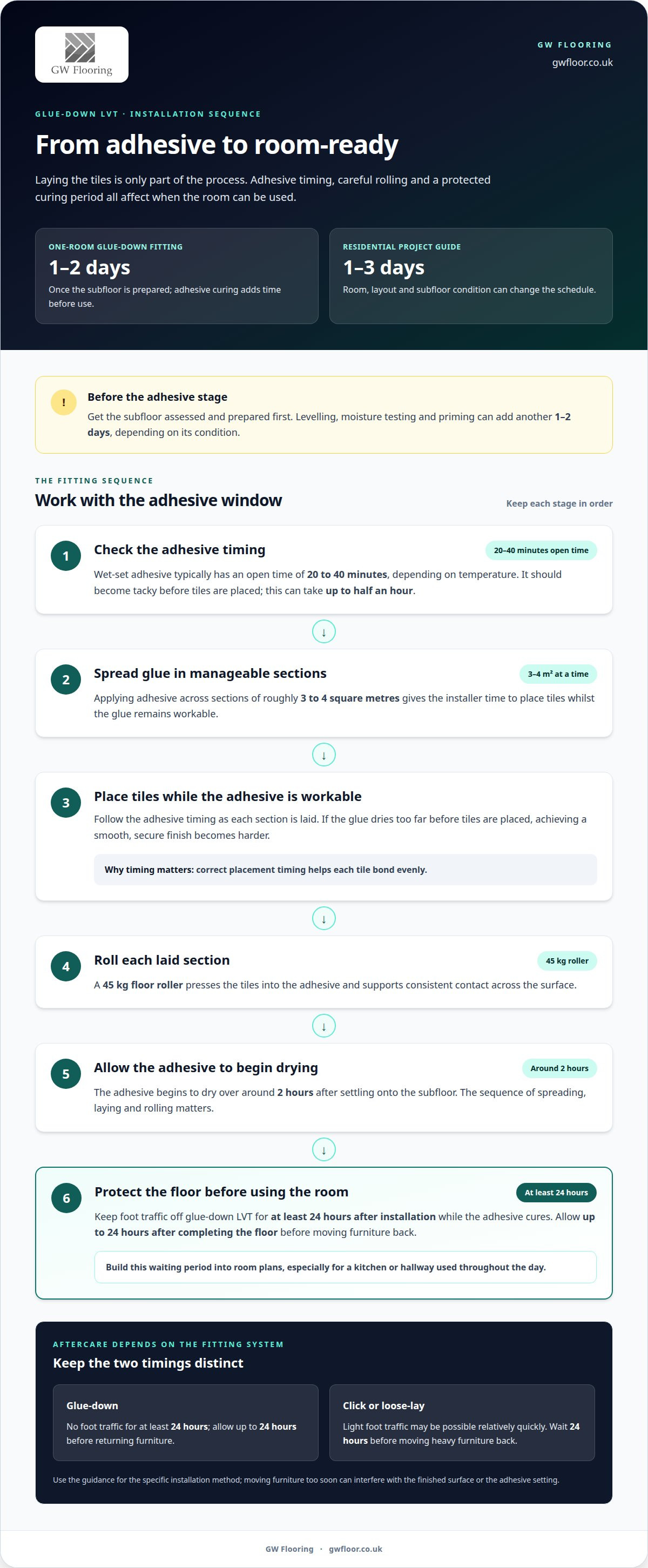
- Confirm the adhesive type and its working window before fitting starts. Wet-set adhesive typically has an open time of 20 to 40 minutes, depending on temperature. The adhesive should become tacky before tiles are placed, which can take up to half an hour. Correct timing helps each tile bond evenly.
- Apply glue in manageable sections rather than across the entire room. Sections of roughly 3 to 4 square metres allow the installer to place tiles while the adhesive remains workable. If it dries too far before placement, achieving a smooth, secure finish becomes harder.
- Roll each laid section with a 45kg floor roller. This presses the tiles into the adhesive and supports consistent contact across the surface. The adhesive begins to dry over around 2 hours after settling onto the subfloor, so the sequence of spreading, laying and rolling matters.
- Keep people off a glue-down floor for at least 24 hours after installation. This gives the adhesive time to cure before regular foot traffic begins. Build this waiting period into room plans, especially if the space is a kitchen or hallway used throughout the day.
- Return furniture only after the floor has had time to set. For glue-down LVT, allow up to 24 hours after completing the floor before moving furniture back. Click or loose-lay flooring has different use guidance: light foot traffic may be possible relatively quickly, but wait 24 hours before returning heavy furniture. Follow the method-specific timing to protect the finished surface.
How does room size affect LVT flooring installation time?
- Ask for the full floor area to be measured, including alcoves, recesses and doorways. A simple rectangular room has a different fitting sequence from an L-shaped lounge with several thresholds. The total area matters, but so do the number of edges and interruptions, which affect how much cutting and fitting is needed.
- Use the room’s shape to understand the estimate. A larger open space may allow fitting to progress in continuous rows, while a smaller room can require careful work around cupboards, door frames and fixed features. For example, a narrow hallway has less floor area than a lounge but often needs detailed cuts along its edges.
- Include preparation in the schedule, not just the time spent laying tiles. The subfloor’s condition and any levelling work can affect when fitting can begin. Ask for the schedule to separate preparation from laying, so essential groundwork is included in the estimate.
- Discuss the layout and awkward angles before settling on a completion time. A tradesperson estimates that fitting with only 2-3 tricky angles should take no more than 4 hours. That example shows why room dimensions alone don’t determine duration: corners, doorways and cuts can influence the work as much as the area.
- Plan access around the full job, including clearing the room and moving furniture. A professional can use the room’s measurements, shape, floor condition and chosen layout to plan the sequence. For an estimate based on your space, arrange professional LVT flooring fitting and discuss the rooms involved.
The subfloor should be in good condition before installation, as irregularities can show through thin flooring. On floorboards, install a 5.5 mm plywood layer first.
GW Flooring
GW Flooring helps homeowners and businesses across Essex plan flooring projects around the room, chosen layout and required subfloor preparation. The team supplies and installs LVT, with preparation work that may include plywood, primers, latex screed and liquid DPM where necessary. GW Flooring’s showroom-to-you service brings samples to your home or business, so you can compare colours and finishes in the space before choosing. For a personalised plan covering the materials, preparation and installation, contact GW Flooring for a free, no-obligation quote.
Plan your next step with confidence
Knowing how long it takes to fit LVT flooring is useful, but the next decision is how you want the finished room to look and work. Consider the atmosphere you want to create, how the space is used each day, and whether a particular pattern or finish suits your home. These choices help shape a floor that works for your space as well as your schedule.
GW Flooring supplies and installs Luxury Vinyl Tiles (LVT), carpets and vinyl flooring for homes and businesses across Essex. Share which rooms you’re updating and the look you have in mind when discussing your plans. This gives the team a clear starting point for shaping the project around your space.
Contact GW Flooring for fitting advice and take the next step towards a floor that feels right for your home.
Frequently Asked Questions
How Long Does It Take To Lay LVT Flooring?
A residential LVT installation typically takes 1 to 3 days, including the work needed for the project. The actual laying stage is only part of the schedule: the room’s shape, chosen pattern and subfloor condition all affect progress. For a more useful estimate, distinguish the time spent preparing the surface from the time spent fitting tiles, then factor in when the room can be used.
Can You Walk On LVT Flooring Straight Away?
It depends on the fitting method. Click and loose-lay floors may allow light foot traffic relatively quickly, but glue-down floors need at least 24 hours without foot traffic while the adhesive cures. For example, a household using a kitchen should plan alternative access if its floor is glued down. Heavy furniture needs separate consideration, even where light walking is possible.
Does Herringbone LVT Take Longer To Install?
Yes. Herringbone generally takes longer than a straight-plank layout because the installer must maintain the pattern and make more precise cuts. Alcoves or several doorways add further detail compared with a clear rectangular space. The extra time is mainly needed for setting out and accurate fitting, so both the pattern’s complexity and the room’s shape matter alongside the floor area.
Three Installation Methods - Which Is Right for Your LVT Flooring?
Click LVT uses boards that lock together, while glue-down tiles are fixed to the prepared subfloor with adhesive. Loose-lay flooring is another installation method. The suitable choice depends on the product, room and installation requirements, not simply which method appears quickest. For instance, adhesive curing affects room access after glue-down fitting, so factor that into your plans alongside the fitting itself.
How long does it take to fit LVT flooring in an average UK room?
There isn’t one standard time for an “average” room, since floor area alone doesn’t capture cuts, corners or preparation. As a guide, a 9 m² kitchen with a level, prepared subfloor has been estimated at 4-6 hours for click-system fitting. Detailed cuts or additional preparation can extend that example, so describe the room’s shape as well as its size when planning.
How long does it take to install LVT flooring in a typical UK house?
A residential installation typically takes 1 to 3 days, but a whole-house project depends on the number of rooms and their condition. Several clear rooms with prepared subfloors can be scheduled differently from spaces needing levelling or moisture testing. Subfloor preparation can add 1-2 days, depending on its condition. Include preparation and room-by-room access when arranging the work.


