

The right screed for an uneven floor depends on the subfloor, the required build-up and whether underfloor heating is involved. Liquid screed flows across the surface to create a smooth, level base and can cover heating pipes. Choosing screeding services for uneven floors in Essex starts with assessing what the floor needs, rather than choosing a material by name alone.
An uneven floor can affect the appearance and performance of the finished flooring, so consider preparation, screed choice and drying before work begins. This guide explains what influences screeding costs in Essex, how liquid screed options differ and what to consider before selecting a floor finish. It also covers local Essex towns and the practical steps involved in preparing a smoother base.
Key Takeaways
- See which project details affect a screeding quote, and how anhydrite and cement-based flowing screeds differ.
- Understand the key preparation and installation stages, including what matters when underfloor heating is part of the project.
- Find out which Essex towns the service covers and how to plan the next flooring stage after levelling.
- Explore flooring options such as LVT, carpet, vinyl and commercial safety flooring for a newly levelled surface.
How much does floor screeding cost in Essex?
These are broad figures, not a project quote. Floor area, preparation, screed depth, access and the chosen system affect the total.
Traditional sand-cement screed is made from cement and sharp sand, commonly mixed at one part cement to three to five parts sand. It can level a concrete base, but the required depth and drying time affect the work. Anhydrite and cement-based flowing screeds spread more easily to create an even surface. The right option depends on the subfloor, planned finish and whether underfloor heating pipes need covering.
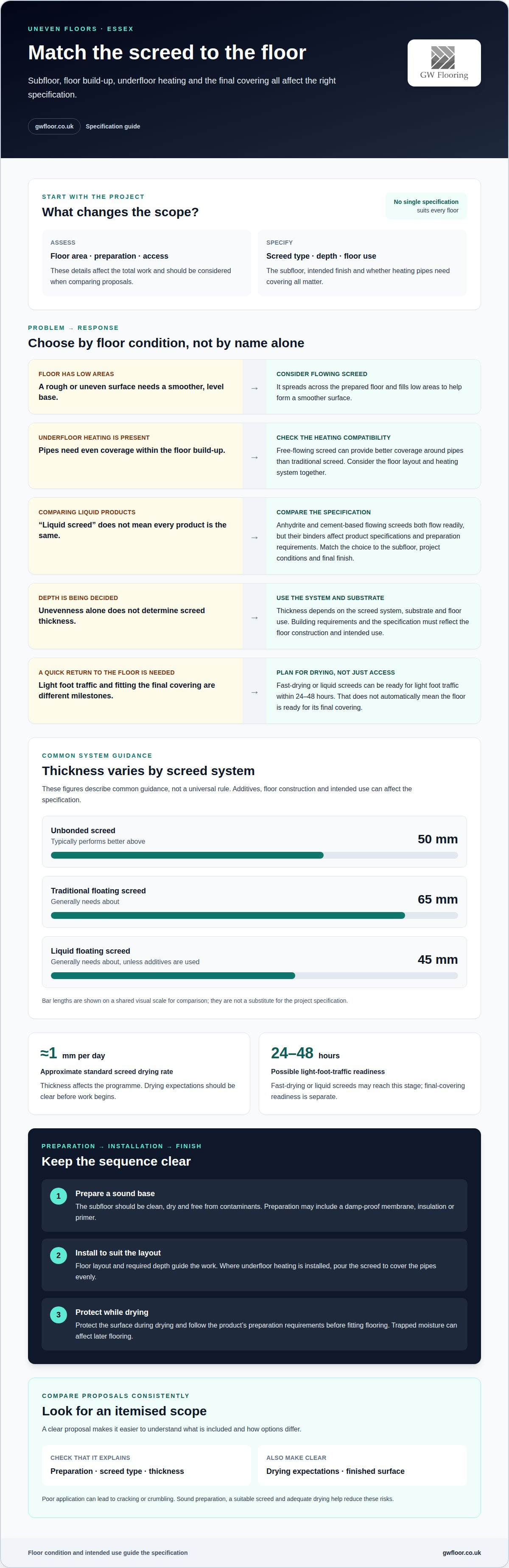
In short, traditional screed is mixed from sand and cement; liquid screed flows readily, while fast-drying products can shorten the wait for light foot traffic. Fast access does not automatically mean the floor is ready for its final covering. Standard screed dries at roughly 1 mm per day, so thickness affects the programme.
Thickness is determined by the screed system, substrate and floor use, rather than unevenness alone. Unbonded screed typically performs better above 50 mm; traditional floating screed generally needs about 65 mm, and liquid floating screed about 45 mm, unless additives are used.
No single thickness suits every UK floor. Building requirements and the screed specification must reflect the floor construction and intended use. The figures above describe common system guidance, not a universal rule.
When comparing screeding proposals in Essex, check that each explains the preparation, screed type, thickness, drying expectations and finished surface. An itemised scope makes it easier to see what each proposal includes and understand the differences.
Poor application can lead to cracking or crumbling, while trapped moisture can affect later flooring. Sound preparation, a suitable screed and adequate drying help reduce these risks. Before application, the base should be clean and free from contaminants.
Liquid screed supply and installation
Liquid screed flows across a prepared floor to create a level base. The right option depends on the subfloor, underfloor heating and intended finish.
Liquid screed benefits
Free-flowing screed spreads across the floor and fills low areas to help form a smoother surface. Its consistency can provide better coverage around underfloor heating pipes than traditional screed. Close coverage matters where pipes run through the floor, as it supports heat transfer. Consider the floor layout and heating system together when choosing the specification.
Anhydrite and free-flowing screeds
Anhydrite screed is a liquid screed valued for its self-levelling and compacting qualities. Cement-based flowing screeds are another option. Both flow readily, but their binders affect product specifications and preparation requirements. Choose based on the subfloor, project conditions and final floor finish, rather than assuming every liquid product performs the same way.
Installation starts with a sound base. The subfloor should be clean, dry and free from contaminants. Preparation may include a damp-proof membrane, insulation or primer. Where underfloor heating is installed, the screed is poured to cover the pipes evenly. The floor layout and required depth guide the work, while careful preparation helps reduce the risk of an uneven result.
A brand name alone does not show whether a product suits a particular floor. Compare the screed type, stated application, compatibility with heating and preparation requirements. A clear product specification helps match the materials and installation to the property, whether the project is residential or commercial.
After pouring, protect the surface during drying and follow the product’s preparation requirements before fitting flooring. Fast-drying or liquid screeds can be ready for light foot traffic within 24-48 hours, but foot traffic readiness isn’t the same as readiness for a final covering. For commercial spaces, consider the finish early, including commercial safety flooring.
Essex towns covered by the screeding service
GW Flooring is based in Rayleigh and serves customers across Essex. Screeding services for uneven floors in Essex are relevant to projects in towns including Southend-on-Sea, Harlow, Colchester, Great Dunmow and South Woodham Ferrers. Share the property’s town and floor details early so access, preparation and the work sequence can be considered.
Different homes bring different subfloor considerations. Southend-on-Sea has 79,027 households, and flats make up 34% of its homes. In a flat, access routes and the floor build-up can affect how materials and equipment reach the room. In South Woodham Ferrers, 78% of housing stock dates from 1973 to 1999, so existing floor construction and previous alterations may vary between properties.
Harlow has a strong terraced-house profile, with terraces making up 45% of homes. Colchester’s housing stock includes homes from different periods, while 30% were built since 2000. These local examples show why a screeding plan needs to consider the actual floor, not just the town or property type.
For Great Dunmow, 43% of homes were built since 2000. That figure offers context, but it doesn’t replace an assessment of the subfloor, room dimensions or heating layout. A specialist approach considers whether underfloor heating is present, how the floor will be used and what finish follows levelling.
To help plan the work, provide the town, property type, affected rooms and any known underfloor heating details. Photographs can show access and visible floor conditions. These details help GW Flooring understand the project and plan the preparation and installation. Whether your property is in Rayleigh or Colchester, the floor’s condition and intended use remain central to screeding services for uneven floors in Essex.
What floor screeding services are available in Essex for uneven floors?
Uneven floors can call for different screed systems depending on the concrete sub-base, room use and final covering. The main options include bonded, unbonded, traditional, flowing and reinforced screeds. Each suits different floor conditions, so the specification should match the surface and how the room will be used.
A bonded screed is fixed directly to its substrate, often using a primer or bonding agent. It can suit a sound concrete slab where a strong connection is needed. An unbonded screed sits separately from the sub-base, with a damp-proof membrane between the layers. Because this changes how the screed behaves, the floor build-up should guide the choice.
Traditional sand and cement screed creates a flat base for the final floor finish. Flowing, self-levelling screed spreads across the floor and fills lower areas, which can help address uneven concrete. Where underfloor heating is installed, liquid screed can flow around the pipes. Both the heating layout and proposed floor covering influence the preparation required.
Reinforced screeds contain fibres or metal mesh to strengthen the construction and help limit shrinkage and cracking during drying. Granolithic screed is designed for areas exposed to heavy bearing and changing live loads, such as warehouses, industrial units and plant rooms. These applications differ from an uneven domestic hallway, where the surface condition and planned finish are key considerations.
Installation begins by assessing the existing base and identifying low or damaged areas. Preparation may involve cleaning the surface and applying a suitable primer, membrane or insulation layer. The screed is then selected to suit the substrate, loading and floor design before planning the final finish. This sequence avoids treating every uneven floor as the same problem.
For an Essex flooring project, consider how the levelling work connects to the finished surface. Plan the next flooring stage around the room’s use, subfloor condition and chosen covering.
GW Flooring
GW Flooring can help plan the flooring that follows a levelled subfloor, so the finished room suits its use and style. Once the screed is ready for a covering, the next choice may be Luxury Vinyl Tiles (LVT), carpet, vinyl flooring or commercial safety flooring. The right option depends on the room, the look you want and how the space will be used.
We can also help you consider how the finished floor will work with the room’s layout and day-to-day demands. For a more personal selection process, GW Flooring’s showroom-to-you service brings samples to your home or business, making it easier to compare colours and finishes in place.
Plan the finished room with confidence
Next, consider how you want the room to look and function once the floor is level. Think about the furniture that will stay, how people move through the space and the feel you want underfoot. These decisions help shape a finish that feels considered, rather than an afterthought.
If you’re arranging screeding services for uneven floors in Essex, decide on the intended floor covering early. This connects preparation with the final design and gives the flooring plan direction, whether you’re updating one room or coordinating several spaces. A considered finish can bring the room together.
Talk through your flooring plans and the room’s practical needs with Contact GW Flooring about your floor. A well-planned finish is a positive step towards a space you’ll feel proud to use.
Frequently Asked Questions
...But which type of liquid screed is best for my individual requirements?
The best option depends on the subfloor, heating system and planned floor covering. An underfloor heating layout, for example, may benefit from a flowing product that surrounds the pipes, while another project may suit cement-based flowing screed. The product specification and room use matter more than the name alone. Assessing these details helps narrow the choice.
Can you repair uneven or damaged floors?
GW Flooring provides subfloor preparation, which can include screeding or plyboarding to create a suitable base for flooring. The approach depends on the cause of the unevenness and the condition of the existing surface. A localised dip and a wider damaged area, for example, may need different preparation. Assess the floor before choosing a covering and planning installation.
Which flooring types do you install after floor levelling?
After levelling and preparation, GW Flooring installs Luxury Vinyl Tiles (LVT), carpets, vinyl flooring and commercial safety flooring. The right finish depends on the room’s purpose, your preferred look and how the space is used. A busy commercial area, for instance, has different practical demands from a bedroom. Discussing use alongside style helps guide the flooring choice.
Which towns in Essex do you cover?
GW Flooring serves customers across Essex from its base in Rayleigh. Towns covered in this article include Southend-on-Sea, Harlow, Colchester, Great Dunmow and South Woodham Ferrers. For a project elsewhere in Essex, share the town and rooms involved when discussing the flooring work. This gives the team useful context about the property and the preparation needed.
Why is professional screeding before flooring installation important?
Professional preparation creates a suitable base for the chosen floor covering. An uneven or poorly prepared surface can affect the finished appearance and performance, so attend to the substrate before installation. Dips beneath vinyl or LVT, for example, can become more noticeable after the flooring is laid. The preparation method should suit both the existing floor and the planned finish.
How much does floor screeding cost per square metre in Essex?
The cost depends on the floor area, subfloor condition, preparation required, screed choice and depth. Access and project details also affect the work, so a general rate may not reflect the cost of your floor. GW Flooring provides a free, no-obligation quote. Share the room dimensions and details of any visible damage to help the team understand the project and prepare a relevant quotation.


