

What if a concrete floor that looks dry still needs checking before your new LVT goes down? Hidden moisture can affect the preparation plan, so choosing a membrane by assumption may be as unhelpful as skipping an assessment. For subfloor preparation for LVT Essex homes, the right decision starts with the floor’s condition and the requirements of the complete flooring system.
It’s understandable to want clear answers before committing to a finished floor. A suitable damp proof membrane can form part of the preparation, but it isn’t automatically needed for every concrete floor, and one option won’t suit every situation.
This guide explains when moisture assessment may be needed, what to ask a flooring professional about membrane suitability, and how the concrete, preparation materials and planned LVT work together. It also covers how careful groundwork supports a smooth finish. With over 20 years of flooring experience, GW Flooring understands the importance of assessing the foundation before focusing on the visible design, helping you plan for your Essex home or business.
Key Takeaways
- Start with the concrete’s condition, rather than assuming every floor needs a damp proof membrane.
- Ask how the substrate will be inspected and moisture assessed before a preparation system is recommended.
- Compare membrane options by their substrate requirements, application instructions and compatibility with the planned LVT system.
- Plan subfloor preparation for LVT in Essex as a coordinated process, from initial assessment to readiness checks before fitting.
- Choose a flooring professional who can explain the preparation sequence and how it supports your intended LVT finish.
Why concrete-floor moisture matters before fitting LVT in Essex
A concrete floor can look dry and still need professional assessment before LVT is fitted. Moisture within the slab isn’t always visible at the surface, and appearance alone can’t confirm whether the floor is suitable for the proposed flooring system. Careful subfloor preparation for LVT Essex therefore starts with understanding the substrate, not choosing a membrane by default.
A damp proof membrane (DPM) is a layer or coating specified as part of a floor build-up to help manage moisture movement through or from the substrate. Its role depends on the system being used, the concrete’s condition and the flooring manufacturer’s requirements. It isn’t a universal cure for damp, and not every concrete floor needs the same treatment. For background on the distinction between damp-proof courses and membranes, see Damp proofing.
Moisture assessment tells you what the concrete needs. Membrane selection determines whether a particular system is suitable for that assessed condition.
What a damp proof membrane does beneath LVT
Within a proposed floor build-up, a membrane may be specified to help control moisture before levelling materials, adhesive and LVT are installed. Its exact purpose and position depend on the chosen system, so ask the installer how the manufacturer’s instructions apply to your floor. The membrane must also be compatible with the preparation materials and flooring planned above it.
Surface appearance offers limited evidence about moisture inside concrete. A slab may look clean and dry but still need to be checked against the acceptance criteria for the specified flooring system. Don’t assume that a membrane is necessary simply because the floor is concrete, or that applying one will resolve every underlying moisture concern.
When should a concrete floor be investigated?
Staining, damp patches, a musty smell or previous moisture problems are reasons to investigate, not proof of a particular cause. An installer may also recommend suitable checks during renovations, when the floor build-up is changing, or before newly prepared concrete is covered. The assessment method and acceptable results should be established for the proposed products, rather than guessed from appearance.
Share what you know about the property’s floor history, including previous coverings, repairs, known damp issues, changes to the concrete and any underfloor heating. These details can help a flooring professional assess the substrate and explain the preparation plan. If moisture is identified, ask what the result means for the chosen membrane, levelling materials and LVT, and which manufacturer’s instructions support the recommendation.
How concrete-floor moisture assessment informs membrane choice
A sound recommendation follows a clear sequence: inspect the substrate, assess moisture using an appropriate method, then specify a system that suits both the findings and the planned LVT. Choosing a membrane before understanding the floor could overlook other preparation needs or lead to materials that aren’t compatible.
The assessment method and acceptance criteria depend on the flooring system and the instructions for the products being installed. BS 8203:2017 is the current code of practice for resilient floor coverings, including LVT, and covers recommendations for subfloor assessment and preparation. Ask the installer which guidance and product instructions apply to your project, rather than relying on a single threshold in isolation.
Test results are useful when interpreted against the requirements of the specified floor system.
What should a professional check on a concrete subfloor?
A practical inspection looks beyond moisture. The installer should identify the substrate and note its visible condition, including cracks, repairs, coatings, adhesive residues, contamination and unevenness that could affect preparation. Existing coverings and previous repairs can change what needs to be removed, retained or treated, so share what you know about the floor’s history.
Ask the installer to explain the findings in plain language and set out the recommended next steps. For example, a crack or old adhesive residue may call for further investigation or specific preparation before a membrane or levelling material is considered. This connects the assessment to the floor build-up being proposed, rather than treating every concrete surface alike.
Which moisture test or standard applies?
There isn’t one test method or acceptance figure to assume for every project. The installer should confirm how the concrete will be assessed, why that method is appropriate, and which manufacturer’s criteria apply to the proposed membrane, preparation materials and LVT. Request a record of the method used, the result and the relevant product requirements.
A floor damp proof membrane and a wall damp-proof course have related but distinct roles. For general background on damp-proof courses in the context of building moisture protection, see UK Building Regulations for DPCs. This reference isn’t a substitute for project-specific flooring instructions.
Clear assessment is central to subfloor preparation for LVT Essex: it helps the installer explain why a particular preparation plan is being proposed. GW Flooring provides subfloor preparation and LVT fitting across Essex. Explore professional LVT and subfloor preparation when considering a coordinated approach.
How to compare damp proof membrane systems for LVT
Compare proposed systems against the floor you have and the complete LVT build-up, not a headline claim that one option suits every job. Ask whether the membrane is intended for the identified substrate and whether the manufacturer’s current instructions support the planned combination of membrane, smoothing compound, adhesive and LVT installation method.
Drying or curing instructions matter too. Check the conditions and waiting times specified by the manufacturer, and confirm what must happen before the next preparation layer or floor covering can be applied. A system that appears suitable on its own may not fit the sequence or materials proposed for your project.
What makes a membrane suitable for an LVT build-up?
Suitability depends on the substrate, the moisture assessment and compatibility across the whole floor build-up. Ask the installer to identify the relevant manufacturer instructions and explain how they apply to your concrete floor. References such as KTA-Tator’s overview of testing for moisture content in concrete can introduce different assessment methods, but don’t assume a method discussed there automatically determines the right UK flooring system.
Keep membrane selection separate from levelling. A membrane, smoothing compound and screed perform different roles, and one doesn’t automatically replace another. Confirm which materials are proposed and why each is needed.
What should a written preparation specification include?
Request a clear record of the assessment findings, proposed materials and order of work. It should explain how the installer intends to deal with relevant details such as edges, joints, thresholds and changes in substrate, following the specified system’s instructions. Ask what checks will confirm that the floor is ready before LVT fitting begins.
This gives you a useful basis for comparing recommendations for subfloor preparation for LVT Essex. Use the questions below to clarify what’s included and what still needs confirmation.
Comparison criterion | Ask the installer | Confirm before work
Substrate suitability | Is this system intended for the concrete and its assessed condition? | Substrate requirements and any limits in the current instructions.
Compatibility | Will it work with the planned smoothing compound, adhesive and LVT method? | Compatibility across each layer, not just the membrane.
Application and timing | What preparation and drying or curing steps are required? | The specified sequence and readiness conditions.
Floor details | How will edges, joints, thresholds and repaired areas be handled? | Any system-specific details and responsibilities before fitting.
A written, coordinated plan makes it easier to understand why a particular membrane is being proposed and what must be completed before the finished floor can be laid.
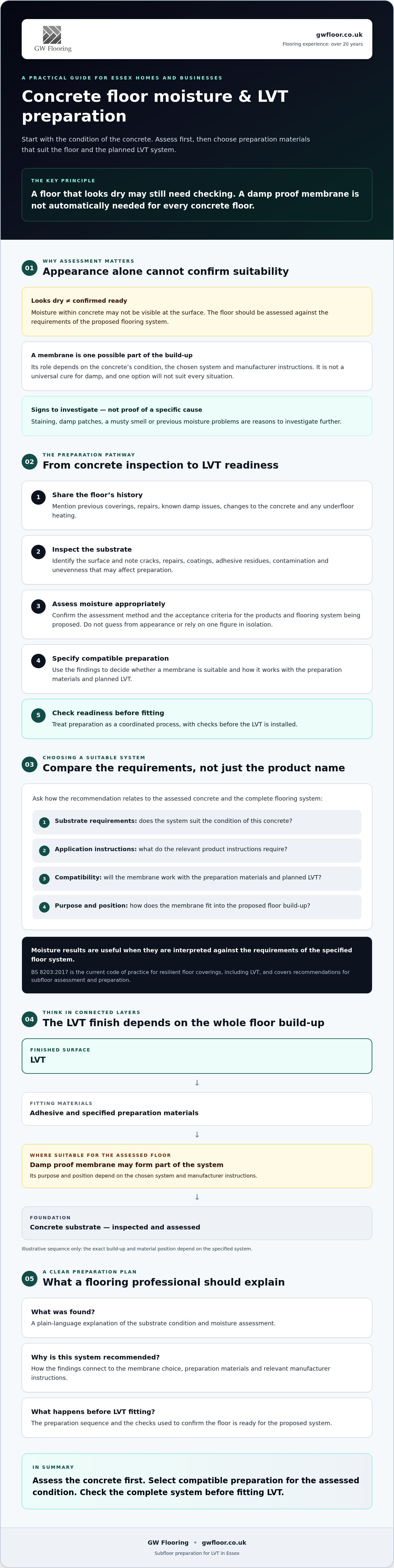
What to expect when preparing a concrete floor for LVT in Essex
A well-planned installation makes the preparation stages clear before work begins. The exact order depends on the concrete’s condition and the instructions for the specified system, so treat this as a typical process, not a fixed prescription.
- 1. Survey the floor and agree the scope. The installer inspects the concrete, discusses its history and identifies visible issues or previous repairs. Agree which preparation tasks are included and who is responsible for each stage.
- 2. Carry out suitable moisture checks. The assessment method should suit the proposed flooring system. Ask how the findings affect the preparation plan, rather than assuming a membrane will be needed.
- 3. Prepare the substrate. Depending on the assessment, work may involve addressing residues or uneven areas and, where professionally judged suitable, screeding or plyboarding. These materials have different purposes, so ask why each one is specified for your floor.
- 4. Apply any specified membrane. If the findings and system call for one, it should be applied according to the relevant manufacturer’s instructions, including preparation and curing requirements. The membrane is one part of the build-up, not a substitute for other necessary preparation.
- 5. Check readiness before fitting. Before LVT installation proceeds, the installer should confirm that the prepared floor meets the requirements of the specified materials and that any required waiting or curing time has been observed.
Good subfloor preparation for LVT Essex projects depends on the connection between the assessment, chosen materials and planned finish. Each stage should have a clear purpose, with any change to the sequence explained if the floor’s condition calls for it.
What should Essex customers clarify before work begins?
Before scheduling the work, establish who will assess moisture, carry out the preparation and fit the LVT. If different people or businesses are responsible for each stage, ask how findings and readiness checks will be shared. This helps clarify who confirms that the floor is ready for the next step.
Discuss access, how the room will be used during the work, and any preparation or curing time required by the specified system. Ask for the expected sequence so you can plan around furniture, other trades and room access. For broader planning, consult a professional floor installation guide if one is available from your installer.
GW Flooring is a Rayleigh-based family business offering subfloor preparation and LVT fitting across Essex. To discuss a coordinated preparation and fitting plan for your floor, talk to GW Flooring about LVT installation.
Choosing an Essex flooring professional for membrane preparation and LVT
A useful recommendation should be clear, specific to your concrete floor and connected to the LVT you plan to install. Look for a flooring professional who can explain the reasoning behind the preparation, not simply name a membrane. A coordinated approach helps you understand how the assessment, preparation work and fitting fit together.
Questions to ask before accepting a preparation recommendation
Use these questions to check whether the advice is based on your floor and the intended installation:
- What assessment supports this recommendation? Ask what was inspected or measured and how the findings lead to the proposed preparation.
- Is the system suitable for my floor and LVT? Ask how the proposed materials work together, including any smoothing products and adhesive specified for the installation.
- What exactly is included? Request a clear scope covering preparation materials, the order of work and what needs to be completed before LVT fitting.
- What happens if the floor differs from the initial assessment? Clarify who will explain any change to the plan and discuss its effect on the agreed work.
- Who is responsible for each stage? Confirm who handles the assessment, preparation and LVT installation, especially if these tasks are assigned to different people.
Clear answers help you compare recommendations on more than the proposed membrane alone. They also show whether the installer has considered the whole floor build-up and can explain any changes if the substrate reveals unexpected issues.
How GW Flooring can help with an Essex LVT project
GW Flooring is a family-run business based in Rayleigh, with over 20 years of flooring experience serving domestic and commercial customers across Essex. Its services include LVT fitting and subfloor preparation, including screeding or plyboarding where appropriate. The specific preparation plan should be guided by the floor assessment and confirmed for your project. No particular membrane system should be assumed in advance.
Discussing preparation and fitting together can help connect practical requirements with the look you want to achieve. GW Flooring’s sample service brings flooring samples to your home or business, making it easier to consider colour and style in the room while discussing the concrete floor and proposed work.
If you’re planning subfloor preparation for LVT Essex, discuss your concrete floor, the LVT finish you have in mind and what assessment may be needed with GW Flooring.
Plan your LVT floor from the concrete up
A confident flooring decision starts with a clear preparation plan. Assess the concrete before choosing a membrane, then check that each proposed material suits the complete LVT system. A membrane isn’t automatic: the right approach depends on the floor’s condition and the specified products.
That careful groundwork is at the heart of subfloor preparation for LVT Essex. It connects what lies beneath the surface with the finish you want in your home or business. GW Flooring is a family-run Rayleigh business with over 20 years of flooring experience, offering LVT fitting and subfloor preparation across Essex.
Ready to discuss your concrete floor and LVT plans? Arrange a conversation with GW Flooring about your Essex concrete floor and LVT plans.
Frequently Asked Questions
Does every concrete floor need a damp proof membrane before LVT?
No, a damp proof membrane isn’t automatically required beneath every concrete floor. The decision should follow an assessment of the substrate and the requirements of the proposed LVT system. A floor that looks dry may still need suitable moisture checks, while visible damp signs should prompt investigation rather than an automatic membrane recommendation. Ask the installer to explain the assessment findings and why the specified preparation is appropriate for your floor.
How do you check for moisture in a concrete floor before fitting LVT?
A flooring professional assesses the concrete using a method suited to the floor and the requirements of the specified products. The installer should explain how the check was carried out, what the result means, and which manufacturer’s acceptance criteria apply. Don’t rely on surface appearance alone or assume a single test or threshold suits every system. Ask for the method and findings to be recorded as part of the preparation plan.
Can you lay LVT directly over a concrete floor?
Yes, LVT can be fitted over concrete if the floor meets the requirements of the chosen flooring system. The substrate may need to be assessed for moisture, cleanliness, stability and flatness, then prepared as specified. Depending on its condition, preparation might include a smoothing material or other suitable work before installation. Ask the installer to confirm that the concrete is ready and that the proposed build-up follows the relevant product instructions.
What happens if you fit LVT over a damp concrete floor?
Fitting LVT over concrete that doesn’t meet the flooring system’s moisture requirements may affect the installation. Depending on the products and conditions, moisture can contribute to problems with adhesive bonding or the finished floor. The exact risk varies, so don’t assume that a membrane will resolve every moisture issue. Have the substrate assessed before fitting, and ask how the findings relate to the specified LVT, adhesive and preparation materials.
Is a damp proof membrane the same as a levelling compound?
No. A damp proof membrane and a levelling compound have different roles in a floor build-up. A membrane may be specified to help manage moisture, while a levelling or smoothing material is used to prepare the surface as required by the flooring system. Neither should be assumed to replace the other. Ask your installer which materials are proposed, what each one does, and whether they’re compatible with the concrete and planned LVT.
How long does damp proof membrane preparation take before LVT fitting?
There isn’t one fixed timescale for membrane preparation before LVT fitting. The work and any required waiting period depend on the assessed floor, the specified system, the preparation sequence and the manufacturer’s drying or curing instructions. Ask your installer what stages are planned, how long each must be left before the next layer, and what checks confirm readiness for fitting. Avoid planning around assumed timings until the system has been confirmed.
Who can prepare a concrete floor for LVT in Essex?
Choose a flooring professional who can assess the concrete, explain the preparation recommendation and coordinate it with the LVT installation. GW Flooring is a family-run business based in Rayleigh, serving domestic and commercial customers across Essex. With over 20 years of flooring experience, it offers LVT fitting and subfloor preparation. Ask what assessment and materials your floor may need, as the appropriate plan depends on its condition.


