

Have you ever pulled out your fridge for a spring clean only to find a damp, bubbling mess where your flooring used to be? It's a common worry for Essex families, especially when heavy appliances and constant foot traffic are in the mix. We understand that choosing between LVT vs sheet vinyl for kitchens often feels like a difficult balancing act between your design vision and your bank balance. You want that premium, high-end finish that adds genuine value to your home, but you also need a surface that handles spills and won't dent the moment a heavy pan hits the floor.
In this guide, we'll help you discover the critical differences in durability, cost, and installation to ensure you choose the perfect kitchen flooring for your specific lifestyle. Whilst sheet vinyl offers a quick and practical fix, LVT represents a structural investment that brings long-term elegance to your space. We'll preview the benefits of both options and explain why the invisible work of subfloor preparation is the true secret to a professional, lasting finish that stands up to the demands of a busy Rayleigh household.
Key Takeaways
- Understand the lifespan gap between these materials and why LVT often provides superior value for high-traffic Essex homes over several decades.
- Compare LVT vs sheet vinyl for kitchens to see which material offers the best protection against fridge leaks, dropped pans, and heavy appliance pressure.
- Discover the "invisible work" of subfloor preparation and why it is the defining factor in preventing floor failure and ensuring a professional finish.
- Learn how to match premium flooring styles with your existing worktops and cabinetry to create a cohesive, high-end look that adds value to your property.
- Explore the benefits of a "showroom to you" service that allows you to see samples in your own kitchen's natural light before making a final decision.
Understanding the Kitchen Flooring Challenge in 2026
We've spent over 20 years installing floors across Essex, and we know the kitchen is the ultimate testing ground. It's the heart of the home, but it's also a high-pressure environment. Between heavy fridge-freezers and constant foot traffic from busy families, the structural integrity of your floor is paramount. When deciding between LVT vs sheet vinyl for kitchens, you aren't just choosing a colour; you're choosing a material that must withstand constant temperature shifts from ovens and the weight of modern white goods. Structural strength matters because a floor that looks beautiful today must still be level and secure in a decade.
Moisture Resistance and Hygiene
Kitchens are synonymous with spills. Whether it's a dropped glass of milk or a slow leak from a dishwasher, moisture resistance is a non-negotiable requirement. When weighing up LVT vs sheet vinyl for kitchens, consider that sheet vinyl offers a significant advantage by providing a seamless, non-porous barrier across the entire room. There are no gaps for water to seep through. In contrast, LVT relies on either a click-lock system or a glue-down method. Whilst modern LVT is incredibly water-resistant, the success of the installation depends on the tightest possible fit. Traditional Vinyl composition tile (VCT) was once the standard in commercial spaces, but today's luxury options offer much better protection against the cleaning chemicals and grease typical in a Rayleigh family kitchen. Textured wood-effect finishes look stunning, but they do require a bit more attention during cleaning to ensure dirt doesn't settle in the deep grain.
The Impact of Underfloor Heating
Many modern Essex renovations now include underfloor heating to keep the home warm during the winter months. Both LVT and sheet vinyl are compatible with these systems, but they behave differently under heat. LVT is generally more efficient at transferring heat to the surface, making it a popular choice for those who want that cosy feel underfoot. However, these materials expand and contract as temperatures change. Without professional subfloor preparation, your floor can become uneven or even lift at the edges. We always emphasise that the visible surface is only as good as the groundwork beneath it. A heated subfloor needs specific screeding and adhesives to keep everything level and secure. Getting professional advice ensures your floor stays flat and functional for years, rather than buckling after its first winter of use.
LVT vs Sheet Vinyl: The Core Differences
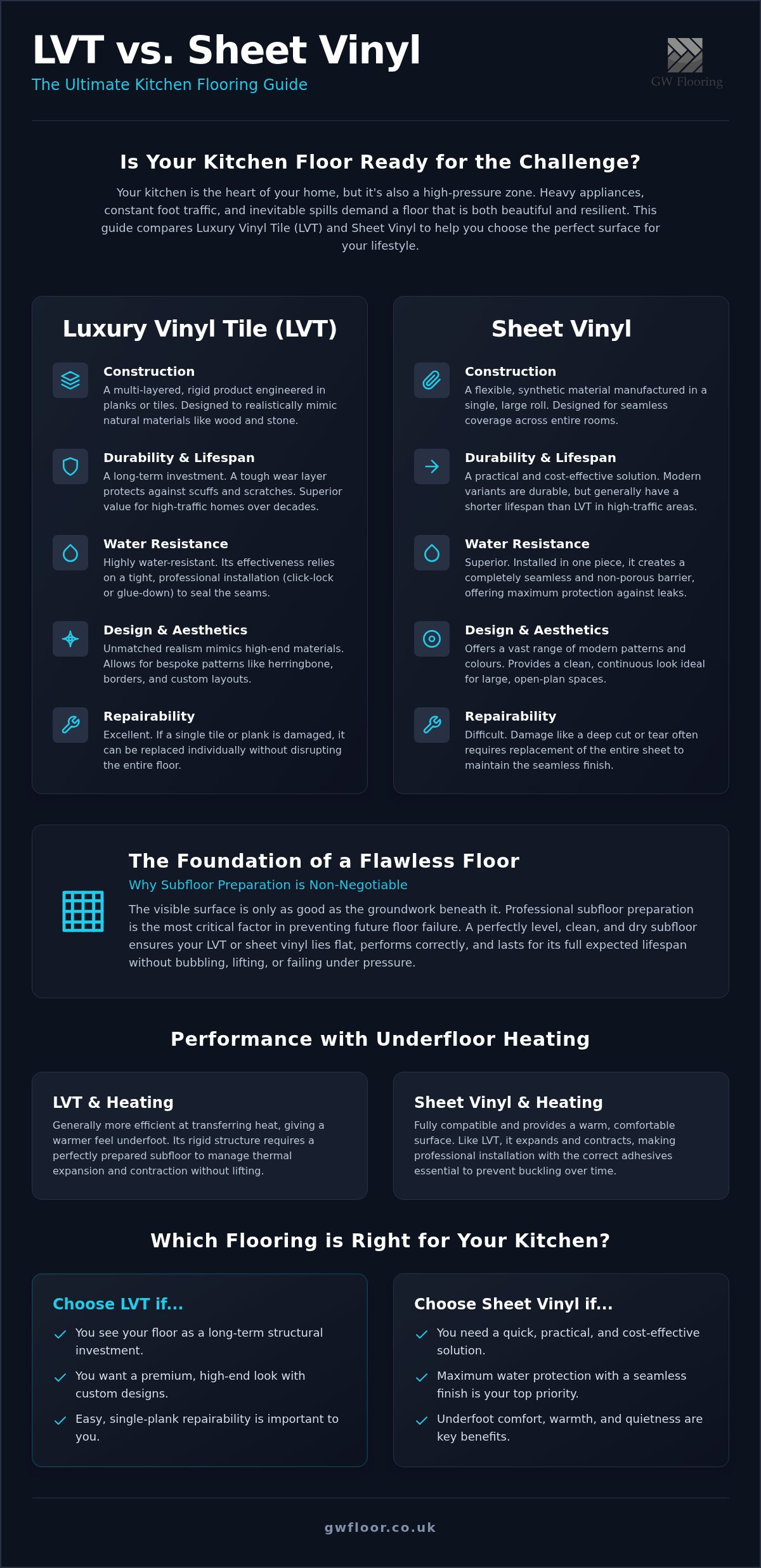
When we sit down with families in Rayleigh to discuss LVT vs sheet vinyl for kitchens, the first thing we explain is the physical construction of each material. LVT is a multi-layered product engineered for rigidity and high-definition detail, whereas sheet vinyl is a flexible, single-roll synthetic material. These different compositions change how the floor feels underfoot, how much sound it absorbs, and how long it stays looking fresh in a high-traffic home. Whilst both are synthetic, the way they're manufactured dictates everything from their thickness to their life expectancy.
Luxury Vinyl Tiles (LVT) Explained
Luxury Vinyl Tiles are designed to mimic natural materials like oak or slate with startling realism. This aesthetic flexibility allows us to create bespoke patterns, such as traditional herringbone or intricate borders, which aren't possible with roll flooring. The thickness of the wear layer is what truly protects your investment; it acts as a tough shield against the scuffs of school shoes and pet claws. For many Essex homeowners, the choice of LVT vs sheet vinyl for kitchens comes down to long-term repairability. If a single tile is damaged by a dropped heavy object or an appliance leak, we can replace that specific piece without disturbing the rest of the room. This modular nature makes LVT a fantastic choice for those who view their kitchen floor as a permanent, structural part of the home's value.
The Modern Appeal of Sheet Vinyl
Modern sheet vinyl is a brilliant, cost-effective choice for covering large, open-plan spaces quickly. Because it's installed in a single continuous piece, you get a seamless finish that's incredibly easy to wipe clean without any joins where dirt can accumulate. Many of our clients prefer cushioned variants for the extra comfort they provide whilst standing at the sink or hob for long periods. It's also naturally warmer and quieter than many hard surfaces, making it a practical choice for upstairs flats or busy households. If you're struggling to decide which material suits your home's unique light and decor, our showroom to you service brings a wide range of samples directly to your doorstep for a pressure-free comparison. This allows you to see how different colours and textures work alongside your existing cabinetry before you make a final decision.
Durability, Maintenance, and the Kitchen Test
When we assess the performance of LVT vs sheet vinyl for kitchens, we look far beyond the first week of installation. A kitchen floor needs to survive the "chaos test" of daily life. This includes everything from muddy paws to the inevitable red wine spill during a Saturday night dinner party. Sheet vinyl is a fantastic short-to-medium-term solution, typically offering a reliable lifespan of 5 to 10 years. However, if you're looking for a permanent fixture, LVT is the clear winner. High-quality tiles often come with a lifespan of 20 years or more, making them a more durable investment for your Rayleigh property.
Scratch and scuff resistance is another area where these materials diverge. Whilst modern sheet vinyl is tough, it remains susceptible to sharp objects or heavy dragging. LVT features a much thicker, hardened wear layer. This makes it incredibly difficult to scratch, even if you have large dogs or children playing on the floor. If the worst happens and you drop a heavy cast-iron pan, the repair process is simple. With LVT, we can replace a single damaged tile. With sheet vinyl, a deep tear often requires the entire floor to be replaced to maintain that seamless look.
Protecting Against Heavy Appliances
One challenge many people overlook is the sheer weight of modern kitchen appliances. American-style fridge-freezers and heavy washing machines can cause permanent indentation on softer flooring. Sheet vinyl is particularly prone to this because of its cushioned backing. If you ever decide to rearrange your kitchen layout, you might find unsightly permanent dips where your appliances once stood. We find that glue-down LVT is far superior for heavy kitchen units. Because the tiles are bonded directly to a perfectly prepared subfloor, they don't compress or shift under static weight. To add an extra layer of protection, we always recommend using felt furniture protectors under any moveable tables or chairs to keep the surface pristine.
Daily Cleaning and Long-Term Care
Cleaning shouldn't be a chore that takes up your entire Sunday. Both materials are easy to maintain with a simple sweep and a damp mop using a pH-neutral cleaner. However, we always warn our Essex clients to avoid steam mops. The intense heat and pressure from steam can weaken the adhesives over time or even cause the layers of your flooring to delaminate. For LVT, there's an added long-term benefit. After several years of heavy use, you can actually recoat the surface with a specialist finish. This refreshes the original lustre without the need for a full replacement, ensuring your kitchen remains the showpiece of your home.
Why Professional Subfloor Preparation is Non-Negotiable
We often tell our clients that the most important part of their kitchen floor is the part they'll never see. This "invisible work" is the difference between a floor that lasts decades and one that fails within months. When weighing up LVT vs sheet vinyl for kitchens, remember that the surface finish is entirely dependent on the quality of the groundwork. Many Rayleigh homes, especially older properties, suffer from hidden subfloor issues like rising damp in concrete or loose, uneven floorboards. Identifying these problems early is essential for a professional result that adds genuine value to your home.
The Screeding and Levelling Process
Creating a level foundation is particularly vital for LVT to prevent "telegraphing," where minor imperfections in the concrete or wood "ghost" through to the surface. We use moisture testing to ensure the subfloor is perfectly dry before any material is laid. This step prevents the adhesive from failing and stops your floor from lifting or bubbling in the future. Screeding serves as the vital bond between your subfloor and your chosen tile. For timber-based kitchen floors, we use high-quality plyboarding to provide a rigid, flat base. This eliminates the natural bounce in floorboards that can cause LVT joints to snap or sheet vinyl to crease over time.
Professional Fitting vs DIY
You might see advice on forums like Reddit suggesting you can simply lay new vinyl over an existing floor. This is a dangerous shortcut that often leads to mould growth, uneven wear, and voided manufacturer warranties. Professional fitting is especially important in kitchens where you have to cut around intricate corners, island units, and kickboards. We also ensure that LVT is correctly acclimatised to your home's temperature for at least 48 hours before installation. This prevents the tiles from shrinking or expanding once they're glued down, which causes unsightly gapping. When comparing LVT vs sheet vinyl for kitchens, the complexity of the installation usually means that an expert touch is required to get those seamless edges around your cabinetry.
If you're unsure about the state of your current floor, we offer a comprehensive subfloor assessment to identify exactly what preparation your space requires. You can also read more about why we prioritise this foundational groundwork in our guide to professional floor installation across Essex.
Choosing the Right Finish for Your Rayleigh Kitchen
Selecting the final surface for your home is an exciting design milestone. It's the moment where your vision for a warm, welcoming family hub finally comes together. When deciding between LVT vs sheet vinyl for kitchens, we encourage you to look at your floor as more than just a walking surface. It is a design element that must complement your cabinetry, worktops, and the specific way natural light enters your room. Whether you're aiming for a sleek modern look or a rustic farmhouse feel, the finish you choose will define the atmosphere of your home for years to come. If you're looking for global design inspiration from premium holiday homes, check out GALVESTON LUXURY VACATION RENTALS to see how luxury interiors are masterfully curated.
LVT for Premium Aesthetics
Luxury Vinyl Tiles are the go-to choice for homeowners who want the timeless look of real oak or limestone without the high-maintenance demands of natural materials. Brands like Amtico and Karndean remain the gold standard in the industry, offering incredibly realistic textures that are indistinguishable from the real thing. Because these tiles come in individual planks or stones, we can create bespoke layouts that suit the exact dimensions of your space. If you're looking for more detail on these high-end options, our guide on Choosing the best LVT explores the latest 2026 trends in depth. This material doesn't just look premium; it adds tangible property value to your Essex home by providing a permanent, high-performance solution.
Sheet Vinyl for Practical Budgets
Sheet vinyl remains a brilliant tactical choice for many of our clients, particularly landlords or those looking for a high-impact kitchen refresh on a tighter budget. Modern manufacturing has come a long way, and today's patterns can mimic expensive Moroccan tiles or Victorian patterns with surprising accuracy. The key to making sheet vinyl look expensive is the quality of the fit. Even the most beautiful pattern will look poor if the edges aren't cut perfectly against your kickboards. By opting for a professional installation, you ensure that this cost-effective material still delivers a sophisticated, high-end finish that handles the spills of a busy household with ease.
We know that choosing from a tiny swatch in a shop can be difficult. The way natural light hits a floor in a south-facing Rayleigh kitchen is completely different to how it looks under the fluorescent bulbs of a retail park. Our "showroom to you" service solves this problem by bringing large-scale samples directly into your home. You can place them against your own cupboards and see the true colour in your own environment. Once you've found a style you love, we'll provide a clear, no-nonsense plan for the installation. We invite you to book a professional flooring assessment with our team today to take the first step toward your dream kitchen.
Elevate Your Essex Home with the Perfect Kitchen Floor
Choosing between LVT vs sheet vinyl for kitchens doesn't have to be a stressful process. Whether you decide on the premium, long-term investment of LVT or the practical, seamless finish of modern sheet vinyl, the success of your project relies on the quality of the installation. We've seen how meticulous subfloor preparation and expert craftsmanship turn a simple renovation into a stunning home transformation that stands up to the rigours of Rayleigh family life.
As a family-run business with over 20 years of industry experience, we're dedicated to helping you find a floor that looks beautiful and performs perfectly. We take pride in our "invisible work," ensuring your foundation is as solid as your style. We invite you to book your free "Showroom to You" home visit in Rayleigh today to compare our premium range of Amtico, Karndean, and vinyl options in your own natural light. Let's work together to create a kitchen space you can be truly proud of, knowing it's built to last for decades to come.
Frequently Asked Questions
Is LVT better than sheet vinyl for a kitchen with underfloor heating?
LVT is highly recommended for kitchens with underfloor heating because it transfers heat more efficiently than cushioned sheet vinyl. Most luxury tiles are designed to handle temperatures up to 27°C without warping. While some sheet vinyls are compatible, their thicker, cushioned backing can act as an insulator, which slows down the warming process. We always check manufacturer specifications to ensure your chosen floor performs perfectly with your specific heating system.
Can I lay LVT or vinyl directly over my existing kitchen tiles?
We never recommend laying new flooring directly over existing tiles. While it might seem like a shortcut, the grout lines and imperfections from the old tiles will eventually "telegraph" through to the surface of your new floor. This creates an uneven look and can cause LVT joints to fail. For a professional finish, we remove old tiles or apply a specialist smoothing compound to create a perfectly flat foundation.
How long does it take to install LVT in a standard-sized kitchen?
A standard kitchen installation usually takes between one and two days. The first day is typically dedicated to subfloor preparation, such as screeding or plyboarding, which needs time to dry or settle. The actual laying of the LVT vs sheet vinyl for kitchens happens on the second day. Larger open-plan spaces or intricate herringbone patterns may require additional time to ensure every cut around your cabinetry is precise.
Will heavy kitchen appliances like a fridge-freezer dent sheet vinyl?
Heavy appliances like American-style fridge-freezers can cause permanent indentations in cushioned sheet vinyl. Because sheet vinyl is a softer material, the static weight of white goods can compress the core over time. If you plan on moving your appliances in the future, glue-down LVT is a much better choice. Its rigid construction and bonded application mean it won't dent or shift under the pressure of heavy kitchen equipment.
What is the price difference between LVT and sheet vinyl installation?
LVT generally carries a higher installation cost than sheet vinyl because it requires more intensive subfloor preparation and meticulous fitting. While sheet vinyl is installed from a single roll, LVT involves laying individual tiles or planks, which takes significantly longer. Many Essex homeowners find the extra investment for LVT vs sheet vinyl for kitchens worthwhile because tiles offer a longer lifespan and the ability to replace individual damaged sections.
Is LVT completely waterproof if my kitchen floods?
While individual LVT tiles are 100% waterproof, the floor as a whole is not designed to survive a major flood. Sitting water can eventually seep into the joints or reach the subfloor, potentially weakening the adhesive bond. In the event of a significant leak, glue-down LVT is often more resilient than other materials, but it's vital to dry the area quickly to prevent any long-term structural damage to the foundation.
Do I really need to screed my floor before laying kitchen LVT?
Screeding is an essential step for any high-quality LVT installation in a kitchen. It creates a mirror-smooth foundation that allows the tiles to bond perfectly to the floor. Without it, even the smallest grain of sand or uneven patch in the concrete will show through the surface. We view screeding as the "invisible work" that ensures your floor remains level, secure, and covered by the manufacturer's warranty for years.
Which is easier to clean: textured LVT or smooth sheet vinyl?
Smooth sheet vinyl is typically the easiest to clean because it has no seams or deep textures where dirt can hide. You can simply wipe it down with a damp mop and a neutral cleaner. While textured LVT provides a more realistic wood or stone look, the embossed grain can occasionally trap fine dust. Both options are far more hygienic and easier to maintain than traditional stone or real hardwood floors.


