

Neither LVT nor engineered wood has to rule out underfloor heating: both can be suitable when the chosen flooring is approved for the system, with listed ranges typically limited to a floor surface temperature of around 27°C. The better choice for your kitchen depends on more than heating, though. LVT vs engineered wood in kitchens comes down to how you balance moisture resistance, everyday wear and the look and feel you want.
It’s understandable to want a floor that looks inviting but can also cope with spills, cooking and busy family life. This comparison explains how the two options differ in care, durability and appearance, as well as what affects installation costs. You’ll also see how their underfloor-heating compatibility compares, so you can weigh the practical details against the finish you have in mind.
Key Takeaways
- For a kitchen where spills are a regular concern, compare LVT’s water resistance with engineered wood’s need for prompt spill clean-up.
- Balance everyday care against long-term repair options: LVT doesn’t need refinishing, while engineered wood’s real-wood surface may be sanded, depending on its thickness.
- Choose between LVT’s layered construction and engineered wood’s genuine hardwood top layer to find the look and feel that suits your kitchen.
- When comparing installation quotes, look beyond the flooring itself: fitting and subfloor preparation also affect the overall cost, and both flooring types can work with compatible underfloor-heating systems.
LVT and engineered wood moisture resistance in kitchens
For either floor, installation starts with a clean, sound subfloor suited to the chosen material. The fitter assesses its condition, addresses uneven areas and prepares a stable base before laying the flooring.
LVT water resistance
LVT is described as 100% waterproof, making it the more moisture-tolerant option for kitchens and bathrooms. That rating applies to the flooring material, not automatically to every joint, edge or the room beneath it. Water can still find its way through gaps or around fittings, so careful installation matters. Spills can be wiped away without the same concern about water damaging the flooring itself.
LVT has a decorative surface that can mimic wood without using solid timber. It offers a wood-inspired look and is waterproof, making it a practical option for kitchen splashes. However, waterproof flooring does not mean the subfloor or the whole room is protected from leaks.
Engineered wood water resistance
Engineered wood combines plywood layers with a genuine hardwood top layer. Some ranges are water resistant, but that does not make every board waterproof. Wipe up kitchen spills promptly, since standing water can damage the floor. A leaking appliance, for example, can leave boards exposed to water for longer than an everyday splash.
Engineered wood is generally not recommended for bathrooms, where frequent moisture makes the distinction especially important. In a kitchen, it may suit someone who prioritises real wood and is prepared to wipe up spills quickly. Its surface needs more care around wet areas than LVT.
| Flooring | Water exposure | Kitchen use | Bathroom use |
|---|---|---|---|
| LVT | Material is described as 100% waterproof | More tolerant of splashes | Moisture-tolerant choice |
| Engineered wood | Only select ranges are water resistant | Wipe spills promptly | Generally not recommended |
Subfloor preparation helps create a reliable finish with either material. The fitter assesses the existing base, removes debris and addresses uneven areas before installation. Water resistance cannot compensate for a poorly prepared subfloor or prevent water from reaching beneath the floor.
Choose LVT for a waterproof surface and straightforward care; choose engineered wood for genuine hardwood character, with the understanding that spills need prompt attention.
Scratch resistance and durability
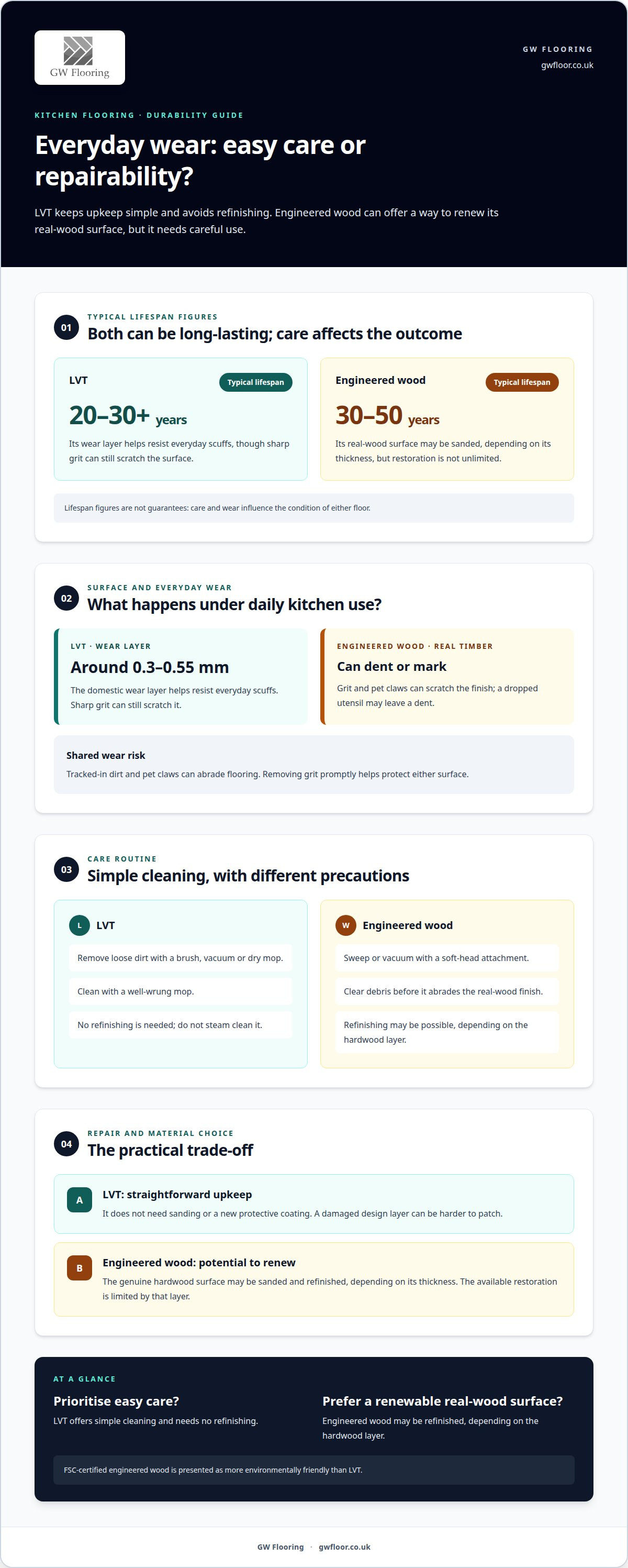
FSC-certified engineered wood is presented as more environmentally friendly than LVT. Typical lifespan figures are 20-30+ years for LVT and 30-50 years for engineered wood. Comparing LVT vs engineered wood in kitchens also means considering how each surface handles everyday wear.
LVT durability and maintenance
Domestic LVT has a wear layer around 0.3mm to 0.55mm thick. That surface helps resist everyday scuffs, though sharp grit can still cause scratches. With pets, remove tracked-in dirt promptly and keep claws trimmed to reduce abrasion. A damaged design layer can be harder to patch than engineered wood.
LVT needs no refinishing, and regular care is simple. Remove loose dirt with a brush, vacuum or dry mop, then clean with a well-wrung mop. Don’t steam clean it. These practical steps help preserve the finish without sanding or applying a new protective coating.
Engineered wood durability and lifespan
Engineered wood has a genuine hardwood surface over plywood layers. Depending on the thickness of that top layer, it may be sanded and refinished, giving it a repair option that LVT does not have. The trade-off is that wood can dent: a dropped utensil, for example, may leave a mark.
Grit and pet claws can scratch or mark a real-wood finish. Sweep or vacuum with a soft-head attachment to clear debris before it abrades the surface. The hardwood layer limits how much refinishing is possible, so restoration is not unlimited.
For LVT vs engineered wood in kitchens, consider the kind of wear most likely in your household. LVT avoids refinishing and offers straightforward mopping, while engineered wood may allow surface renewal. The longer lifespan figure for engineered wood does not mean every floor will last that long; care and wear influence its condition. An FSC-certified choice may also matter if environmental impact is part of your decision.
If easy everyday care matters most, explore LVT flooring options alongside your preferred finish and household needs.
Appearance and material construction
LVT and engineered wood create different kitchen finishes because their surface materials differ. Their construction also affects their thickness and feel underfoot.
Surface appearance and feel
Luxury vinyl tile is made from multiple PVC layers, with a printed design giving it a visible pattern. A wood-effect design can suggest oak grain, while its printed appearance may look more consistent than natural boards. Glue-down LVT is often 2 to 3mm thick, creating a slim profile. Some homeowners find LVT softer and warmer underfoot than wood, and quieter than creaking boards.
Appearance and design
Engineered wood has plywood layers topped with genuine hardwood, usually with a wear layer between 2mm and 6mm thick. Each board shows real grain and natural variation, so the floor’s character comes from the timber itself. LVT can reproduce wood patterns, but its decorative image is manufactured rather than a real hardwood surface.
Picture the floor across the whole kitchen, not just in a single sample. Real oak boards have natural variation from plank to plank, while a printed LVT design can create a more consistent pattern. Colour, plank direction and layout also affect how the floor works with cabinets, worktops and adjoining rooms.
Thickness can matter where flooring meets existing thresholds or another floor. Glue-down LVT’s 2 to 3mm profile differs from engineered wood’s layered board construction, so the finished levels may need consideration during planning. The hardwood wear layer also varies from 2mm to 6mm, affecting how much genuine timber is visible at the surface.
Choose engineered wood if genuine hardwood grain and the variation between individual boards are central to your design. Consider LVT if you prefer a manufactured pattern and a softer, warmer feel underfoot. Viewing samples beside your kitchen cabinets and worktops helps you compare colour and finish in the room’s own light.
Installation costs and flooring quotes
A flooring quote reflects more than the visible material. The fitting method, room shape, waste, removal of existing flooring and subfloor condition all affect the work involved.
There is no single warranty term for every LVT or engineered wood floor; coverage depends on the product’s stated terms and fitting conditions. Both need a stable, properly prepared subfloor. LVT usually needs around 24 hours to acclimatise before fitting, while engineered wood should acclimatise in the room for 48 to 72 hours.
For a useful comparison, separate the quote into flooring, installation and groundwork. Uneven areas may need preparation such as plywood or latex screed. A complex kitchen layout, thresholds and doorways can also affect the installation. Make sure the quote sets out the preparation work, not just the flooring material.
Costs vary with the product and specification. Budget click LVT differs from premium glue-down designs, while engineered wood costs reflect factors such as wood type, board width and the thickness of its hardwood layer. Compare similar specifications rather than headline product categories. Laminate is a separate flooring material, with different construction and performance.
Match the flooring to your household routine. LVT suits a kitchen where waterproofing and easy care matter. Engineered wood may appeal if real timber is the priority and spills are wiped up quickly. Engineered wood is generally not recommended for bathrooms, so a kitchen choice may not suit every room.
For underfloor heating, include system compatibility in the product specification and keep within the flooring’s permitted surface temperature. The listed LVT and engineered wood ranges allow up to 27°C. Compare quotes on the same basis: product, fitting method, subfloor work and heating suitability.
Request a flooring quote that accounts for your kitchen’s layout and subfloor preparation.
GW Flooring
GW Flooring can help you turn the comparison into a practical flooring choice for your kitchen. If moisture resistance, easy care or a particular finish matters most, consider how those priorities fit your room and household routine. GW Flooring supplies and installs Luxury Vinyl Tiles (LVT) and other flooring options, with samples brought to your home through its showroom-to-you service. Seeing samples alongside your cabinets and worktops can make colour and pattern decisions clearer. For engineered wood, the guidance above can help you weigh its natural timber appearance against the extra care it needs around spills. Contact GW Flooring to discuss your kitchen flooring options.
Choose a floor that feels right for your kitchen
Choosing LVT vs engineered wood in kitchens is also a chance to shape the feel of the whole room. Before settling on a finish, consider the look you want, how your household uses the space and which care routine suits you. A clear priority, such as natural character or straightforward upkeep, can make the decision easier.
Look beyond the floor sample. Consider how the colour and pattern will sit with your cabinetry, worktops and adjoining rooms, and include the practical installation details in your decision. A well-planned floor should feel like part of the kitchen, not an afterthought.
Ready to take the next step? Contact GW Flooring for a flooring quote and discuss the right direction for your kitchen. With a clear sense of your priorities, you can move towards a floor that feels at home in your space.
Frequently Asked Questions
Can both floors go over underfloor heating?
Yes, compatible LVT and engineered wood ranges can be used with underfloor heating. The listed LVT ranges work with water-fed systems; the engineered wood ranges work with water-fed and electric systems. Both are limited to a floor surface temperature of 27°C. Keep the heating within the flooring manufacturer’s stated limits, as excessive heat can damage the finish.
So, which floor do I recommend overall?
For a kitchen where splashes and simple day-to-day care are priorities, LVT is a practical choice. If genuine wood grain matters most and you are comfortable wiping up spills promptly, engineered wood may suit you better. Picture a busy evening of cooking: choose the material whose appearance and care routine you will be happy with.
What does LVT stand for?
LVT stands for Luxury Vinyl Tile. It is a flooring category, not one particular pattern. Designs can mimic wood or stone, so compare samples with your cabinets and worktops. Despite the name, LVT is a vinyl flooring material, not natural stone or solid wood.
What is the difference between LVT and engineered wood flooring?
The key difference is the surface material: LVT has a manufactured decorative finish, while engineered wood has a genuine hardwood surface. This affects the visual character and how you plan for wear over time. If natural timber grain matters more to you than a consistent printed design, engineered wood may be a closer fit for your kitchen.
Is LVT or engineered wood better for a kitchen in the UK?
LVT is often a practical kitchen choice when waterproofing and straightforward upkeep are priorities. Engineered wood can be a strong design choice if you want real timber character and can wipe up spills promptly. If the kitchen opens onto a dining area, consider how the floor will look across both spaces, not just beside the sink.
How waterproof are LVT and engineered wood kitchen floors?
LVT is waterproof, but that does not make the whole floor assembly or room impervious to leaks. Water may still reach vulnerable edges or the subfloor. Engineered wood varies by range: some products are water resistant, but standing water can damage the boards. A dishwasher leak needs prompt attention with either flooring type.


