

That sleek, traditional ceramic tile you've been eyeing might actually be the least practical choice for your Essex home renovation in 2026. We've all experienced the shock of a freezing kitchen floor on a January morning, or the frustration of seeing a beautiful surface ruined by a single dropped pan. Dealing with discoloured grout lines that refuse to come clean is a chore nobody enjoys, whilst the prospect of a long, dusty installation often makes homeowners hesitate. We understand that you want a space that looks premium without the high-maintenance headaches.
In this guide, we'll weigh up the LVT instead of ceramic tiles pros and cons to show you why Luxury Vinyl Tiles are now outperforming traditional ceramics in modern British households. You'll discover how to achieve a warm, stylish finish that adds genuine value to your property. We'll also explain why the secret to a professional result lies in the invisible work, specifically the expert subfloor preparation that ensures your new floor stays perfect for decades. By the end, you'll have the clarity needed to choose the ideal flooring for your lifestyle and budget.
Key Takeaways
- Learn why Luxury Vinyl Tiles provide a naturally warmer feel underfoot and better impact resistance than traditional ceramics, helping to prevent cracked tiles and cold feet in winter.
- Understand the maintenance benefits of a non-porous surface, which eliminates the need to scrub discoloured grout lines whilst effectively resisting bacteria and mould.
- Weigh up the LVT instead of ceramic tiles pros and cons to see how modern materials like Amtico and Karndean offer the aesthetic of stone with superior durability for busy Essex households.
- Discover why meticulous subfloor preparation, such as expert screeding and plyboarding, is the non-negotiable foundation for a high-quality and long-lasting floor finish.
- Compare the long-term value and installation requirements of stone-effect LVT versus traditional porcelain to make a confident, stylish choice for your home renovation.
Understanding the Modern Shift: LVT vs Ceramic Tiles in British Homes
The flooring landscape in Essex has transformed significantly over the last decade. In Rayleigh, we've seen a massive shift in how homeowners approach kitchen and hallway renovations. For years, ceramic and porcelain were the default choices for any high-traffic area. However, the rise of Luxury Vinyl Tile (LVT) has challenged that dominance. LVT has evolved from the basic, thin linoleum of the past into a sophisticated, multi-layered product that genuinely competes with natural materials. When evaluating LVT instead of ceramic tiles pros and cons, it's clear that modern technology has closed the gap in aesthetics whilst offering superior comfort. We've helped countless clients move away from the cold, clinical feel of stone toward something much more inviting.
What Exactly is Luxury Vinyl Tile?
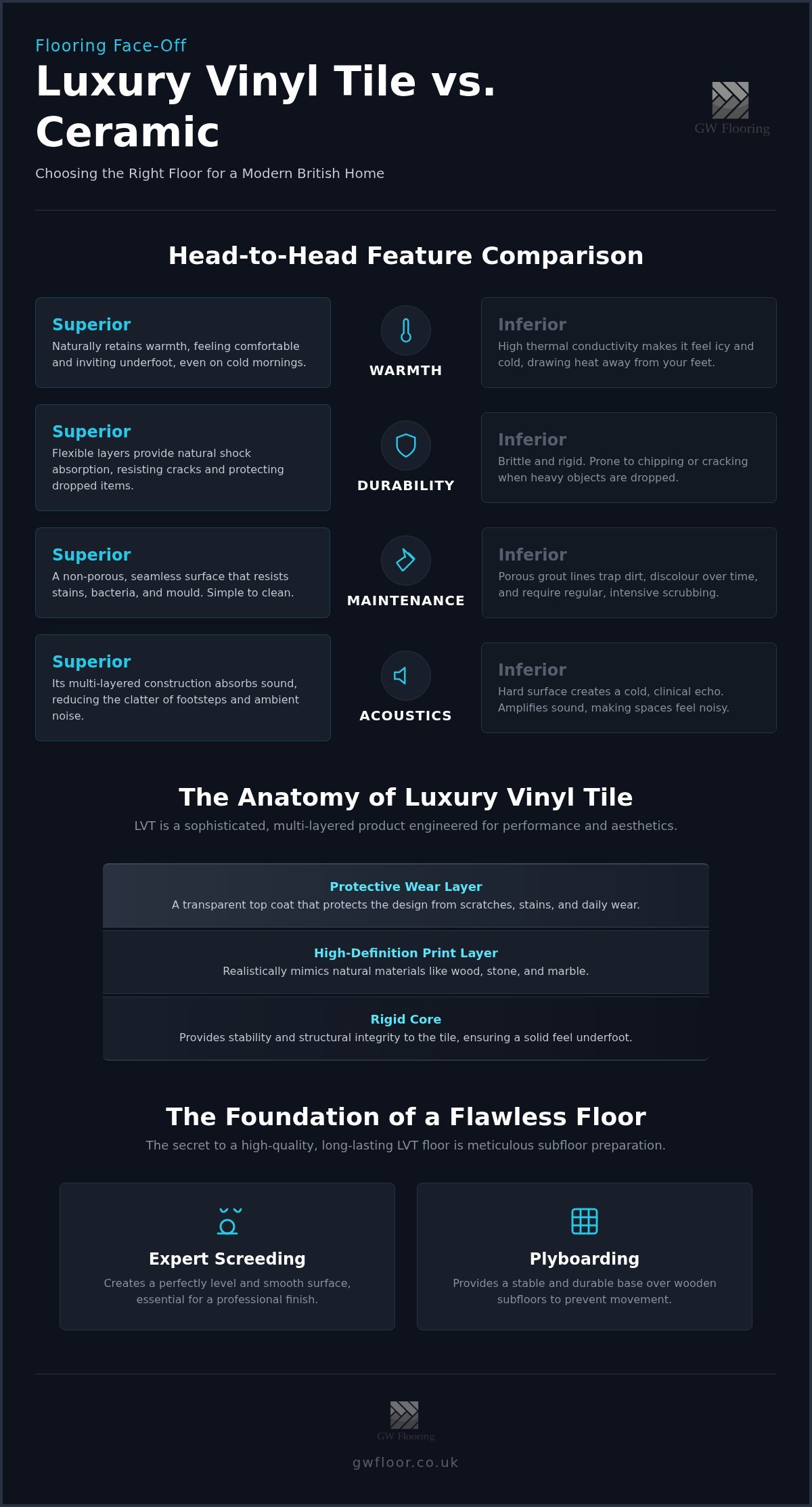
LVT isn't just a single sheet of plastic. It's a technical marvel consisting of several distinct layers. At the base, you'll find a rigid core that provides stability. Above this sits a high-definition print layer that can mimic anything from rustic oak to Italian marble with incredible realism. Finally, a transparent wear layer protects the design from scratches and stains. We often recommend professional 'glue-down' LVT over 'click' systems for a more permanent, high-end feel. Understanding Vinyl Composition Tile and its evolution into LVT reveals how these layers work together to create a surface that's both durable and beautiful. The 'luxury' label is earned because these tiles don't just look like the real thing; they perform better in a busy home environment.
The Traditional Appeal of Ceramic and Porcelain
We still appreciate the qualities of kiln-fired clay. Ceramics are incredibly hard and heat-resistant, which made them the go-to for bathrooms and hallways for decades. They offer a specific type of permanence that many find appealing; if you are considering this traditional route for your home, you can visit Kroll Interiors to explore high-quality tiling options. But in a residential setting, 'harder' isn't always 'better'. A ceramic floor is unforgiving on the joints and brittle enough to crack if you drop a heavy pan. Whilst porcelain remains a valid choice for certain environments, many Essex families are finding that the rigidity of stone comes with a literal coldness that's hard to live with day-to-day. When you weigh up LVT instead of ceramic tiles pros and cons, the thermal comfort of vinyl often wins out. It's about finding the balance between that classic look and modern-day practicality.
Performance and Comfort: Why LVT is Winning the Underfoot Battle
The sensory experience of living with a floor often carries more weight than its initial appearance. Ceramic tiles are notorious for their clinical, echoing sound. If you drop a glass on porcelain, it shatters into fragments and frequently chips the tile surface itself. LVT behaves differently. Its multi-layered construction provides a natural shock absorption that protects your glassware and your floor. It significantly reduces ambient noise and the "clatter" of footsteps or pet claws, making your living space feel calmer and more substantial. When we discuss the LVT instead of ceramic tiles pros and cons with our clients, we always highlight that comfort isn't just a luxury; it's a fundamental part of how you enjoy your home. Safety is equally vital, and high slip-resistance ratings across our LVT ranges provide peace of mind for families with young children or elderly residents.
Warmth and Underfloor Heating (UFH)
Many Essex homeowners ask us about the "cold shock" factor. In a typical British winter, ceramic tiles can feel like walking on a block of ice. LVT has much lower thermal conductivity, meaning it doesn't draw heat away from your feet as aggressively as stone or clay. It works in perfect harmony with modern underfloor heating systems, too. Whilst stone takes a significant amount of time to warm up, LVT transfers heat efficiently and maintains a consistent, comfortable temperature for longer. Looking at the in-depth pros and cons of LVT and tile, the thermal benefit is a primary reason why local families are moving away from traditional ceramics. It turns a cold kitchen into a space where you're happy to linger in your socks.
Ergonomics and Long-Term Comfort
Standing on a rigid ceramic surface for long periods whilst cooking or cleaning can take a toll on your joints. LVT offers a flexible resilience that is much kinder to your knees and back. This "give" in the material provides a subtle ergonomic advantage that stone simply cannot match. This resilience, combined with the realistic textures of premium brands, makes it the best flooring for busy Rayleigh households that demand both high-end style and daily practicality. Of course, this comfort is only truly achieved when the foundation is right. You can experience the difference in texture and warmth for yourself by booking a complimentary home assessment, where we bring the showroom directly to your door.
Maintenance and Longevity: The Reality of Grout vs. Wear Layers
Homeowners often choose ceramic because they believe it's a "forever" floor. Whilst the tiles themselves are incredibly durable, the grout is almost always the first point of failure. Grout is porous, meaning it absorbs everything from spilled coffee to dirty mop water. In our experience across Essex, the local hard water presents a unique challenge. Limescale and mineral deposits bond to the grout lines, causing stubborn discolouration that no amount of scrubbing seems to fix. When you evaluate LVT instead of ceramic tiles pros and cons, the absence of traditional grout is a massive functional advantage. LVT features a high-grade wear layer that is entirely non-porous, meaning bacteria and mould have nowhere to hide.
Longevity is another area where perceptions are shifting. A high-quality LVT installation from brands like Amtico or Karndean can easily last 25 years in a residential setting. Whilst ceramic is technically harder, it's also brittle. A heavy le Creuset pan dropped in the kitchen won't just leave a mark; it will likely shatter a ceramic tile or cause a hairline crack that eventually spreads. LVT has a flexible resilience. It absorbs the energy of an impact rather than breaking under it. We’ve seen many Rayleigh homes where the tiles remain intact, but the aesthetic is ruined by a single cracked corner that is impossible to replace without damaging the surrounding floor.
The Daily Clean: LVT vs. Ceramic
Keeping your floor looking pristine shouldn't be a weekend-long chore. Ceramic tiles require regular deep-cleaning of the grout to prevent staining, often involving harsh chemicals and a lot of elbow grease. LVT simplifies your routine. A quick sweep and a damp mop with a pH-neutral cleaner are all it takes to maintain that "just fitted" look. The protective wear layer handles everything from muddy paw prints to red wine spills with ease. It’s a surface designed for the reality of a busy family life, not just for a showroom display.
Waterproof and Moisture Protection
LVT is an ideal solution for bathrooms and utility rooms because it is 100% waterproof. In contrast, if the grout in a ceramic floor develops even tiny cracks, moisture can seep through to the subfloor, leading to damp issues or lifting tiles. This reliability is why many carpet fitters in Essex now specialise in LVT for wet areas. We ensure that every installation is perfectly sealed, providing a seamless barrier that protects your home's structure whilst looking incredible.
The Installation Journey: Why Subfloor Preparation is Non-Negotiable
Ceramic tile installation is often a disruptive, dusty process that can ground your household to a halt. Removing old tiles involves jackhammers and clouds of silica dust that settle into every corner of your home. In contrast, our approach to LVT focuses on meticulous preparation rather than destructive demolition. When you weigh up LVT instead of ceramic tiles pros and cons, the installation phase is where the difference in household disruption becomes most apparent. We've spent over 20 years refining our process in Essex to ensure your renovation is as frictionless and clean as possible.
Some retailers suggest you can simply "float" new vinyl over existing surfaces to save time and money. We strongly advise against this shortcut. Laying LVT over old, uneven tiles or a poorly prepared base leads to "telegraphing", where the bumps and grout lines of the old floor eventually show through the new surface. It also compromises the adhesive bond, which can cause the tiles to lift or shift over time. We believe a floor is only as good as what is underneath it, and we never compromise on that foundation.
The Vital Role of Screeding
For a glue-down finish that looks and feels like a solid stone floor, the subfloor must be perfectly level and structurally sound. We use high-quality smoothing compounds, known as screeding, for concrete bases and marine-grade plyboarding for timber floors. This creates a moisture-stable, glass-smooth surface that allows the LVT to sit perfectly flat without any movement. Professional subfloor preparation is the invisible work that guarantees the longevity and premium finish of your new floor.
Just as we prioritise technical accuracy for your home, the wider construction industry uses advanced tools—such as RAW calculatie software for infrastructure projects—to manage complex requirements and costings.
Installation Timelines and Disruption
Time is a major factor in any Rayleigh home renovation, and LVT offers a significant advantage here. Ceramic tiles require substantial "curing" time for both the adhesive and the grout before you can safely walk on them or move furniture back into the room. LVT installations are generally much swifter. Once the adhesive has set, the floor is ready for use almost immediately. Our floor installation experts manage the entire timeline to minimise downtime in your kitchen or utility room. By using our "showroom to you" service, you also skip the stress of visiting busy retail parks; we bring the samples directly to your living room to see how they look in your own light.
If you want to ensure your home transformation starts on the right foundation, book your professional subfloor assessment with our expert team today.
Making the Right Choice for Your Essex Property
Choosing the right surface for your home is about balancing your aesthetic vision with the practicalities of your daily routine. When weighing up LVT instead of ceramic tiles pros and cons, you must consider how each material fits into your specific lifestyle. Whilst ceramic might still have a place in specific heritage restorations or heavy-duty commercial environments, the modern Rayleigh family often finds that the benefits of vinyl simply outweigh the traditional alternative. LVT offers a unique combination of warmth, impact resistance, and ease of maintenance that stone simply cannot match in a residential setting. It's a technical solution that addresses the common frustrations of cold feet and cracked surfaces whilst maintaining a high-end, premium appearance.
In the competitive Essex property market, high-end vinyl is no longer seen as a budget compromise. Property professionals and savvy buyers now recognise brands like Amtico and Karndean as premium assets. These floors add genuine value to a home because they look beautiful and are known to last for decades without the grout issues that plague older tile installations. When you invest in a professionally fitted LVT floor, you aren't just buying a surface; you're investing in a long-term, low-friction living experience that appeals to future owners just as much as it delights you today.
LVT for the Design-Conscious Homeowner
Creative freedom is where vinyl truly shines. Unlike ceramic tiles, which are often limited by grout width and weight, Amtico LVT allows for intricate patterns like herringbone, chevron, and custom border inlays. We take pride in helping you match your flooring to the unique architectural character of your Rayleigh home. Whether you want a contemporary stone-effect slab or a classic parquetry look, the versatility of the material allows us to realise a bespoke vision that feels personal and polished.
Next Steps for Your Flooring Project
Organising a transformation for your home shouldn't be a stressful process. We recommend a professional site survey as the essential first step to ensure your quote is accurate and covers all necessary subfloor preparation. We offer a "showroom to you" service across Essex, allowing you to see samples in your own light and alongside your existing furniture. Don't compromise on the foundation just to save on the surface; the invisible work is what guarantees your floor remains a source of pride for years to come. Reach out to our family-run team to book your complimentary home assessment today.
Transform Your Living Space with Confidence
Deciding on the right flooring is a significant step for any homeowner. We've explored the LVT instead of ceramic tiles pros and cons, highlighting how modern luxury vinyl offers superior warmth and style for your Essex property. Foundations matter. Whilst the surface is what you see, meticulous subfloor preparation ensures your investment lasts for decades. We take genuine pride in this invisible work, drawing on 20 years of expert installation experience in Rayleigh to create a flawless finish.
As a family-run business, we're here to help you realise your vision. We'll bring our extensive range of high-quality samples directly to your door, allowing you to choose in the comfort of your own home. Book your free 'showroom to you' consultation with GW Flooring today and take the first step toward a beautiful, durable floor. We look forward to creating a space you'll be proud of for years to come.
Frequently Asked Questions
Is LVT cheaper than ceramic tile to install in Essex?
LVT often proves more cost-effective when you consider the total installation journey. Whilst high-end material prices can be similar to premium porcelain, the labour for LVT is typically lower because the process is faster and less destructive. You also avoid the long-term costs of grout repairs and tile replacement. Weighing up LVT instead of ceramic tiles pros and cons usually shows that vinyl provides better value over its 25-year lifespan.
Can I lay LVT directly over my existing ceramic tiles?
We never recommend laying LVT directly over old ceramic tiles. Existing grout lines and uneven surfaces will eventually "telegraph" through the new vinyl, creating visible ridges and bumps on your finished floor. We always insist on removing the old floor or applying a professional smoothing compound first. This foundational work ensures a glass-smooth finish that stays perfectly flat, preventing the adhesive failures common with shortcut methods.
Is LVT as waterproof as ceramic tile for a bathroom?
Premium Luxury Vinyl Tile is 100% waterproof and specifically designed for high-moisture areas like bathrooms and utility rooms. Unlike ceramic, which relies on porous grout that can eventually leak or harbour mould, LVT provides a seamless, non-porous barrier. It's a superior choice for wet areas because it won't lift or swell when exposed to water. This makes it a highly practical and hygienic alternative to traditional tiling in busy Essex households.
Does LVT scratch more easily than ceramic or porcelain?
Ceramic is technically harder and more scratch-resistant, but it's also much more brittle. Whilst porcelain resists fine scratches, it will chip or crack if you drop a heavy object. LVT features a tough, transparent wear layer that handles daily scuffs and pet claws with ease. Its flexible nature means it absorbs impacts rather than shattering. For most families, the resilient surface of vinyl proves more durable than rigid, breakable clay.
Which is better for underfloor heating: LVT or ceramic?
Both materials work excellently with underfloor heating, but LVT offers a faster response time. LVT has lower thermal mass, so it warms up much quicker once the heating is turned on. Ceramic tiles take longer to reach temperature but retain heat for a longer period once the system is off. However, LVT feels naturally warmer underfoot even when the heating is switched off, which is a significant advantage during the milder British months.
How long does it take a professional to fit LVT compared to tiling a room?
Professional LVT installation is significantly faster than traditional tiling. A standard kitchen can often be professionally screeded and fitted in just two days, whereas tiling requires multiple stages for setting, grouting, and curing. You don't have to wait days to walk on an LVT floor or move your furniture back into the room. This reduction in household disruption makes it a favourite for Rayleigh families who want a swift transformation.
Will LVT fade in rooms with large south-facing windows?
Modern LVT from premium manufacturers includes advanced UV stabilisers specifically to prevent fading. Whilst any material can be affected by extreme, direct sunlight over many years, high-quality vinyl is designed to maintain its colour in bright Essex sunrooms. We recommend brands like Amtico or Karndean for rooms with large windows. Their protective layers ensure the vibrant wood or stone effects don't lose their lustre or depth, even in south-facing spaces.
What is the best way to clean LVT floors in a hard water area like Rayleigh?
The best way to clean LVT in hard water areas is with a dedicated, pH-neutral floor cleaner. Avoid using generic soaps or harsh detergents, as these can react with the minerals in the water to leave a dull film. Because LVT doesn't have porous grout lines, you won't have to deal with the limescale buildup that typically discolours ceramic floors. A simple damp mop is all it takes to keep the surface pristine without heavy scrubbing.


