

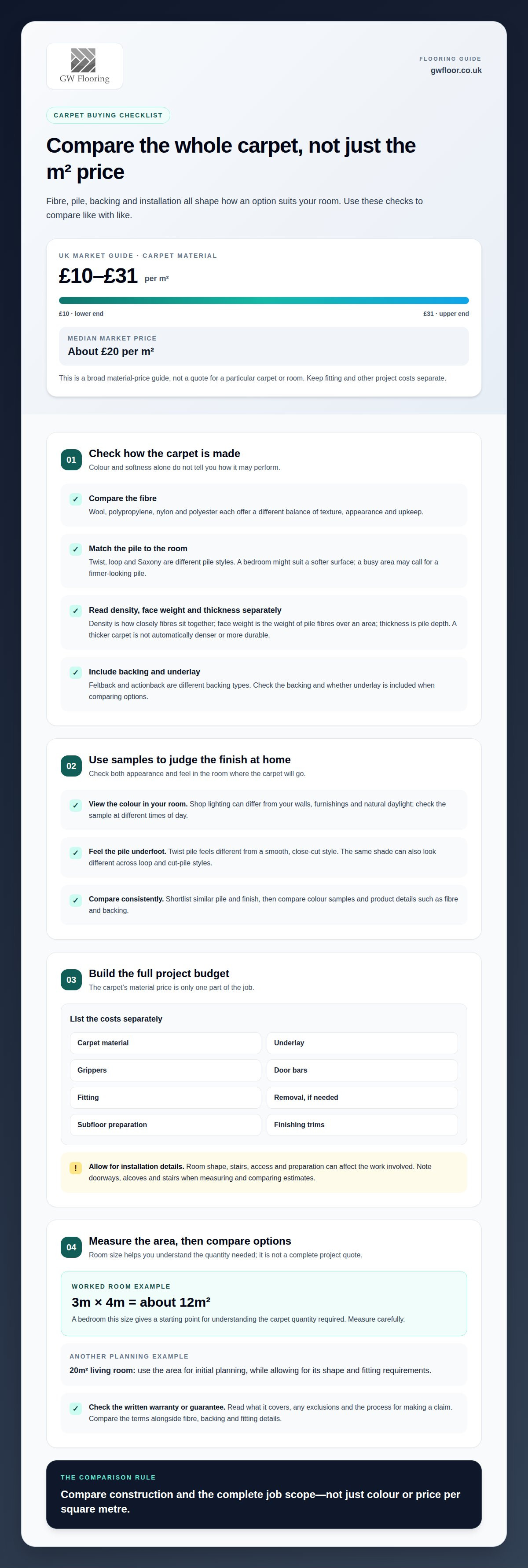
A lower carpet price doesn’t always mean better value. On the UK market, carpet typically costs £10-£31 per m², with a median of about £20. That gives you a starting point for estimating the price of carpet flooring, before considering fitting and other materials.
It’s easy to focus on the cost per square metre, but fibre, pile and backing all affect how a carpet feels and performs. The right choice depends on your budget, the room and the finish you want, so compare like with like.
This guide explains what affects the price of carpet flooring and how to weigh budget against quality, including when considering a luxury finish. It also covers costs that can shape the overall project and how samples help you judge colour and texture at home before deciding.
Key Takeaways
- Compare fibre, pile and backing together to judge how a carpet may suit the room, not just its appearance.
- Look at samples in your home to see how their colour and texture work with your lighting and furnishings.
- Plan your budget around the full job, including underlay, fitting and any preparation the floor needs.
- For a hard-wearing finish, weigh quality and maintenance alongside style when comparing wool and dense twist pile options.
Carpet prices by fibre, pile, density and backing
The price of carpet flooring depends on more than colour or softness. Compare fibre, pile construction and backing, and consider what the room needs.
Fibre and pile types
Fibre affects a carpet’s feel, appearance and upkeep, so compare materials before choosing a style. Wool, polypropylene, nylon and polyester each offer a different balance of texture and practical use. Pile describes how the fibres form the surface: twist, loop and Saxony are examples. A bedroom might suit a softer surface, while a busy area may call for a firmer-looking pile.
Colour affects how the carpet looks against walls and furnishings, but it doesn’t tell you how it is made. If you are redecorating alongside installing new flooring, interior specialists such as Colorado Springs Painters advise coordinating wall tones with carpet samples under both natural and artificial light. Compare samples in your room’s lighting, then consider pile and fibre together. The same shade can look different across loop and cut-pile styles, even when the fibres are similar.
Density, face weight and thickness
Density describes how closely the pile fibres sit together; face weight is the weight of the pile fibres over a given area. Thickness measures the pile’s depth. These terms describe different features, so a thicker carpet isn’t automatically denser or more durable. Compare each specification like for like, then consider the texture underfoot and the room’s expected use.
For example, a deep, soft pile may prioritise comfort, while a compact twist may look neater in a frequently used space. Check the product details for pile type, density and face weight rather than relying on touch alone. A sample helps you judge the feel.
Backing is another part of a carpet’s construction. Feltback and actionback are different backing types, so include backing and underlay when comparing options. Carpet prices also differ from laminate, vinyl and engineered wood because each flooring type has its own material and installation requirements. Compare the full project scope, including the floor covering, underlay where needed, subfloor preparation, fitting and finishing trims. This gives you a clearer basis for comparing carpet with hard flooring than material prices alone.
Should I order carpet samples before buying?
Yes. A sample lets you see the colour and feel the finish at home before choosing. Shop lighting can make a shade look different from how it appears beside your walls, furnishings and natural daylight. Place each sample in the room you’re carpeting and view it at different times of day. Compare the pile underfoot as well as its appearance: twist pile, for example, feels different from a smooth, close-cut style.
For a market guide, carpet typically costs between £10 and £31 per m², with a median of about £20. That range gives you a broad comparison, not a quote for a particular room or carpet. Fibre, construction and finish all affect where an option sits within it. Polypropylene appears across affordable choices, while a different fibre or pile may better suit your preferred look and feel. Samples help you judge the actual colour and texture, rather than relying on a product image alone.
Compare options consistently. First, shortlist carpets with a similar pile and finish. Then order samples in the colours you’re considering and check them against the room’s décor. Compare product details, including fibre and backing, before deciding. For a frequently used area, consider construction and practical requirements alongside comfort. A sample helps you judge colour and feel, while the written specifications explain what you’re comparing.
Keep fitting separate from the per-square-metre material price when planning your budget. The final project can also involve underlay, preparation and finishing details, so a material figure alone doesn’t describe the whole job. A bedroom measuring 3m by 4m has an area of about 12m², which gives you a useful starting point for understanding how room size affects the quantity required. Measure carefully before comparing options.
To explore carpet choices and compare finishes, browse carpet options and consider which samples suit your room.
UK carpet price ranges by budget and quality
On the UK market, carpet typically costs £10-£31 per m², with a median of about £20. Compare the material and the complete installation budget separately.
Budget carpet options
Start by deciding what matters most: lower upfront material cost, a particular finish or suitability for regular foot traffic. Budget and mid-range labels can help you browse, but compare the fibre, pile and backing behind each option. A lower-priced carpet may suit a spare bedroom, while a living room used daily calls for closer attention to construction and maintenance.
Measure the room before comparing quantities. A 20m² living room gives you a clear area for initial planning, though its shape and fitting requirements also affect the project.
Budget carpet examples
Polypropylene twist and feltback styles are examples to consider when looking for an affordable option. Compare their construction with the room’s expected traffic instead of choosing by colour or collection name alone. In a living room, think about how the pile will look with regular use; in a quieter bedroom, comfort may matter more.
Use samples to assess the finish at home, then compare product details side by side. This shows how the options differ before you settle on one.
Additional budgeting costs
The carpet itself is only one part of the budget. Include underlay, grippers, door bars and fitting, then allow for carpet removal or subfloor work if needed. Room shape, stairs, access and preparation can all affect installation, so list these separately when comparing estimates.
Measure each area carefully and note doorways, alcoves and stairs. This gives you a clearer starting point for estimating materials and discussing the work involved.
Affordable carpet and guarantees
In the UK, compare affordable options through carpet retailers and flooring specialists, using the market range as a guide rather than a promise for a particular product. Before buying, read the written warranty or guarantee terms. Check what it covers, any exclusions, and the process for making a claim.
Compare those terms alongside fibre, backing and fitting details. A low material cost alone doesn’t show whether the full project suits your home or budget.
Luxury carpet options
A luxurious finish comes from the combination of fibre, pile, underlay and careful fitting, not appearance alone. Wool and dense twist pile carpets are among the longest-lasting options when properly maintained. Compare how each option feels underfoot and whether its texture suits the room. In a bedroom, a softer pile may offer the comfort you want; on stairs, consider how the finish works across the treads and landings.
Wool is a natural fibre, while dense twist pile offers a more compact surface. Consider construction details alongside colour, because a rich shade doesn’t show how a carpet will perform. Decide what matters most: softness, a tailored appearance or durability under regular foot traffic. This helps narrow the options without treating every premium-looking carpet as the same.
Underlay is part of the finished floor, not an afterthought. It can change the feel underfoot and support the carpet, so consider it alongside the chosen material and pile. A suitable underlay can extend a carpet’s life by up to 50%. For stairs, include the steps and landings when assessing the whole project, since fitting and surface preparation affect the finished result.
Think about long-term value as well as initial appearance. A well-chosen, properly installed carpet can last 10-15 years in a typical UK home, with lifespan affected by fibre, foot traffic, cleaning and suitable underlay. Plan a simple care routine suited to the carpet’s material. This helps protect the finish and keeps the luxurious look aligned with everyday use.
Before deciding, compare samples in the room and check how the pile looks in changing light. Then consider the floor beneath it: sound subfloor preparation supports a neat, even finish. If you’re weighing carpet styles for your home, explore carpet choices and focus on the fibre, construction and underlay combination that best suits your rooms.
GW Flooring: Luxury Vinyl Tiles (LVT)
GW Flooring helps you compare carpets with Luxury Vinyl Tiles (LVT) when choosing a finish for your home. Its showroom-to-you service brings samples to your home or business, so you can view colours and textures in the space where they’ll be used. If carpet is your preference, GW Flooring also supplies and installs carpets across Essex.
The price depends on the project and is provided after you request a quote. Room measurements, carpet selection, fitting requirements and subfloor preparation all affect the work involved. Compare these details to assess the complete flooring project, not just its visible surface.
Contact GW Flooring to discuss your flooring project and explore samples.
Choose a floor that feels right for your home
Start by picturing how you want each room to look and feel in everyday use. Carpet can bring softness and warmth, while another floor covering may better suit your preferred finish. Keep the price of carpet flooring in perspective by weighing the result you want against how the room is used, rather than choosing on appearance alone.
GW Flooring can help you explore carpets, Luxury Vinyl Tiles (LVT) and vinyl flooring for your home in Essex. Its showroom-to-you service brings samples into your space, so you can compare colours and finishes with your furnishings and lighting. This helps you move from comparing options to choosing a floor that fits your plans.
Ready to discuss your flooring project? Contact GW Flooring and take the next step towards a finish that feels like home.
Frequently Asked Questions
How Much Does It Cost to Carpet a Room?
The total includes the carpet material, fitting and any other work required. Start by measuring the floor area, then work out the material needed for the room’s shape and layout. Add the selected underlay and installation to your budget. Alcoves, doorways and stairs can affect how the carpet is cut and fitted, so floor area alone won’t determine the final cost.
Is It Worth Paying More for a Luxury Carpet?
Paying more can be worthwhile when the chosen fibre, feel and finish suit the room and your priorities. Compare the specifications and care needs rather than paying extra for a luxurious appearance alone. For example, consider how a bedroom carpet feels underfoot and whether its material fits your household’s cleaning routine. A higher price makes sense when its features matter to you.
What Affects Carpet Prices?
Carpet prices reflect the material, pile construction, backing and amount required. The work involved matters too: stairs, awkward room layouts and preparation can change the fitting process. Compare quotations on the same basis, including the materials and labour covered. This helps distinguish a low, material-only figure from the cost of completing the flooring project.
What is the average carpet flooring price per square metre in the UK?
The current UK market range is typically £10-£31 per m², with a median of about £20. This is a market guide, not a guaranteed price for every fibre or carpet specification. The price of carpet flooring depends on the option chosen and the amount required. Compare products with similar construction, and keep material costs separate from fitting and preparation.
How much does carpet fitting cost per square metre in the UK?
There isn’t one fitting rate for every UK carpet project. Labour requirements depend on the room layout, stairs, access, removal work and subfloor preparation. GW Flooring supplies and fits carpets in Essex, with project pricing provided after a quote request. Share the rooms involved and any preparation needs to define the work included in your quote.
What is the total cost to carpet a bedroom, living room or whole house?
Work out each room separately, then combine material, fitting and preparation costs to set your overall budget. Record room measurements, doorways, alcoves and stairs, since they affect quantities and installation. For a whole house, include every space you plan to carpet rather than multiplying one room’s area. A room-by-room breakdown makes it easier to adjust your choices to your budget.


