

A dark floor doesn’t automatically make a room feel smaller. Light flooring can make a space feel brighter and more open, while dark flooring adds depth and a grounded, cosy feel. The best choice depends on the room’s natural light, proportions and the look you want. The pros and cons of light versus dark flooring also include how readily each shade shows dust, pet hair, footprints and scratches.
Lighter colours can appeal when a room feels compact, while darker tones can bring character to a larger space. But colour is only part of the decision: the flooring material and your everyday routine matter too.
This guide compares light and dark hardwood and vinyl, explains how each affects the feel of a room and its interior style, and explores what everyday marks may stand out. You’ll also find practical pointers for choosing a shade that feels right for your home.
Key Takeaways
- For a brighter, more open feel, consider how floor colour works with the room’s natural light and the tone of its walls.
- Match the floor to the atmosphere you want, from an airy minimalist look to a warm, more intimate setting.
- Think about your household’s dust, pet hair and foot traffic when weighing which shade will make everyday marks less noticeable.
- Compare light and dark vinyl alongside hardwood to find a practical finish that suits your room and interior style.
Do Dark or Light Hardwood Floors Make a Room Appear Larger?
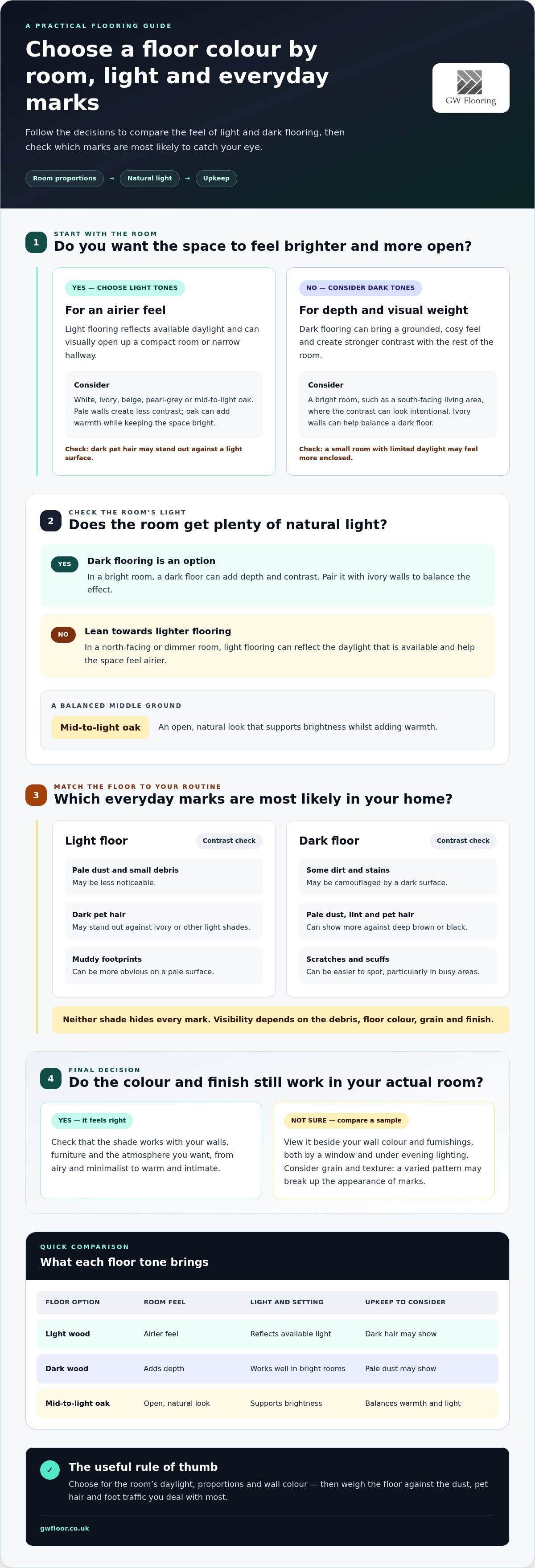
Light flooring can make a room feel brighter and more open, while dark flooring adds depth and may make a small space feel more enclosed. The pros and cons depend on natural light, wall colour and cleaning habits: ivory floors reflect light, while dark floors create stronger contrast.
Light flooring and perceived room size
Light flooring can visually open up a room by reflecting available daylight, making it a useful option for a north-facing lounge or narrow hallway. White, ivory, beige and pearl-grey surfaces create less contrast with pale walls. Compared with dark flooring, they often feel airier; mid-to-light oak can add warmth while keeping the space bright.
Dark flooring and perceived room size
Dark flooring gives a room visual weight and depth, but in a small space with limited daylight it can feel more enclosed. In a bright room, such as a south-facing living area, the contrast can look intentional. Pairing a dark floor with ivory walls helps balance the effect. Pale dust and lint may stand out, so consider your sweeping routine.
Neither shade hides every mark. A light floor may reveal dark pet hair, while a dark surface can show pale dust; visibility depends on the debris and the floor’s colour. Consider the room’s use and your cleaning routine, not colour alone. Treat flooring as part of a cohesive interior rather than a guaranteed way to increase buyer appeal. A floor that works with the walls and furniture can make a room feel considered.
| Floor option | Room-size effect | Natural light | Everyday upkeep |
|---|---|---|---|
| Light wood | Airier feel | Reflects available light | Dark hair may show |
| Dark wood | Adds depth | Works well in bright rooms | Pale dust may show |
| Mid-to-light oak | Open, natural look | Supports brightness | Balances warmth and light |
Choose a floor tone to suit the room’s daylight, wall colour and cleaning needs.
Matching floor colour to minimalist, cosy, modern or traditional interiors
Floor colour helps set an interior’s mood, from a pared-back modern look to a traditional room with rich contrast. Consider your furniture, wall colour and available natural light when choosing a surface.
Light floor colour choices
Light floors suit Scandinavian and minimalist schemes, where pale walls, simple furniture and natural textures create a calm finish. Pair light flooring with darker furniture or warm neutrals for definition, so the room doesn’t feel flat. In a bedroom, a soft, light surface can support an airy feel; in a hallway, it can keep the palette visually simple.
Dark floor colour choices
Dark floors bring depth to traditional or cosy interiors, especially with ivory, dove-grey or sand-coloured walls. Light wood furniture, metallic details and textured fabrics can balance a dark surface and draw attention to individual pieces. In a living or dining room, the contrast can define furniture; choose complementary finishes to keep the scheme cohesive.
In a kitchen, consider cabinet colour and foot traffic alongside the overall palette. Medium or dark stone-effect and concrete-effect finishes can suit a well-used kitchen, though natural light still matters. In bathrooms, light or tone-on-tone colours can create an orderly feel. Similar floor colours through a hallway and adjoining spaces can help the interior flow.
Material, finish and texture also shape the result: a glossy surface reflects more light, whilst a matt or natural-looking finish gives a softer effect. With LVT or laminate, consider how the chosen colour and surface appearance work with nearby finishes, such as kitchen cabinets or bedroom furniture. View samples beside your wall colour and furnishings to judge the contrast in the room’s natural light.
For a practical starting point, browse flooring colour ideas and compare them with your room’s existing finishes.
Dust, pet hair, footprints and scratch visibility
Floor colour affects which everyday marks catch your eye, but contrast with the debris matters most. Compare the shade with your household’s pet hair, dust and usual foot traffic.
Dirt, dust and pet hair visibility
Light floors can disguise pale dust and small debris, but dark pet hair may stand out against an ivory surface. Dark floors can camouflage some dirt and stains, yet pale lint and dust show more against deep brown or black. Try a sample alongside your pet’s coat before choosing; contrast can affect how clean the room looks between sweeps.
Scratches, scuffs and wear visibility
Dark floors can make scratches and scuffs easier to spot, particularly in busy areas where shoes and furniture mark the surface. Light floors may hide minor scuffs, but larger imperfections can contrast with the finish. Grain and texture influence what you see: a varied pattern can break up the appearance of a mark more than a uniform, smooth surface.
Footprints show differently depending on colour and finish. On a darker polished floor, a damp shoe mark may catch the light; on a pale floor, muddy prints can be more obvious. In a hallway where outdoor shoes bring in grit, consider which marks you’re most likely to notice and how often you want to clean.
Dents and dings also vary in visibility according to their colour and depth. A small pale mark may stand out on a dark floor, while a larger scratch can interrupt a light surface. Dark flooring may camouflage some grime, but dust and pale pet hair can still be visible. Consider the room’s atmosphere and your usual sweeping routine.
Before deciding, view a sample in the room, both beside a window and under evening lighting. This shows how the colour, grain and finish look in changing light and helps you judge whether the shade suits how you use the space.
Dark and light vinyl flooring
LVT offers a practical way to explore light and dark effects without choosing hardwood. In a compact living room, a pale wood-effect surface can feel more open; in a larger, bright room, a darker finish can add contrast and visual weight.
Light vinyl flooring
Light-coloured vinyl can help a smaller room feel brighter and suit different interior styles. It hides dust and minor scratches well, but stains may show more readily, so consider where muddy shoes or spills are likely. In a playroom or basement, vinyl’s water resistance can make it a useful flooring choice. Pair a pale floor with darker furniture to give the room definition.
Dark vinyl flooring
Dark LVT can hide stains effectively, which may appeal in a busy kitchen or family space. However, dust and scratches can stand out against a darker surface, and the colour may make a small room feel more enclosed. In a spacious living room with strong natural light, dark wood-effect LVT can ground the furniture and create a more intimate feel.
Look beyond colour when comparing LVT samples. Grain, pattern and finish affect how continuous the floor appears and how it works with existing furniture. A subtle wood-effect pattern, for example, can bring warmth to a pale scheme, while a deep tone can balance light cabinets. Consider room size, natural light and everyday use together rather than judging a shade from a sample in isolation.
- Choose lighter vinyl for a brighter look, while considering visible stains.
- Use darker vinyl to conceal stains, but account for visible dust and scratches.
- Compare a sample with your furniture and view it in the room’s natural light.
Ready to find a shade for your home? Explore vinyl flooring options and compare finishes with your room’s light and furnishings.
GW Flooring: Luxury Vinyl Tiles (LVT)
GW Flooring supplies and installs Luxury Vinyl Tiles (LVT), helping homeowners and businesses in Essex compare practical alternatives to hardwood in light or dark finishes. View samples alongside your walls, furniture and natural light to judge how the colour works in your space. GW Flooring’s showroom-to-you service brings samples to your home or business, making it easier to consider the overall scheme before deciding.
When choosing between pale wood-effect LVT for a brighter look and a darker shade for added contrast, consider the room’s size, daily use and style together. The right choice should work with both your interior and your everyday routine.
Contact GW Flooring to discuss LVT for your space.
Make your flooring choice feel at home
Before settling on a shade, picture how you want to use the room, not just how it looks in a sample. Do you want a calm backdrop, a stronger design feature or a balance between the two? This gives the pros and cons of light versus dark flooring a personal context, so your choice feels right for your home rather than driven by a passing trend.
Bring your preferred wall colour and furniture finishes into the decision. A considered palette can show whether the floor supports the atmosphere you want while meeting the room’s practical needs. If you’re still weighing the options, GW Flooring can help you compare samples and choose a direction for your space.
Contact GW Flooring for flooring advice and take the next step towards a floor that feels right for your home.
Frequently Asked Questions
Do dark floors make rooms feel smaller?
They can, particularly in a compact room with little daylight and dark walls. A large, lighter rug can break up the floor visually while leaving the darker finish visible around the edges. In an open-plan Essex home, consider how the flooring connects adjoining spaces too; an abrupt change in tone can make the layout feel less continuous.
Are light or dark floors easier to keep clean with dogs and cats?
Neither shade hides every trace of pets; the better match depends partly on coat colour and what your animals bring indoors. Pale fur may stand out on dark flooring, while dark fur can be obvious against a light surface. Place an entrance mat where paws come in, and factor in your usual sweeping routine when choosing a floor colour.
Do light floors make a home feel more expensive or generic?
Light floors can look refined, but the overall effect depends on how the room is styled. Pale flooring with natural fabrics, considered lighting and contrasting furniture can feel distinctive rather than plain. Repeating the same neutral shade across every surface may look less individual. Choose a light tone that suits your furnishings and the character of your home.
Do light or dark floors show scratches and scuffs more easily?
Dark floors can make fine pale scratches stand out, while light floors may reveal deeper marks that contrast with the surface. The pros and cons of light versus dark flooring also depend on pattern: visible grain can break up the appearance of small marks, unlike a uniform finish. In a busy room, view samples from several angles before choosing a colour.
Final Thoughts: Which Flooring Colour Is Right for You?
Choose a colour that suits your routine as well as your preferred interior style. Picture the room at different times of day, then compare the floor with its curtains, furniture and largest rug. Placing a sample beside these features can reveal whether the palette feels balanced and help you make a considered choice.
Is one better than the other?
No single colour suits every home. A pale floor may work well when you want an open, bright look, while a darker shade can complement furniture and create a more intimate atmosphere. For an Essex property, choose based on the room’s light, size, furnishings and use, rather than treating either colour as a universal rule.


