

The safest way to clean LVT is often to use less water and fewer products, not more. If you’re unsure which cleaner or mop is suitable, you’re not alone: advice about household products, water and steam can be confusing. This LVT flooring maintenance guide starts with a simple principle: follow the care instructions for your specific floor.
With more than 20 years of flooring experience, we know that a straightforward routine can help protect the appearance of a professionally fitted floor. This guide covers how to remove everyday dirt, damp-mop carefully and deal with spills, as well as which products and tools could scratch, dull or otherwise affect the finish.
It also explains when to check the manufacturer’s guidance or ask a flooring professional for advice, particularly if a mark won’t lift or the surface looks different after cleaning. The aim is to help you care for your LVT with confidence, without guesswork or unnecessary treatments.
Key Takeaways
- Use a gentle cleaning sequence: remove loose dirt first, then clean carefully and deal with spills promptly.
- Choose tools and cleaning products with your floor’s finish and manufacturer instructions in mind.
- Shape your care routine around how your home is used, and check that mats and furniture protectors are suitable for LVT.
- This LVT flooring maintenance guide helps you distinguish everyday dirt from marks or changes that may need further advice.
- If you notice persistent marks, lifting, gaps or surface damage, don’t assume cleaning will fix the cause. Check the manufacturer’s guidance or ask a flooring professional.
LVT flooring maintenance: what regular care can and cannot do
Regular care helps keep an LVT floor looking its best, but it can’t prevent every mark or guarantee that the surface will never wear. Loose grit and dirt can be moved around under shoes or cleaning tools, causing avoidable abrasion over time. Gently removing them is a simple way to reduce that risk and help protect the floor’s appearance.
Everyday LVT care means routine cleaning and sensible prevention; specialist repair addresses damage or changes that cleaning alone can’t resolve. A persistent mark, lifting edge or visible change may need assessment rather than stronger cleaning. A useful LVT flooring maintenance guide should help you care for the surface while recognising the limits of routine cleaning.
What makes LVT care different from general floor cleaning?
Vinyl composition tile is a related but distinct vinyl floor covering, so its general information shouldn’t replace care instructions for your LVT. LVT is resilient, but it isn’t scratch-proof or stain-proof. Its construction and surface finish can affect which tools and cleaning methods are suitable. Follow the care document for your exact product rather than assuming guidance for another vinyl floor applies.
What should you check before cleaning LVT?
Before choosing a cleaner, look for the product name on your paperwork or care documents supplied with the floor. The manufacturer’s instructions are the best starting point because recommendations can differ between products and finishes. If you can’t identify the floor, contact the retailer, installer or manufacturer before trying an unfamiliar treatment.
Read the cleaner’s label as well as the flooring instructions. Check that it’s suitable for your specific surface and follow any dilution directions. Don’t assume a product is appropriate just because it’s described as a floor cleaner. If the manufacturer permits testing, try an unfamiliar product discreetly and follow its directions. If the guidance is unclear, pause and ask for advice rather than risk changing the finish.
As a family-run flooring business in Rayleigh, Essex, with over 20 years of experience supplying and installing LVT, we know the visible finish depends on more than cleaning. Careful day-to-day habits help, but they don’t replace product-specific guidance or resolve every issue. Use this section as a starting point, then check the instructions for your own floor before settling on a routine.
How to clean LVT flooring safely: daily dust to spills
A careful cleaning sequence helps lift dirt without spreading grit or leaving excess moisture behind. Check your flooring instructions first, as suitable tools and methods can vary by product.
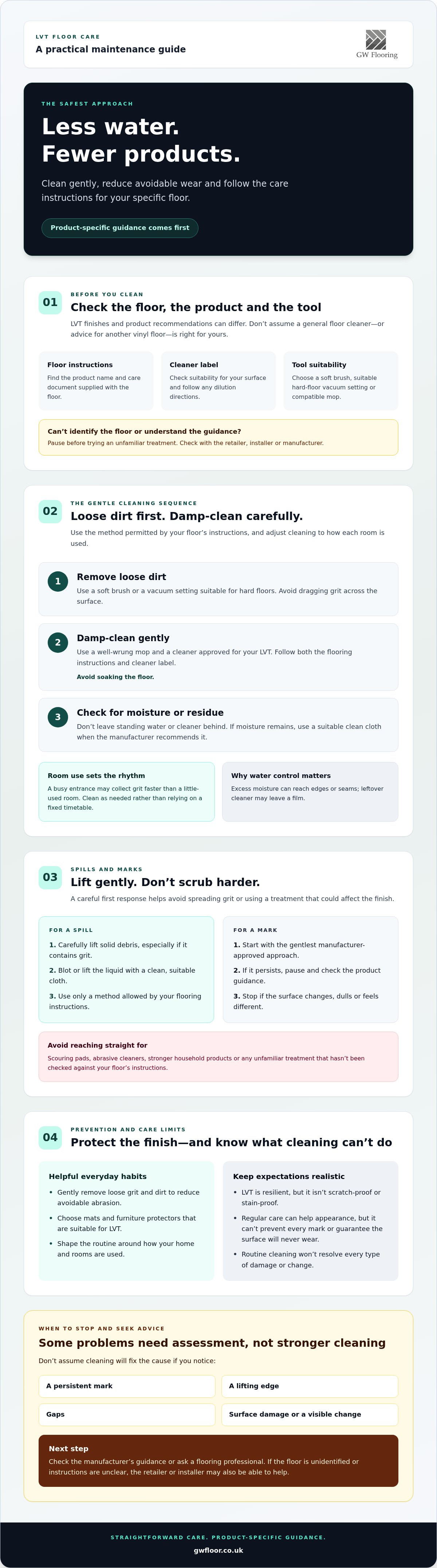
For routine LVT cleaning, remove loose dirt first, damp-clean gently with a compatible method, then remove excess moisture if the product instructions call for it.
A simple weekly LVT cleaning routine
Adjust your routine to how each room is used. A busy entrance may collect grit faster than a little-used room, so clean as needed rather than relying on a fixed timetable.
- Remove loose dirt. Use a soft brush or a vacuum setting suitable for hard floors. Check that the vacuum head won’t scratch the surface, and avoid dragging grit across the floor.
- Damp-clean gently. Use a well-wrung mop and a cleaner approved for your particular LVT, following the flooring instructions and the cleaner’s label. Avoid soaking the floor.
- Check for moisture or residue. Don’t leave standing water or cleaner behind. Dry the surface with a suitable clean cloth if the manufacturer recommends it or moisture remains.
Controlled water use matters. Excess moisture can reach edges or seams, while leftover cleaner may leave a film. For another manufacturer’s perspective on routine care and prevention, see the Mohawk Flooring care guide. Always follow the instructions for your own floor if the advice differs.
How to deal with spills and marks
Act promptly, but resist the urge to scrub. If a spill contains grit, carefully lift away the solid debris first so it isn’t rubbed over the finish. Blot or lift the remaining liquid with a clean, suitable cloth, using only a method permitted by your flooring instructions.
For a mark, start with the gentlest manufacturer-approved approach. Don’t reach straight for a scouring pad, abrasive cleaner or stronger household product. If the mark persists, pause and check the product guidance before trying anything else. Stop if the surface changes, becomes dull or feels different, or if the method isn’t working safely. A failed cleaning attempt can make the issue harder to assess.
This LVT flooring maintenance guide is a starting point, not a substitute for product-specific care instructions. If you’re choosing LVT or planning a new floor, explore LVT flooring options and installation with a local flooring business.
LVT cleaning methods: what to use and what to check
The right method depends on your exact floor and its surface finish. Use the table as a starting point, then check the manufacturer’s care instructions before cleaning. A tool or product suitable for one LVT floor may not be recommended for another.
| Method | Purpose | Key caution and what to check |
|---|---|---|
| Soft-brush vacuuming | Removes loose dust, hair and grit before they’re spread across the floor. | Use a hard-floor setting or suitable soft attachment. Check the vacuum head and brush won’t mark the surface, and follow any care guidance for your product. |
| Damp cleaning | Lifts everyday dirt after dry debris has been removed. | Use a well-wrung mop and limit moisture. Check the flooring instructions for approved methods, then follow the cleaner’s label, including dilution and rinsing directions. |
| Specialist floor products | May help with routine cleaning or a particular cleaning need, if approved for the floor. | Look for clear wording that the product is suitable for your specific LVT or surface. Check for residue and any precautions; a specialist label alone doesn’t mean the manufacturer approves it. |
Which cleaners and tools are appropriate for LVT?
Start with soft, non-abrasive tools, subject to your product’s instructions. Before using a cleaner, check its label for compatibility with your type of flooring and surface, along with dilution, application and removal directions. A general household cleaner isn’t automatically unsuitable, but use it only if its label and your flooring guidance support that use.
Pay particular attention to products that may leave a coating or residue, strong chemicals and abrasive pads. Cleaner build-up can affect how the floor looks or feels, while abrasive tools may mark it. If the instructions are unclear or conflict, don’t guess. Ask the manufacturer or retailer for product-specific advice.
Should you use steam, polish or household remedies on LVT?
There isn’t a universal yes-or-no answer for every LVT product. Heat from a steam cleaner, chemicals in a household remedy or a coating from polish may affect some floors or finishes. Check current manufacturer guidance for your exact product before using any of them. Don’t treat online advice as approval if it conflicts with those instructions.
This LVT flooring maintenance guide is most useful when paired with the care document for your own floor. If a method isn’t specifically supported, stick to the manufacturer’s recommended approach rather than testing it on the surface.
Build an LVT flooring maintenance routine for your home
A useful routine fits the way your household uses each room, rather than following a rigid timetable. Notice where grit gathers, where spills are more likely and which areas see the most foot traffic. Focus your checks and cleaning there, while following the care instructions for your specific floor.
Everyday habits that help protect an LVT floor
Small preventative steps can help reduce avoidable scuffs and dirt. Place a suitable mat near entrances to catch grit before it travels further into the home. Check that its backing is compatible with your flooring, as some materials may not be recommended by the manufacturer. Keep the mat clean too, so trapped grit isn’t carried back onto the surface.
- Check protective pads. Felt pads beneath furniture legs can help limit scuffs, but make sure they’re suitable for your floor. Replace them if they’re worn, dirty or no longer sitting securely.
- Move furniture carefully. Lift items where practical instead of dragging them across the floor. For heavier pieces, plan the move and use a method that won’t scrape or mark the surface.
- Keep an eye on entrances. Remove tracked-in grit before it’s walked through the house, especially after coming in from outside.
These habits support routine care, but the materials you use matter. If you’re comparing floor coverings for your home, our guide to home flooring options in Rayleigh can help you explore suitable choices.
Adjust care to the room and household
A busy entrance may collect more outdoor dirt, while a kitchen can need closer attention to splashes and dropped food. A quieter room may need less frequent cleaning. Use what you observe: check high-use areas when you notice grit or a spill, and avoid unnecessary cleaning elsewhere. This flexible approach keeps your routine practical without relying on fixed intervals.
If you notice lifting, gaps or a change in the floor’s appearance, don’t assume a different cleaning routine will solve it. The cause may not be clear from the symptom alone. Check your product guidance and seek informed advice before attempting a repair. For context on how fitting choices relate to the finished floor, read about professional LVT flooring installation in Essex.
A good LVT flooring maintenance guide should help you build habits that suit your home, not encourage unnecessary treatments. If you’re considering new LVT or installation, discuss your flooring options with GW Flooring, a family-run business based in Rayleigh, Essex. GW Flooring also offers a ‘showroom to you’ service, bringing samples to homes and businesses to help with selection.
When LVT flooring needs more than routine cleaning
Cleaning can remove everyday dirt, but it can’t restore every mark or change in appearance. If a stain remains after using the method approved for your floor, or an area looks different, pause before trying stronger products or scrubbing harder. More aggressive cleaning may affect the surface without resolving the underlying issue.
Signs that cleaning may not solve the problem
Persistent marks, visible wear or a change in the floor’s appearance are reasons to stop and check the product guidance. Note where the issue is and when you first noticed it. A clear photograph can also help you describe the concern when asking for advice.
Lifting edges, movement or gaps deserve particular care. These symptoms alone don’t reveal the cause, so don’t assume a cleaning product or quick DIY fix is the answer. Check the flooring documentation, including relevant care or installation information, and ask the manufacturer or a flooring professional if the concern persists. Don’t use unapproved treatments or attempt repairs based only on an online diagnosis.
Where to get advice about LVT in Essex
Start with the manufacturer’s current guidance for the exact floor, especially if you’re unsure whether a mark can be treated or a change needs further attention. If the issue remains unclear, a flooring professional can help you consider an appropriate next step without guessing at the cause.
GW Flooring is a family-run flooring business based in Rayleigh, Essex, with over 20 years of flooring experience supplying and installing LVT and other floor coverings. Its work also includes the preparation and fitting beneath the finished surface. For broader context on the work involved, read the professional floor installation guide.
This LVT flooring maintenance guide is intended to help you recognise when routine care has reached its limit, not to diagnose damage remotely. Keep the product details and any photographs to hand when seeking advice. If you’re planning a flooring project in Essex, speak with GW Flooring about LVT and discuss your options.
Keep your LVT looking its best with the right care
A simple routine can make LVT care manageable: remove loose dirt gently, clean with methods approved for your floor and avoid stronger treatments when marks persist. The right approach depends on your product, so use its manufacturer’s instructions as your guide.
This LVT flooring maintenance guide can help you care for your floor with more confidence and recognise when a concern needs advice beyond routine cleaning. Persistent marks, lifting or gaps are reasons to pause and seek guidance, not to scrub harder or guess at a repair.
If you’re planning a new floor or weighing up LVT for your home, speak with GW Flooring. We’re a family-run independent flooring business in Rayleigh, Essex, with over 20 years of flooring experience, supplying and professionally installing LVT.
Talk to GW Flooring about LVT for your home, and take the next step towards a floor that suits your space and style. With informed care and the right advice, you can feel more confident looking after your flooring.
Frequently Asked Questions
How often should you clean LVT flooring?
Clean LVT as often as your household and the floor’s use require. Remove loose grit and dust when you notice it, particularly near entrances, and clean spills promptly. A busy kitchen or hallway may need attention more often than a quieter room, so there’s no single schedule for every home. Follow the product’s care instructions and adjust your routine to what you see on the floor.
Can you use a steam mop on LVT flooring?
Don’t use a steam mop unless the manufacturer’s current instructions for your exact LVT product specifically permit it. Steam combines heat and moisture, which may affect some flooring products, finishes or adhesives. Check the care document before using one, rather than relying on general online advice or guidance for a different floor. If you can’t confirm that steam cleaning is suitable, choose a manufacturer-approved alternative.
What is the best cleaner for LVT flooring?
The best cleaner is one the flooring manufacturer approves for your specific LVT and surface finish. Check both the flooring care document and the cleaner’s label for compatibility, dilution and application instructions. Don’t assume that a product labelled “floor cleaner” is suitable for every vinyl floor. This LVT flooring maintenance guide recommends checking the exact product guidance first and asking the manufacturer or retailer if the instructions are unclear.
Can you use washing-up liquid to clean LVT flooring?
Only use washing-up liquid if the manufacturer’s instructions for your floor allow it. A small amount may suit some products, but household detergents can leave residue or may not be recommended for every finish. Don’t guess at the amount or mix it with other cleaners. Check the label and flooring guidance, and follow any dilution or removal directions. If guidance doesn’t confirm suitability, use an approved alternative.
How do you remove marks from LVT flooring?
Start with the gentlest cleaning method approved for your floor. Lift any loose dirt first, then follow the manufacturer’s instructions for treating the mark with a suitable cloth and cleaner. Avoid scrubbing hard or reaching for abrasive pads and stronger products, as these could affect the surface. If the mark remains, stop and seek product-specific advice. A persistent mark may need assessment rather than more intensive cleaning.
Does LVT flooring need special maintenance?
LVT doesn’t usually call for complicated upkeep, but its care should be specific to the product and finish. Routine cleaning, sensible prevention and prompt attention to spills are a practical foundation. Use the manufacturer’s guidance to choose suitable tools and products, and don’t assume that advice for another vinyl floor applies. A consistent, appropriate routine helps protect the appearance of a professionally fitted floor without promising to prevent all wear.
What should you avoid using on LVT flooring?
Avoid any cleaner, tool or treatment that the manufacturer says isn’t suitable for your floor. Take care with steam, abrasive pads, strong chemicals, polish and products that may leave a coating or residue, as these could affect some finishes. Don’t drag heavy furniture across the surface or scrub persistent marks more aggressively. If you’re unsure, check the product instructions or ask a flooring professional. In Essex, GW Flooring is based in Rayleigh.


