
Your stunning new Karndean or Amtico floor is only as good as the surface it sits on; skipping the groundwork is the fastest way to turn a luxury investment into a costly mistake. We understand that when you're planning a home renovation, the cost to level a concrete floor UK homeowners encounter can feel like a hidden hurdle that slows down your creative vision. It's common to feel anxious about which screed to choose or whether those small dips in your subfloor will eventually cause your LVT to click and fail.
We promise to demystify the process by providing clear, real-world insights into professional levelling and explaining why meticulous preparation is the most vital investment for your home. You'll gain a transparent look at 2026 pricing trends, the technical differences between various screed types, and the exact steps we take to ensure your new flooring remains perfectly flat and durable for decades to come.
Key Takeaways
- Gain a clear understanding of the cost to level a concrete floor UK homeowners can expect in 2026, focusing on how room size and surface irregularities influence your quote.
- Discover why precise subfloor preparation is the invisible work that protects luxury investments like Amtico and Karndean from premature wear and joint damage.
- Compare the performance benefits of modern liquid self-levelling compounds against traditional screeds to ensure a perfectly smooth substrate for your new flooring.
- Learn how to identify potential hidden costs, such as damp-proof membranes or asbestos testing, before they impact your renovation budget.
- Understand the value of a professional subfloor assessment to get an accurate, no-nonsense breakdown of the labour and materials required for your specific space.
Understanding the Cost to Level a Concrete Floor in 2026
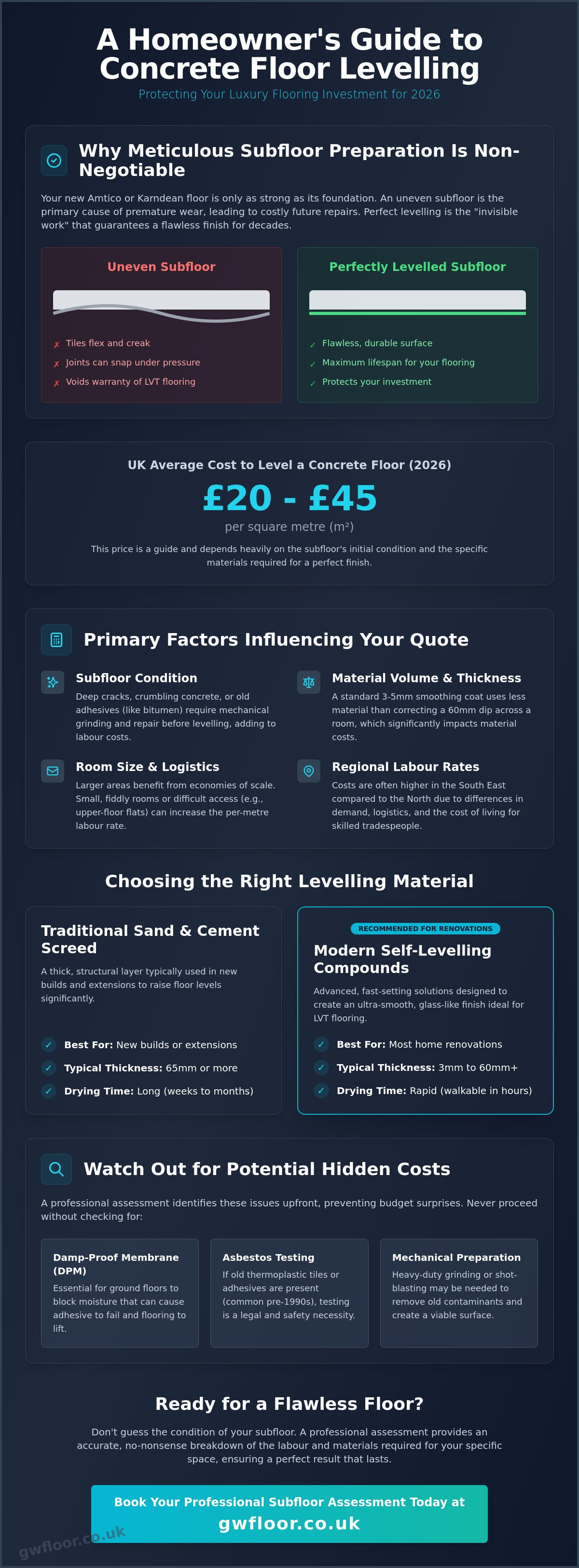
We believe that a beautiful floor is built from the bottom up. Floor levelling is the meticulous process of transforming a bumpy, pitted, or sloping subfloor into a perfectly flat and smooth substrate. We often refer to this as the "invisible work" of a flooring project. While the final Amtico or Karndean tiles receive all the compliments, it's the technical preparation underneath that determines if those tiles will still look flawless in fifteen years. The cost to level a concrete floor UK homeowners encounter in 2026 typically falls between £20 and £45 per square metre, though this depends entirely on the starting condition of your base.
In older Essex homes, particularly around Rayleigh and Southend, we frequently find that concrete floors have settled unevenly over the decades. Sometimes the original builders simply didn't prioritise a "floor-layer's finish" because they were installing thick carpets with heavy underlay that hid a multitude of sins. Today, with the popularity of thin, high-precision Luxury Vinyl Tiles (LVT), even a 3mm deviation can cause significant issues. If your subfloor isn't corrected, those expensive tiles will eventually flex, creak, and potentially snap at the joints.
The Difference Between Screeding and Levelling Compounds
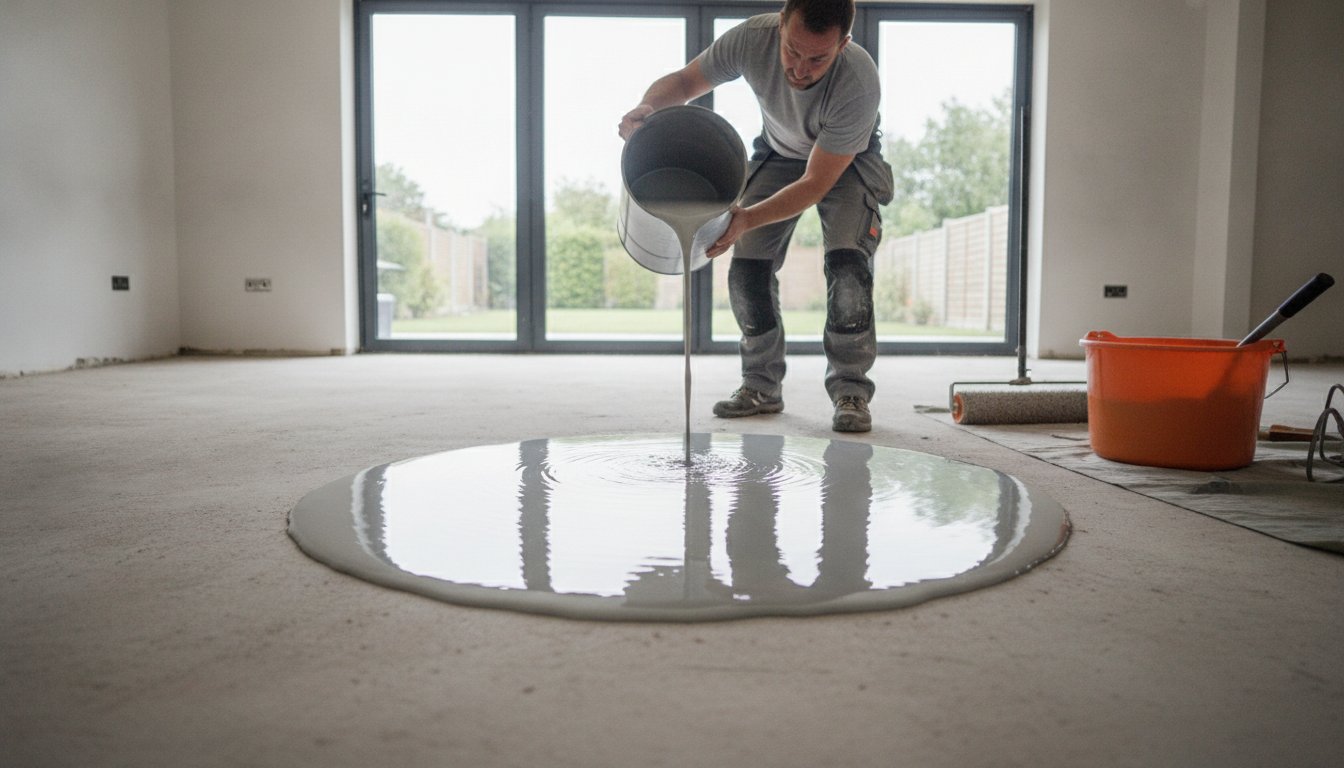
Traditional sand and cement screed is usually reserved for new builds or extensions where a deep layer, often 65mm or more, is required to meet a specific height. However, for most renovation projects, we utilise modern self-levelling concrete or latex-based compounds. These high-performance materials are designed to be thin yet incredibly strong, flowing into the lowest points of a room to create a surface that is often as smooth as glass. We select the specific material based on your needs:
- Deep-fill compounds: These are used when we need to correct significant "valleys" or height differences in a single application.
- Latex-based smoothing: This provides a flexible, ultra-smooth finish that is perfect for bonded floor coverings.
- Rapid-setting resins: These allow us to walk on the floor within a few hours, ensuring your home life isn't disrupted for days on end.
Why 2026 Prices Vary Across the UK
Regional labour rates play a significant role in your final quote. In the South East, costs are often higher than in the North due to increased demand and logistics. Material inflation has also impacted the price of polymer-modified resins in 2026, making the "supply and fit" package more variable than in previous years. This is why we always recommend a professional assessment over a blind online quote. A specialist can test for moisture, check the structural integrity of the existing concrete, and identify if you need a damp-proof membrane before any work begins. It's about securing a durable result that protects your investment for the long term.
Primary Factors That Influence Your Levelling Quote
Every home in Essex presents a unique set of challenges, and we've found that no two subfloors are ever quite the same. When we calculate the cost to level a concrete floor UK homeowners are quoted, we look at several variables that go beyond the simple dimensions of the room. While total surface area is a starting point, economies of scale actually work in your favour for larger spaces. Preparing a small 5m² utility room requires nearly as much setup and cleaning time as a 30m² lounge, which often makes the per-metre rate higher for smaller, fiddly areas. Logistics also play a part; moving half a tonne of compound into a ground-floor kitchen is a different task than navigating stairs in a luxury apartment block.
The condition of your existing slab is perhaps the most significant variable. We often encounter "legacy" issues like old bitumen adhesive from 1970s tiles, deep cracks, or crumbling surface laitance. These aren't just aesthetic problems. They require mechanical intervention, such as grinding or shot-blasting, to ensure the new levelling compound actually bonds to the base. If you're unsure about the state of your slab, we recommend booking a professional subfloor assessment to identify these factors before your project begins.
Material Volume and Thickness
There is a common misconception that "self-levelling" means the product does all the work. In reality, these compounds require expert "spiking" and guiding to reach the right corners. The depth of the "dip" in your floor dictates the material volume required. A standard 3mm to 5mm "smoothing" coat is a routine job, but we've seen Essex renovations where a 60mm drop across a single room required a massive increase in product. Because material is sold by weight, a floor that is ten times deeper will require ten times the compound, significantly shifting the final quote.
Preparation and Priming Costs
We never skip the priming stage because it's the only way to prevent "pinholing," which occurs when air bubbles escape the concrete and ruin the finish. High-quality, grit-based primers create a "key" for the compound to grip onto. We also prioritise moisture testing. If our hygrometer shows high damp levels, we must install a liquid damp-proof membrane (DPM). This is a critical step to ensure your floor complies with Building Regulations for flooring, particularly in extensions. While a DPM adds to the initial preparation cost, it's a non-negotiable investment that prevents your new LVT or carpet from lifting or smelling of damp in the future.
Labour Rates and Material Breakdown for 2026
The cost to level a concrete floor UK homeowners pay reflects the specialist nature of the equipment and the precision required for a flat finish. In the South East, specialist flooring contractors typically work on day rates that reflect their expertise and the specific tools required for a glass-like substrate. While you might find general builders offering a lower daily rate, we've found that a dedicated floor-layer's speed and accuracy often result in a more cost-effective project overall. Using rapid-set materials is a perfect example of this; although the compound itself carries a higher price tag, it allows us to complete the work in a single day and reduces the total labour hours you need to pay for.
We often talk to homeowners who consider the DIY route to save money. Buying bags of compound from a local merchant might seem economical, but it's easy to overlook the "hidden" expenses that professionals handle as part of a "supply and fit" package. These include the cost of high-bond primers, professional-grade mixing equipment, and the logistics of disposing of heavy waste. We also factor in floor protection for the rest of your home, ensuring that the process is as frictionless as possible from start to finish.
Standard Industry Cost Table (Estimated)
To help you plan your budget, we've broken down the typical material and labour requirements for different levelling methods based on 2026 industry benchmarks. Remember that these are national averages and can vary based on the specific challenges of your subfloor.
| Method | Material Cost Trend | Labour Requirement | Typical Drying Time |
|---|---|---|---|
| Sand and Cement | Low (Weight-heavy) | High (Manual) | 1 day per mm thickness |
| Liquid Flowing Screed | Medium | Medium (Pumped) | 24 to 48 hours |
| Latex Levelling Compound | Premium | Low (Rapid) | 4 to 6 hours |
Understanding how these elements work together is a key part of our Professional Floor Installation process. We ensure every penny spent on preparation adds real value to the longevity of your home.
The "Small Room" Premium
When homeowners ask about the cost to level a concrete floor UK specialists provide, they are sometimes surprised by the minimum charges for smaller areas. It might seem counterintuitive, but a small bathroom can often have a higher per-metre rate than a large open-plan lounge. This is because every professional job has a "minimum call-out" requirement that covers travel, equipment setup, and cleaning. To get the best value for your investment, we suggest looking at your home as a whole. You can often save money by bundling your subfloor levelling with other services, such as our Carpet Fitters Essex service, allowing us to prepare multiple rooms in a single visit.
The Risk of Skimping: Why Preparation is a Non-Negotiable Investment
We've often seen homeowners invest thousands in premium Karndean or Amtico tiles, only to have the finish ruined by a subfloor that wasn't properly prepared. It's tempting to look at the initial cost to level a concrete floor UK contractors quote and wonder if you can cut corners. However, skimping on the invisible work is the fastest way to double your long-term expenses. An uneven base doesn't just look poor; it creates structural stress on your new flooring. Without a flat substrate, the "click" joints of modern LVT will flex every time you walk across the room, eventually leading to snapping, gapping, and total floor failure.
The aesthetic impact is just as frustrating. High-end flooring is designed to be sleek and uniform. When natural light hits a floor that hasn't been levelled to a professional standard, every bump and dip becomes glaringly obvious. Shadows will dance across the surface, making even the most expensive luxury vinyl look like a DIY project gone wrong. Fixing a failed levelling job usually costs twice as much as doing it right the first time. This is because we must mechanically remove the old, crumbling compound before we can even begin the correct application.
LVT vs. Carpet: Different Standards of Level
Carpets are remarkably forgiving whilst Luxury Vinyl Tiles are "unforgivingly" precise. A thick underlay and plush pile can mask a multitude of sins in a concrete slab. In contrast, bonded floor coverings require an SR1 (Surface Regularity) standard. This means there should be no more than a 3mm deviation over a two-metre straight edge across the entire room. We take this standard seriously to ensure your home meets the manufacturer's warranty requirements. You can learn more about these technical requirements in our guide to LVT Flooring Installation Essex.
Common DIY Failures to Avoid
Some retail guides suggest that you can "just pour it on," but this underestimates the technical skill involved. We frequently fix DIY attempts where incorrect mixing ratios have led to "soft" or dusty screeds that won't bond to the adhesive. Another common mistake is failing to bridge expansion joints correctly or neglecting to use a spiked roller. Without "spiking" the wet compound, air stays trapped inside, creating tiny craters known as pinholes. These imperfections might seem small, but they will telegraph through your finished floor, leaving you with a textured surface where you wanted a smooth one. To avoid these costly mistakes, we suggest you book a professional subfloor assessment before you start your renovation.
Professional Subfloor Preparation with GW Flooring
Choosing a local specialist means you aren't just getting a tradesman; you're partnering with a team that has spent 20 years perfecting the art of subfloor preparation across Rayleigh and the wider Essex area. We've seen every type of challenging slab, from damp-prone coastal properties to uneven Victorian terraces. While general guides provide a baseline for the cost to level a concrete floor UK homeowners can expect, our local knowledge allows us to spot potential issues before they become expensive surprises. We take immense pride in our "Showroom to You" service, where we bring our expertise directly to your doorstep. During your design consultation, we don't just look at samples; we assess your subfloor to ensure your chosen luxury flooring has the perfect foundation.
We believe that meticulous preparation is the soul of a high-quality installation. This is why we integrate professional levelling into our Home Flooring Options Rayleigh packages. By handling both the groundwork and the final fitting, we maintain total control over the quality and durability of the finish. You won't have to worry about different contractors blaming one another if a problem arises; we take full responsibility for the entire process, from the first bag of compound to the final tile.
Our Meticulous Process
Our approach goes far beyond simply pouring liquid onto a floor. We start with digital moisture testing to ensure the concrete is dry enough for a bonded finish. If we detect damp, we apply a high-performance membrane to protect your investment. We only use premium, manufacturer-approved compounds from industry leaders like Amtico and Karndean. This ensures the chemical bond between the level and the adhesive is perfect. Every floor we lay is spike-rolled to remove air bubbles, resulting in a dense, glass-smooth surface that is ready for a flawless installation. As a family-run business, we care about the small details because we know they make the biggest difference to the final look of your home.
Book Your Free Home Assessment
Getting an accurate quote for your project shouldn't be a guessing game. We provide a low-friction way to understand the specific requirements of your space through our comprehensive home assessments. By seeing the floor in person, we can identify if you need minor smoothing or a deeper correction, giving you a transparent breakdown of the labour and materials involved. This eliminates the fear of hidden costs and gives you the confidence that your new floor will last for decades. Contact GW Flooring for a professional subfloor assessment today and take the first step toward a beautiful, perfectly level home.
Secure Your Flooring Investment with Professional Preparation
Your subfloor is more than just a base; it's the foundation of your home's aesthetic and long-term durability. We've explored how the cost to level a concrete floor UK homeowners budget for in 2026 is a vital investment that protects luxury surfaces from premature wear. By prioritising professional levelling over shortcuts, you avoid the common pitfalls of joint failure and uneven finishes that often plague DIY attempts. Meticulous preparation ensures your new floor remains flat, smooth, and structurally sound for decades.
With over 20 years of local Essex expertise, our family-run team specialises in the technical subfloor preparation required for premium Amtico and Karndean installations. We bring our meticulous attention to detail directly to your home, ensuring every project begins with a perfect substrate. Don't leave your renovation to chance or settle for an inaccurate estimate. Book your free "Showroom to You" home visit and subfloor assessment today to get a transparent, expert evaluation of your space. We're ready to help you realise a flawless vision for your home.
While perfecting your interior foundations, it is also worth considering the safety and aesthetics of your outdoor space. For homeowners managing larger property renovations, you can explore Tree Felling with professional arborists who bring the same level of precision and care to garden maintenance as we do to your new flooring.
Frequently Asked Questions
How long does it take for a levelled concrete floor to dry before I can lay flooring?
Modern rapid-set compounds allow foot traffic within 4 to 6 hours. However, you must wait for the moisture to fully evaporate before laying bonded flooring. This typically takes 24 to 48 hours depending on the depth of the compound and the ambient temperature of the room. We always use a hygrometer to verify moisture levels before installation because trapped moisture is the leading cause of adhesive failure in luxury vinyl projects.
Can I level a concrete floor myself to save on costs?
You can attempt to level a floor yourself, but the risk of failure is high for precise finishes like LVT. Professional equipment and experienced handling are required to prevent pinholes and uneven ridges. Fixing a poor DIY attempt often costs significantly more than hiring a specialist from the start because the old material must be mechanically removed before we can begin the application process again.
Is floor levelling always necessary for new LVT installation?
Yes, floor levelling is almost always required for a successful LVT installation. Luxury Vinyl Tiles are thin and rigid; they require an SR1 standard surface to perform as intended. Any minor bumps or dips in the concrete will eventually telegraph through the tiles or cause the click joints to snap. Meticulous preparation ensures your warranty remains valid and your floor stays flat for decades.
What is the average cost per square metre for floor screeding in Essex?
The cost to level a concrete floor UK homeowners experience in Essex varies based on the room's condition and the required thickness. Factors like moisture levels, existing residue, and the depth of the "dip" play a larger role in the final quote than the surface area alone. We recommend booking a professional assessment to get a precise, no-nonsense breakdown for your specific renovation project.
Do I need to remove my old floor before levelling the concrete underneath?
We always recommend removing old flooring and adhesive residue before levelling. Compounds need a clean, porous surface to bond correctly. Leaving old vinyl or bitumen in place can cause the new levelling layer to crack or delaminate over time. Our team handles the removal and disposal of old materials to ensure the new substrate is perfectly prepared for a long-lasting and beautiful finish.
Can you level a floor that has a large 50mm-60mm drop?
We can certainly level floors with significant drops, though this requires a deep-fill compound or a traditional screed. These scenarios use a higher volume of material and may require multiple applications to achieve a perfectly flat result. It is a technical process that ensures the structural integrity of your subfloor is maintained across the entire room without compromising the height of your doors.
What happens if you don’t level a concrete floor before laying vinyl?
Skipping the levelling stage leads to premature flooring failure. You will likely experience "clicking" sounds when walking, visible gaps between planks, and eventual breakage of the locking mechanisms. In high-light areas, the lack of a flat surface will reveal every imperfection in the concrete below, ruining the aesthetic of your investment. Professional preparation is the only way to ensure your floor looks flawless.
Will floor levelling hide cracks in my concrete subfloor?
Levelling compound will cover surface cracks, but we must first address the root cause of any structural movement. We use specific primers and reinforcing mesh to bridge minor cracks and prevent them from returning. If a crack is still active, the levelling layer may eventually mirror that damage, so a professional inspection is vital to determine if the slab requires deeper structural repair.


