
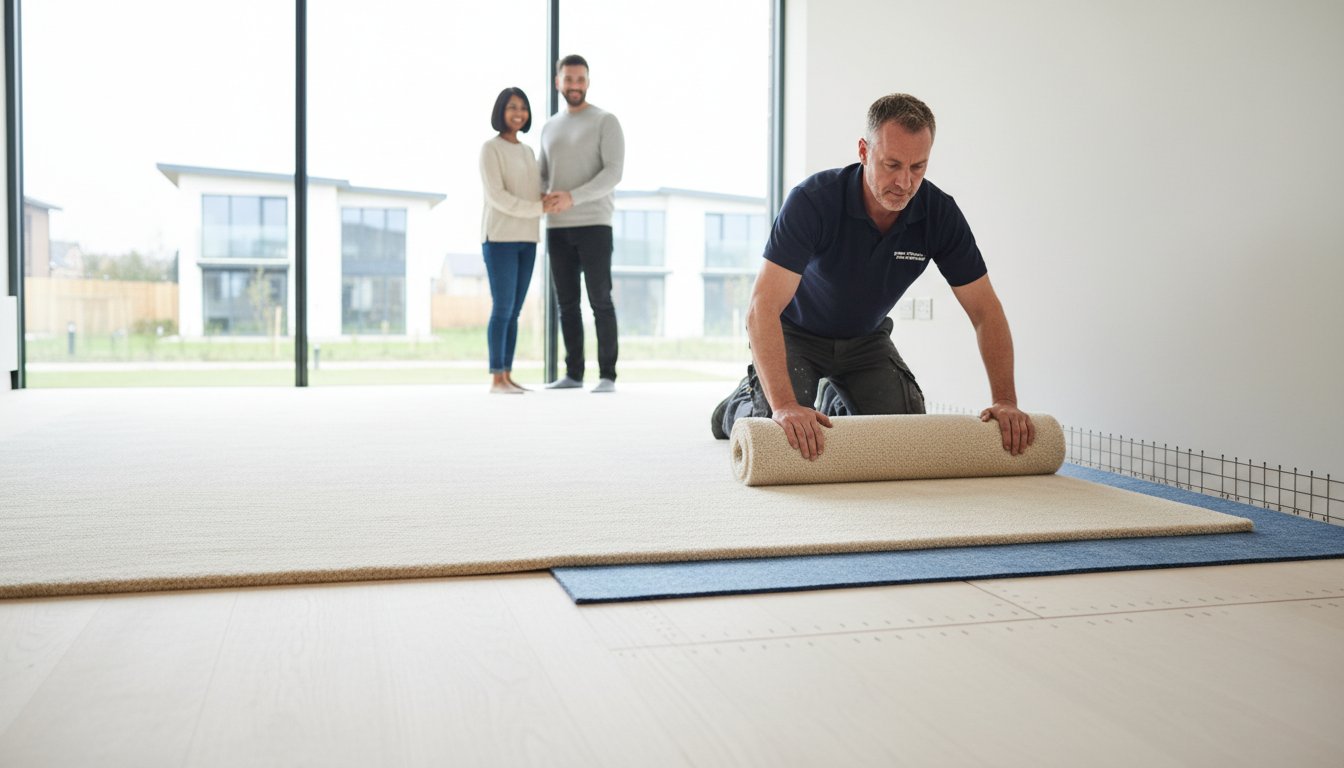
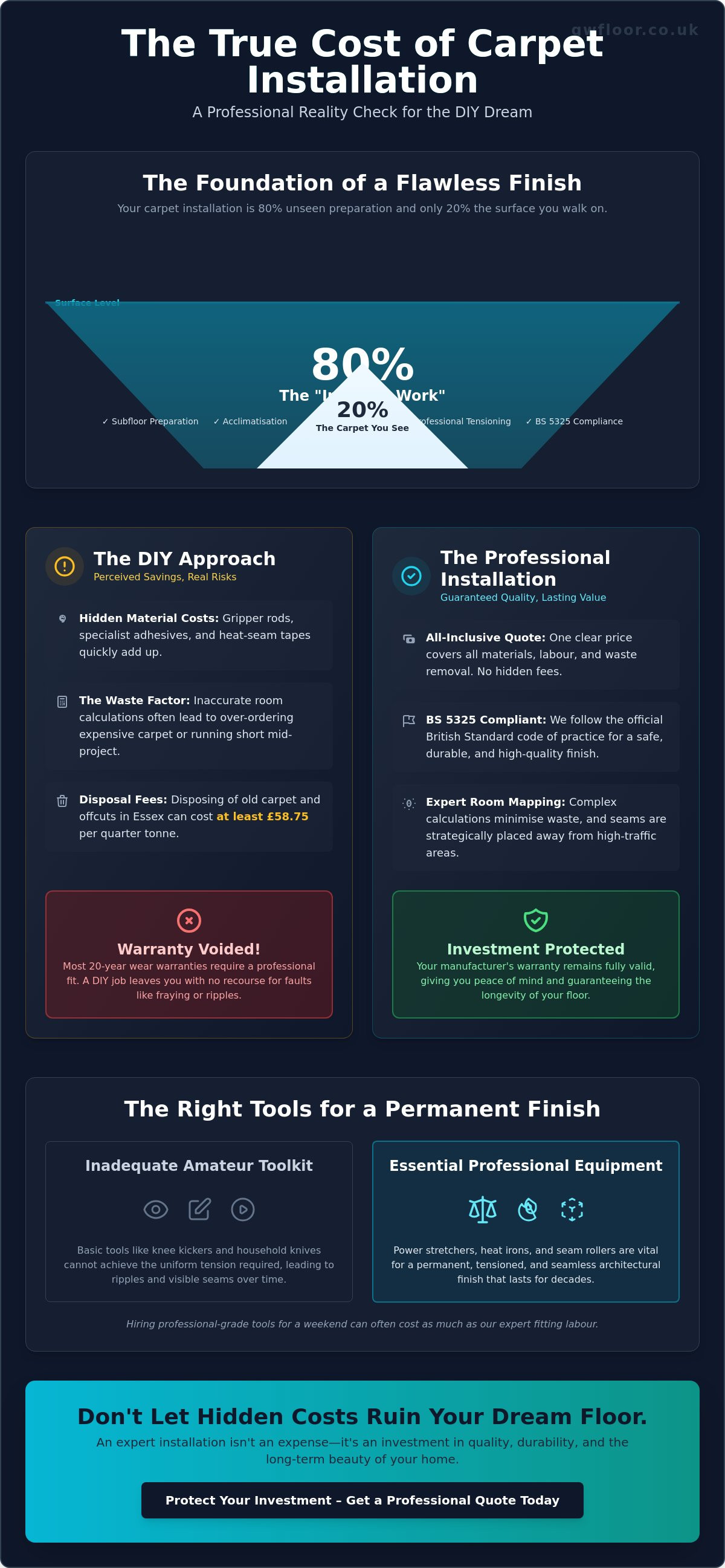
That plush, premium wool carpet you just selected for your Essex home is only as good as the subfloor it sits on. It's a bold claim, but your carpet installation is actually 20% the surface you see and 80% the preparation you don't. We understand that investing in new flooring often brings a mix of excitement and anxiety. You might worry about visible seams, unexpected costs, or technical jargon like "tog ratings" and "screeding" that makes the whole process feel unnecessarily complex.
We believe you deserve a finish that looks as good in ten years as it does on day one. In this guide, we'll debunk the most common myths surrounding professional fitting and reveal why foundational groundwork is the hallmark of a truly high-quality floor. You'll discover how to avoid common pitfalls and gain the confidence that your investment is protected by expert craftsmanship. We'll walk you through the essential steps to achieve a seamless, luxurious result without the stress of the unknown.
Key Takeaways
- Recognise that a flawless finish depends on a technical, multi-stage process rather than just unrolling fabric to avoid the "surface fallacy."
- Avoid the hidden financial traps of DIY by understanding how tool hire and poor room calculations can quickly exceed professional labour costs.
- Master the "invisible work" philosophy to ensure your subfloor is perfectly prepared for maximum durability and comfort.
- Streamline your carpet installation day with a clear roadmap of our professional process, from our arrival to the final walkthrough.
- Benefit from local Essex expertise that understands the unique structural requirements and style preferences of Rayleigh’s diverse property types.
Myth vs. Reality: What Professional Carpet Installation Actually Entails
Many homeowners believe that a new floor is simply a product you buy and drop onto the floorboards. In reality, a professional carpet installation is a technical, multi-stage engineering project. We don't just unroll fabric; we follow the British Standard BS 5325, which is the code of practice for the installation of textile floor coverings. This standard ensures that every layer, from the subfloor to the final trim, meets specific safety and durability requirements. Without adhering to these guidelines, even the most expensive carpet can fail within months.
We often encounter the "Surface Fallacy" in homes across Essex. This occurs when a client invests in a premium, high-tog wool carpet but tries to save money on the fitting. A beautiful carpet looks poorly when fitted by an amateur. You might see ripples, loose edges, or visible seams that ruin the aesthetic of the room. The secret to a floor that stays flat and luxurious for decades is the "Invisible Work." This involves the meticulous preparation and tensioning that you never see once the furniture is back in place, but it remains the hallmark of a seasoned craftsman.
The Difference Between 'Laying' and 'Installing'
'Laying' a carpet is a temporary measure. It's the kind of work often seen in DIY projects where the carpet is simply cut to size and tucked into the corners. In contrast, 'installing' is a permanent, tensioned architectural finish. While an amateur might rely solely on a knee kicker to nudge the carpet into place, we use power stretchers to apply uniform tension across the entire room. This prevents the carpet from "bagging" or developing unsightly waves over time. Looking back at the history of fitted carpets, the transition to these technical, tackless methods was what allowed carpets to become the durable, wall-to-wall luxury we enjoy today.
Why the First Hour of Installation Dictates the Next Decade
The longevity of your floor is often decided before the first gripper is even nailed down. We prioritise acclimatisation, ensuring your carpet sits in the room environment to adjust to the local humidity and temperature. If we install a carpet that is still cold from the delivery van, it will expand as it warms up, leading to immediate buckling.
Precision is our priority during the initial room planning phase. We map out the space to ensure seams are never placed in high-traffic "walk lines" where they would naturally wear down faster. We also know that there is no room for error with the "first cut." A single millimetre of over-cutting can ruin a roll of luxury material. By focusing on these technical details in the first hour, we guarantee a carpet installation that remains taut and beautiful for years to come.
Debunking the DIY Dream: Why 'Doing it Yourself' Often Costs More
At first glance, handling your own carpet installation seems like a savvy way to stretch your renovation budget. The reality is that the "DIY dream" often dissolves the moment you account for specialised materials and the high price of avoidable errors. Beyond the carpet itself, you must factor in the cost of high-quality gripper rods, heat-seam tapes, and specialist adhesives. These small components add up quickly. When you also consider the carpet waste disposal fee, which can be at least £58.75 for a quarter tonne in Essex, the perceived savings begin to vanish before you've even laid a single metre of underlay.
The "Waste Factor" is where most amateur projects become expensive. Professional fitters use complex room mapping to minimise offcuts, but an amateur mistake in room calculation often leads to over-ordering expensive material or, worse, running short. Most premium manufacturers also include a "professional fit" clause in their fine print. This means your 20-year wear warranty could be voided the moment you attempt the fit yourself. If a DIY job ripples or frays after six months, you have no recourse with the manufacturer, leaving you with a botched floor and a depleted bank account.
The Tool Hire Trap
A standard household toolbox is entirely inadequate for a lasting finish. To meet the Carpet and Rug Institute installation standards, you need a suite of professional equipment. This includes power stretchers to prevent bagging, industrial heat irons for invisible seams, and weighted seam rollers to ensure a permanent bond. Hiring these tools for a weekend in Rayleigh or Chelmsford can often cost as much as the professional labour fee itself. "Making do" with a basic utility knife and a knee kicker usually results in loose, wavy carpets that will need re-stretching within a year.
The True Price of a Seam Error
Precision is the difference between a seamless transition and a visible trip hazard. A 1cm mistake whilst trimming around a door frame can ruin an entire five-metre roll of luxury carpet, forcing you to buy a replacement piece at full price. This risk is doubled when dealing with traditional patterns or striped designs that require perfect alignment across every join. A professional's insurance covers mistakes that a DIYer must pay for twice. If you want to ensure your investment is protected from the start, it is always wiser to arrange a professional assessment rather than risking a Sunday evening filled with regret and a ruined floor.
The Subfloor Mystery: Why Preparation is the Foundation of Beauty
Our philosophy at GW Flooring is simple: your new floor is only as good as what lies beneath it. While many retailers focus exclusively on the colour and texture of the fabric, the technical reality of a long-lasting carpet installation is decided during the preparation phase. This "invisible work" is the most frequently ignored part of the process, yet it dictates whether your carpet will stay plush or succumb to premature wear. To protect your investment, every professional floor installation we undertake begins with a comprehensive technical assessment to identify hidden issues before they reach the surface.
Moisture and unevenness are the two primary enemies of a perfect finish. If a concrete subfloor has high humidity levels, it can lead to mould growth and unpleasant odours that trapped fibres will hold for years. We use specialised hygrometers to ensure moisture readings are below the industry-standard 75% relative humidity before proceeding. Grounding our methods in research on carpet selection and maintenance confirms that foundational integrity is the greatest driver of a floor's lifespan. Without this initial discipline, even the most expensive premium wool blend will eventually ripple and fail.
Screeding and Plyboarding Explained
We use liquid screed to level concrete bases that have dips or cracks, creating a glass-smooth surface that prevents the carpet from stretching unevenly. For timber bases in older Essex homes, we often install a layer of flooring-grade plywood. This prevents "ridging," a common problem where the gaps between old floorboards become visible through the carpet pile over time. These meticulous preparation steps are essential for both LVT flooring installation essex and high-end carpet projects alike, ensuring a level of precision that DIY attempts simply cannot replicate.
Underlay: The Unsung Hero of Comfort
Reusing old underlay is a common mistake that we strongly advise against. Even if it looks acceptable, old underlay has already lost its structural integrity and "memory." Think of new underlay as a high-performance shock absorber; it protects the carpet fibres from being crushed against the hard subfloor, which can effectively double the life of your floor. We'll help you navigate the technical side of selection, balancing high tog ratings for thermal warmth in draughty Victorian homes with high-density materials for stairs and hallways that face heavy daily footfall.
The Professional Fitting Journey: What to Expect on the Day
Our arrival marks the transition from planning to execution. A typical carpet installation morning begins with a final walkthrough to confirm the layout and address any last-minute details. We understand that "Room Clearance" is a major source of anxiety for many Rayleigh families. Whilst we ask that small breakables and electronics are moved beforehand, we coordinate the movement of larger furniture items to ensure the workspace is safe and efficient. This collaborative approach removes the heavy lifting from your shoulders and lets us focus on the technical task at hand.
Once the subfloor is prepared, the stretching phase begins. This is often the loudest part of the day, but it is also the most vital for the longevity of your floor. We use power stretchers to pull the carpet to its architectural limit, ensuring it grips the perimeter rods with enough tension to prevent ripples for the next twenty years. The process concludes with a meticulous "tuck and trim" around every skirting board and radiator pipe. This creates the crisp, professional border that defines a luxury finish and distinguishes our work from a standard DIY attempt.
Door Trimming and Finishing Touches
A common surprise for homeowners is discovering that their new, plush carpet and high-density underlay have added significant height to the floor. This often means your internal doors will no longer clear the surface or close properly. We provide a professional door-shaving service to ensure a perfect clearance without damaging the timber. We also guide you through selecting the right threshold bars to transition between rooms. These small metal or wood details provide the final aesthetic bridge between your new carpet and existing flooring like LVT or vinyl.
The Seaming Process: Making Joins Vanish
Joining two pieces of carpet is a delicate art that requires industrial heat-seam tape and specialised irons. We fuse the backing together to create a bond that is often stronger than the carpet itself. Pile direction is critical during this stage; if the grains do not match perfectly, the join will catch the light and remain visible forever. We also take specific care to avoid pile crushing, which is the permanent flattening of fibres caused by improper tool pressure or heavy footfall during the fitting process. If you are ready to transform your living space with a flawless, expert finish, book your professional installation assessment today.
Why Local Expertise Matters for Carpet Installation in Essex
Choosing a team for your carpet installation isn't just about finding the lowest price; it's about finding a partner who understands the architectural DNA of Rayleigh and the wider Essex area. National retailers often rely on subcontracted labour that lacks a personal connection to the community. We take a different approach. As a family-run business with 20 years of experience in Rayleigh, our reputation is built on accountability and the long-term satisfaction of our neighbours. We treat every home with the meticulous care of a craftsman because we know that word-of-mouth in Essex is the ultimate guarantee of quality.
Local knowledge is particularly vital when navigating the diverse housing stock found across our county. Victorian properties in Leigh-on-Sea often have draughty, uneven floorboards that require specific underlay densities to prevent "ridging," whilst new builds in Wickford might deal with residual moisture in concrete slabs that requires expert testing. We've encountered these scenarios hundreds of times. We know exactly which technical techniques will ensure your floor remains stable and beautiful regardless of your property's age or quirks. For business owners, the stakes are even higher. Reputation is everything for commercial safety flooring contractors Essex, where we apply the same disciplined focus on foundational groundwork to high-traffic professional spaces.
The Rayleigh 'Showroom to You' Advantage
Selecting a carpet under the harsh fluorescent lights of a massive warehouse is a recipe for disappointment. Colours shift dramatically depending on the light source. Our "Showroom to You" service allows you to see premium samples in the natural light of your own living room, ensuring the texture and tone perfectly complement your existing decor. This approach offers several benefits for busy Rayleigh families:
- Accurate Colour Matching: View samples against your own furniture and wall colours at different times of the day.
- Efficiency: We handle measurements, technical subfloor assessments, and quotes in a single, frictionless visit.
- Personalised Advice: Receive direct recommendations from the experts who will actually be performing the work.
20 Years of Essex Craftsmanship
Experience is the difference between a floor that looks good today and one that lasts for decades. Over the last two decades, we've built relationships with families who return to us every time they move or renovate. This tenure means we understand the common quirks of local property developments and can anticipate technical challenges before they become expensive problems. We don't just perform a manual task; we act as creative partners to help you realise a specific vision for your home. By supporting a local Rayleigh business, you're investing in a team that values your property's long-term beauty as much as you do.
Ready to Secure a Flawless Finish for Your Home?
Achieving a luxurious and long-lasting floor requires more than just picking the right colour. We've seen how the "invisible work" of technical subfloor preparation and proper tensioning makes the difference between a carpet that ripples and one that stays plush for decades. By avoiding the false economy of DIY and trusting in professional standards, you protect your investment and ensure your home remains a sanctuary of comfort. Our family-run team brings over 20 years of local Essex expertise to every project, ensuring that your carpet installation is handled with the meticulous care of a master craftsman.
We believe that foundational groundwork is the requirement for a high-quality finished product. That's why we include comprehensive subfloor preparation as a standard part of our service, giving you total peace of mind. If you're ready to see how our premium samples look in your own living space, book your free 'Showroom to You' home visit in Essex today. We look forward to helping you realise your vision and creating a beautiful, durable floor that your family will enjoy for years to come.
Frequently Asked Questions
Can I save money by fitting the carpet myself?
You are unlikely to save money by attempting a DIY fit once you account for the hidden costs of tool hire and material waste. Professional equipment like power stretchers and heat irons are expensive to rent for a weekend; often costing as much as the labour fee itself. Amateurs also risk voiding manufacturer warranties and making costly cutting errors that require buying replacement rolls at full price.
Is it really necessary to replace the underlay every time?
Yes, replacing the underlay is essential because it loses its structural "memory" and shock-absorbing properties over time. Reusing old underlay will cause your new carpet to wear out twice as fast as the fibres are crushed against the hard subfloor. New underlay also provides vital thermal insulation and acoustic performance, making it a small investment that significantly extends the life of your floor.
How long does a professional carpet installation take?
A standard carpet installation for a single room typically takes between two and three hours, including basic subfloor checks. For a full three-bedroom house in Essex, we usually complete the project within one working day. The total duration depends heavily on the amount of furniture movement required and whether we need to apply liquid screed or plyboarding to level the subfloor before fitting.
What should I do about my furniture before the fitters arrive?
We ask that you move all small, breakable items, electronics, and books to a safe area outside the workspace. Whilst we are happy to coordinate the movement of larger items like sofas and wardrobes on the day, clearing the floor as much as possible helps us focus on the technical fitting. This collaborative approach ensures the day remains frictionless and allows us to maintain a safe environment for everyone.
Will the fitters trim my doors if the new carpet is too thick?
Yes, we provide a professional door-trimming service to ensure your internal doors clear the new, plush surface. Thick carpets and high-density underlay often add significant height to a room, which can prevent doors from closing properly. We use specialised circular saws to shave the bottom of the door with millimetre precision, ensuring a perfect clearance without damaging the timber or the new fabric.
What is subfloor preparation and do I really need it?
Subfloor preparation is the process of levelling and cleaning the base floor to ensure it is perfectly flat and dry. This "invisible work" is vital because any bumps or moisture in a concrete or timber base will eventually cause the carpet to ripple or rot. Whether it involves liquid screeding or installing flooring-grade plywood, this step is the only way to guarantee a luxurious finish that lasts for decades.
How do I get rid of the 'new carpet' smell after installation?
Ventilation is the most effective way to dissipate the harmless "new carpet" scent, which is simply the smell of fresh materials and adhesives. We recommend opening your windows for 48 to 72 hours following the carpet installation to allow fresh air to circulate throughout the room. Vacuuming the floor a few times in the first week also helps to remove any loose fibres and encourages the carpet to settle into its new environment.
Can you fit a carpet over existing laminate or vinyl flooring?
No, we always recommend removing existing hard flooring before we begin. Fitting over laminate or vinyl prevents us from performing a technical subfloor assessment to check for moisture or structural damage. It also creates an unstable foundation that can lead to excessive movement and premature wear. Removing the old floor ensures the new grippers can be securely fixed to the subfloor for a taut, permanent finish.


