

What if the most expensive mistake you make with your new flooring has nothing to do with the colour or brand you choose? We understand that selecting the perfect finish for your Essex home is a significant investment, yet many homeowners find themselves caught in a confusing debate over installation methods. You want a floor that looks stunning, but you're likely worried about that annoying "hollow" sound or tiles lifting in the heat of a conservatory. It's a common concern that we hear every week, and getting the foundation right is the only way to ensure your peace of mind.
In this 2026 guide, we'll help you settle the debate of whether is it better to glue down or float LVT for your specific space. We believe that a truly luxury floor is built from the ground up, so we'll explain the technical differences between these two popular systems. You'll discover how professional subfloor preparation eliminates the risk of a "bouncy" feel and why certain rooms demand a permanent bond. We'll also provide a clear breakdown of the durability factors involved, giving you the expert insight needed to achieve a flawless, long-lasting result in any room of your home.
Key Takeaways
- Understand the fundamental mechanical differences between dry-back adhesive systems and click-lock floating planks to choose the right fit for your home.
- Discover whether is it better to glue down or float LVT by evaluating your room’s specific temperature fluctuations and subfloor stability.
- Learn why glue-down LVT remains the premium choice for intricate patterns like herringbone whilst providing a more solid, permanent feel underfoot.
- Identify the specific scenarios where floating click systems offer a faster installation process or a versatile solution for over-boarding existing floors.
- Recognise the vital role of "invisible work" and professional subfloor preparation in achieving a flawless, glass-like finish that lasts for decades.
Understanding the Basics: What is Glue-Down vs. Floating LVT?
Choosing the right installation method is the foundation of a successful renovation. We see many clients in Rayleigh who focus purely on the aesthetic, but the technical delivery is what ensures that beauty lasts. Essentially, you are choosing between two distinct engineering approaches. Glue-down LVT, often called "dry back" in the trade, involves bonding individual tiles directly to a prepared subfloor using specialist adhesives. Conversely, floating LVT uses a click-lock mechanism where the planks connect to each other rather than being fixed to the ground beneath them.
The decision on whether is it better to glue down or float LVT usually hinges on your property's specific conditions. Factors like underfloor heating, the presence of large south-facing windows, and even the age of your subfloor will dictate which system performs best over time. We've found that whilst both options look identical once installed, they behave very differently under the pressures of daily life.
The Anatomy of a Glue-Down Tile
A glue-down tile is typically thinner than its floating counterpart, often ranging between 2mm and 3mm in thickness. Despite this slim profile, it possesses a high density that offers incredible stability. Because these tiles are bonded directly to the substrate, there is no room for movement or "bounce". This makes it the preferred choice for premium installations using brands like Amtico or Karndean.
However, this thinness means the tile is susceptible to "telegraphing". If the subfloor isn't perfectly smooth, every tiny lump or grain of grit will eventually show through the surface. This is why we place such a high value on the invisible work: meticulous screeding and plyboarding. Understanding the composition of Luxury Vinyl Tile (LVT) helps clarify why a stable, flat foundation is non-negotiable for this method.
How Floating Click Systems Work
Floating systems are engineered with a multi-layered approach, often featuring a rigid core such as Stone Plastic Composite (SPC). These planks are thicker, usually between 5mm and 7mm, because they must house the intricate locking joints that hold the floor together. They sit on top of an underlay, which can provide extra acoustic insulation and a slightly softer feel underfoot.
One major advantage is how the floor handles environmental changes. The locking mechanism allows the entire floor to expand and contract as a single unit, which is helpful in rooms with minor temperature shifts. Whilst it's a versatile option, the added thickness means you'll need to consider door clearances and transitions to other floor types more carefully than with a dry-back system. Deciding whether is it better to glue down or float LVT for your home often comes down to these subtle profile differences and how they align with your existing skirting boards and door frames.
The Case for Glue-Down LVT: Why Professionals Prefer It
Professionals often view glue-down LVT as the "forever" choice for a reason. When you're weighing up whether is it better to glue down or float LVT, the decision usually comes down to the intended use of the room and the level of permanence you require. A bonded floor provides a level of structural integrity that a floating system simply cannot replicate. Because the tiles are fixed with specialist adhesive, they won't shift, gap, or "bounce" under heavy footfall. This stability is essential for the sprawling, open-plan kitchens common in modern Essex homes, where heavy kitchen islands and constant activity demand a surface that stays perfectly in place.
Beyond sheer durability, the design possibilities are virtually endless. Glue-down tiles allow us to create intricate herringbone patterns, bespoke borders, and elegant feature strips that define different zones in your home. This level of customisation turns a simple floor into a design statement, helping you realise a specific vision for your living space. It's also the superior choice for high-traffic areas where longevity is the primary goal, as the tiles become a literal part of the building's foundation.
We also consider the practicalities of a busy household. If a tile is accidentally gouged or stained, it can be replaced individually without disturbing the rest of the floor. This frictionless repair process saves time and money compared to floating systems, which often require lifting large sections of the floor to reach a single damaged plank. Our team takes genuine pride in the meticulous groundwork required for this finish, ensuring your investment is protected for decades.
Acoustics and the "Solid" Feel
One of the most immediate benefits of a bonded installation is the sound profile. Glue-down LVT eliminates the hollow "click-clack" noise often found with thinner floating floors or laminates. In technical terms, acoustic dampening in bonded vinyl refers to the reduction of impact sound through the direct absorption of vibrations by the adhesive layer and substrate. It creates a premium, quiet environment that feels substantial and high-end underfoot.
Thermal Stability in Sun-Drenched Rooms
Rayleigh homeowners with south-facing extensions or conservatories face a unique challenge: intense solar gain. Significant heat can cause vinyl to expand, which occasionally leads to buckling or "peaking" at the joints in floating floors. Glue-down LVT is the safest bet for these environments. By using high-temperature adhesives, the floor remains locked in place even during the peak of summer. It's also the most efficient partner for modern underfloor heating, as the direct bond allows for better heat transfer than an air-gapped system. If you're unsure which method suits your specific room, we can bring our showroom-to-you service to your door to help you compare the technical differences in person.
When to Choose Floating Click LVT: Speed and Versatility
Whilst we often champion the permanent feel of a bonded floor, floating click LVT offers undeniable advantages for specific projects. If you're wondering whether is it better to glue down or float LVT for a guest room refresh or a temporary update, the click-lock system is usually the winner. The lack of specialist adhesive means we can install the planks and you can move your furniture back in almost immediately. This frictionless process is a huge benefit for busy households where closing off a room for a full day of curing isn't an option.
Another significant plus is the ability to over-board existing hard floors. If your current ceramic tiles are level and stable, a floating floor can often sit directly on top. This approach saves you the disruption and mess of uplifting old materials, making it a very versatile solution for Rayleigh homeowners looking for a high-impact transformation without a major demolition phase. It is also an ideal choice for rooms where you might want to revert to the original subfloor in the future, such as in certain rental properties or historical builds.
The Rigid Core Advantage
Modern floating systems typically utilise SPC (Stone Plastic Composite) or WPC (Wood Plastic Composite) technology. SPC is particularly popular in 2026 due to its incredible density. This rigid core acts as a bridge over minor subfloor imperfections, preventing the "telegraphing" of old grout lines or tiny substrate dips that would ruin a thinner glue-down tile. For Essex homes with slightly uneven concrete bases or moisture-prone utility rooms, these rigid planks provide a stable, waterproof surface that stays flat and looks professional.
The Limitations of the Floating Method
However, click-lock flooring isn't a magic fix for every scenario. A common frustration for homeowners is the "hollow" sound when walking across the room. To combat this, your choice of underlay is critical; a poor-quality barrier will make the floor feel like it's hovering rather than being part of the home. We also have to consider the physical limits of the locking mechanism. In very large open-plan spaces, the floor needs room to move. Without carefully placed expansion gaps, the click joints can fail under the pressure of natural movement.
Maintenance also requires a different perspective. Unlike glue-down tiles, replacing a single damaged plank in the middle of a room is a complex task. It usually requires dismantling the floor from the nearest wall back to the affected area. When deciding whether is it better to glue down or float LVT, we always advise looking at the long-term usage of the space. Speed is excellent, but it shouldn't come at the cost of the structural permanence you might need in a high-traffic hallway.
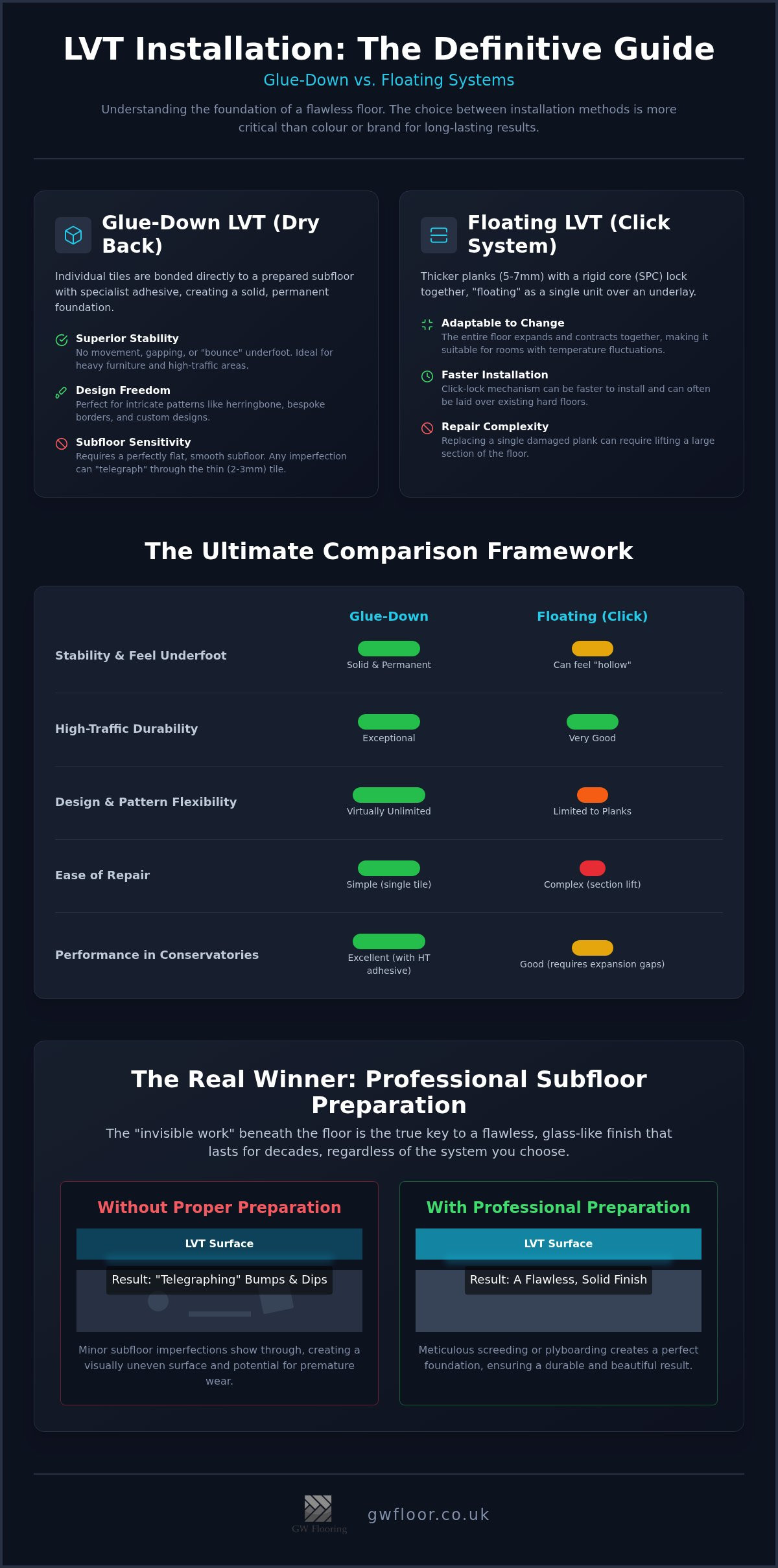
Glue-Down vs Floating: The Ultimate Comparison Framework
When deciding whether is it better to glue down or float LVT, it's vital to look past the initial shelf price. Floating click systems often appear more cost-effective because they require less intensive subfloor preparation and can be fitted quickly. However, glue-down LVT represents a superior long-term investment for Rayleigh homeowners. It's built to endure decades of heavy furniture, frantic pets, and the rigours of family life without the risk of joints failing or the floor shifting. The "forever" nature of a bonded floor means you won't be paying for a full replacement in ten years' time.
The "feel" underfoot is another defining factor. Glue-down LVT feels remarkably solid, mimicking the density of real stone or hardwood because it is physically part of the building. In contrast, floating floors can sometimes feel slightly cushioned or "bouncy" depending on the underlay used. For households with heavy items like pianos or large kitchen islands, the stability of a bonded floor is non-negotiable; it won't pinch or buckle under the weight. Whilst click systems are marketed as DIY-friendly, achieving a professional finish with glue-down tiles is a complex task that requires a seasoned craftsman to handle the specialist adhesives and intricate cutting.
Underfloor Heating and Thermal Expansion
For Essex homeowners installing modern underfloor heating, glue-down LVT is the clear winner for efficiency. Because the tile is bonded directly to the screed, there is no air gap to act as an insulator. This results in faster heat-up times and lower energy consumption. Thermal stability is also crucial near bi-fold doors or large windows. Floating floors require generous expansion gaps to prevent peaking when the sun hits the vinyl. With a bonded system, the high-temperature adhesive holds the tiles firmly in place, even when the temperature fluctuates significantly.
Sound Transmission and Comfort
Achieving a quiet home environment, especially in first-floor bedrooms or flats, depends heavily on your installation method. Floating systems rely on the dBA (decibel) rating of the underlay to dampen sound, but they can still produce a slight "drum" effect when walked upon. Glue-down LVT is naturally quieter because it doesn't vibrate against an underlay. To ensure your floor doesn't just look beautiful but performs acoustically, we recommend reading our guide to professional floor installation. If you want to experience the physical difference between these two systems, book our showroom-to-you service today and we'll bring the samples directly to your Rayleigh home.
The GW Flooring Philosophy: Why Subfloor Prep is the Real Winner
We believe that the surface you see is only as good as the work you don't. Whilst we've compared the two systems in detail, the ultimate answer to whether is it better to glue down or float LVT often lies hidden beneath your feet. At GW Flooring, we call this the "Invisible Work". It's the meticulous foundational preparation that distinguishes a luxury finish from a DIY job that might fail within months. Our 20 years of experience in Rayleigh has taught us that skipping the groundwork is never a shortcut; it's a liability.
Whether you choose a bonded tile or a click-lock plank, the substrate must be irreproachable. For glue-down LVT, we insist on a glass-like finish that can only be achieved through professional screeding on concrete or high-grade plyboarding on timber. Without this, the thin profile of a dry-back tile will highlight every minor undulation in the floor. By prioritising the foundation, we ensure that your investment looks as stunning in ten years as it does on the day of installation.
Screeding vs Plyboarding: Which Do You Need?
Rayleigh’s varied architecture requires a bespoke approach to preparation. In older Victorian terraces with timber joists, we use specialist plyboarding to create a rigid, flat surface that prevents movement and the dreaded "popping" of joints. Conversely, modern new builds often have concrete bases that require a self-levelling compound or screed. We never begin an installation without a damp-proof membrane (DPM) check on concrete subfloors, as moisture is the silent enemy of LVT adhesives. We define the perfect subfloor as one that is flat, dry, and structurally sound.
The Showroom-to-You Advantage
Choosing your floor in a brightly lit shop can be misleading. Our showroom-to-you service allows you to see how different LVT samples look in the natural light of your own Rayleigh home. This is also when our experts perform a physical assessment of your subfloor, identifying potential challenges before they become costly problems. Understanding how we manage the groundwork is a vital part of our process. You can learn more about our LVT flooring installation in Rayleigh to see how we transform a basic substrate into a masterpiece. When you're ready to decide if is it better to glue down or float LVT for your specific space, we're here to provide the technical expertise and creative partnership you need.
Ready to Transform Your Essex Home?
Choosing the right installation method is a balance between technical requirements and your personal vision for your living space. We've seen that whilst floating click systems offer impressive speed and versatility, the unrivalled stability of glue-down LVT remains the gold standard for high-traffic, open-plan environments. Ultimately, the secret to a flawless finish isn't just the product in the box; it's the meticulous subfloor preparation that happens before the first tile is laid.
Deciding whether is it better to glue down or float LVT doesn't have to be a solo journey. Our family-run team brings over 20 years of expert installation experience directly to your door, moving away from the cold corporate feel to provide a personal, meticulous service. We specialise in professional subfloor preparation, ensuring your new floor feels as solid as it looks. Book your free "Showroom to You" home visit in Rayleigh today to see our premium ranges in your own natural light. We're excited to help you create a beautiful, durable space that you'll take pride in for decades.
Frequently Asked Questions
Is glue-down LVT more expensive than floating LVT?
Glue-down installations often involve a higher total investment due to the specialist labour and rigorous subfloor preparation required. Whilst floating planks might seem cheaper initially, the long-term value of a bonded floor is significant. It's built to stay in place for decades without the risk of moving or gapping. We recommend considering the room's usage; a high-traffic hallway in Rayleigh usually benefits from the permanence of a glue-down finish.
Can I install floating LVT over my existing tiles in my Essex kitchen?
You can often install floating LVT over existing ceramic or porcelain tiles, provided they are level, clean, and structurally sound. This over-boarding method is a popular way to refresh an Essex kitchen without the mess of uplifting old flooring. However, we must check that the added height doesn't interfere with your appliances or doors. If the existing grout lines are deep, a rigid core LVT is essential to prevent them from showing through.
Which LVT type is better for underfloor heating?
Glue-down LVT is the superior choice for underfloor heating systems. Because the tiles are bonded directly to the screed, there is no air gap to insulate the heat. This direct contact ensures faster heat transfer and improved energy efficiency for your home. When deciding whether is it better to glue down or float LVT, thermal performance is a major factor for modern Essex renovations where comfort is a priority.
How long does it take for glue-down LVT adhesive to dry?
Most professional adhesives require 24 to 48 hours to cure fully before you move heavy furniture or appliances back into the room. Whilst you can often walk on the floor in socks after a few hours, the bond needs time to reach its maximum strength. We always provide specific guidance based on the luxury brand you've chosen, ensuring your new floor remains perfectly stable from the very first day.
Do I need an underlay for glue-down LVT?
No, you don't use a separate underlay with glue-down LVT. The individual tiles are bonded directly to a meticulously prepared substrate, such as a fresh layer of screed or plyboard. Adding an underlay would prevent the adhesive from forming a permanent bond with the subfloor. If you are looking for acoustic benefits, we can discuss specialist LVT products that have built-in dampening properties whilst still being suitable for a dry-back installation.
Can floating LVT be installed in a bathroom?
Floating LVT is an excellent choice for bathrooms, provided you select a 100% waterproof rigid core product. Modern SPC planks are designed to withstand moisture and humidity without warping or swelling. We ensure that the perimeter is correctly sealed to prevent water from seeping under the planks. This makes it a practical and stylish solution for Essex households seeking a low-maintenance, wood-effect finish in their wet rooms or family bathrooms.
What happens if the subfloor isn’t level before installing LVT?
An uneven subfloor is the most common cause of LVT failure. If you install glue-down tiles on a bumpy surface, imperfections will "telegraph" through the thin vinyl, creating visible lumps. For floating floors, an unlevel base puts excessive stress on the click-lock joints, which will eventually snap or gap. Our team specialises in professional subfloor preparation, using screeding or plyboarding to create the flat, dry foundation required for a flawless finish.
Why does my floating LVT floor sound hollow when I walk on it?
A hollow sound usually occurs when there is an air gap between the floating planks and the subfloor. This often happens if the subfloor isn't perfectly flat or if a low-quality, thin underlay was used. To settle the debate of whether is it better to glue down or float LVT, the sound profile is often the deciding factor. A bonded floor eliminates this "drumming" effect entirely, providing a much quieter and more substantial feel underfoot.


