
That high-end finish on your new floor isn't nearly as bulletproof as the showroom samples might have suggested. We understand the frustration of seeing cloudy residues and streaks appear just minutes after mopping, or the nagging fear that a pet's claws might be doing permanent damage to your investment. It's stressful to worry that using the wrong shop-bought cleaner could inadvertently void your warranty or dull the vibrant surface you fell in love with.
We've spent over 20 years perfecting the "invisible work" of floor care, and we want to share our professional framework with you. In this guide, you'll learn exactly how to clean luxury vinyl tile floors to achieve a hygienic, streak-free finish every single time. We'll reveal the specific pH-neutral secrets that protect brands like Amtico and Karndean, whilst providing a clear routine to keep your Essex home looking like a showroom. From avoiding micro-scratches to selecting the right microfibre tools, you're about to gain total confidence in your daily maintenance.
Key Takeaways
- Master the "Dry First, Wet Second" rule to learn exactly how to clean luxury vinyl tile floors whilst avoiding the common frustration of cloudy streaks and residues.
- Understand the science of pH-neutrality and why household staples like vinegar can inadvertently strip the protective wear layer from your Amtico or Karndean flooring.
- Implement a preventative maintenance strategy that accounts for muddy Essex winters, ensuring the majority of grit is captured before it can scratch your floor's finish.
- Discover how professional subfloor preparation and expert screeding create a perfectly level surface that prevents dirt and bacteria from becoming trapped in hidden gaps.
- Gain the confidence to protect your investment for decades with a daily routine designed to preserve that distinctive "showroom look" in your home.
Understanding LVT: Why Luxury Vinyl Tile Requires Specific Care
Luxury Vinyl Tile (LVT) has completely changed how we think about durable flooring in Essex homes. It isn't just a fancy version of lino; it's a sophisticated, multi-layered product designed to mimic the aesthetic of natural timber or stone whilst offering superior resilience. However, because it looks so much like the real thing, many people make the mistake of using traditional wood soaps or harsh stone cleaners. This is a recipe for disaster. Understanding how to clean luxury vinyl tile floors requires a basic grasp of what's actually under your feet.
Unlike solid hardwood, which is porous and requires constant oiling, LVT is non-porous. It won't swell or buckle like laminate if it gets slightly damp, but it has a unique vulnerability: the wear layer. If you treat LVT with abrasive chemicals or let grit build up, you're essentially using sandpaper on a high-definition photograph. Once that protective coating is compromised, the floor loses its lustre and becomes far harder to maintain.
The Anatomy of an LVT Plank
Every LVT plank is a sandwich of high-performance materials. At the base, you have a stabilising backing and a rigid core that provides the "click" or glue-down strength. Above that sits the photographic film, which provides the stunning visual detail. Finally, the most important part for maintenance is the wear layer. This transparent top coating is usually measured in microns. A standard residential floor might have a 0.55mm wear layer, whilst heavy-duty commercial options reach 0.7mm or higher.
The wear layer is the primary barrier against moisture and stains. Because this layer is so thin, its integrity is everything. If you use the wrong chemicals, you can chemically "burn" or dull this surface. This leads to a permanent cloudy appearance that no amount of mopping can fix.
Brand-Specific Considerations: Amtico and Karndean
Premium brands like Amtico and Karndean lead the market because of their incredible textures. A wood-effect plank might have deep graining, whilst a stone-effect tile could have a riven surface. These textures are beautiful, but they can act as tiny traps for household dust and Essex mud. We've found that these manufacturers often recommend proprietary cleaning solutions for a reason; they're chemically balanced to work with their specific factory finishes.
A floor is only as easy to clean as its foundation allows. This is why professional LVT flooring installation in Essex is so critical. When we spend time on meticulous subfloor preparation, we ensure there are no lipping tiles or uneven gaps where dirt can hide. A perfectly level floor isn't just about looks; it makes your weekly cleaning routine effortless.
The Professional LVT Cleaning Routine: Step-by-Step
The secret to a pristine floor lies in a simple, non-negotiable rule: "Dry First, Wet Second." Most homeowners rush to the mop at the first sign of a smudge, but this actually grinds abrasive particles into the wear layer. In busy Rayleigh kitchens or hallways where foot traffic is constant, mastering how to clean luxury vinyl tile floors using this professional sequence is the only way to ensure longevity.
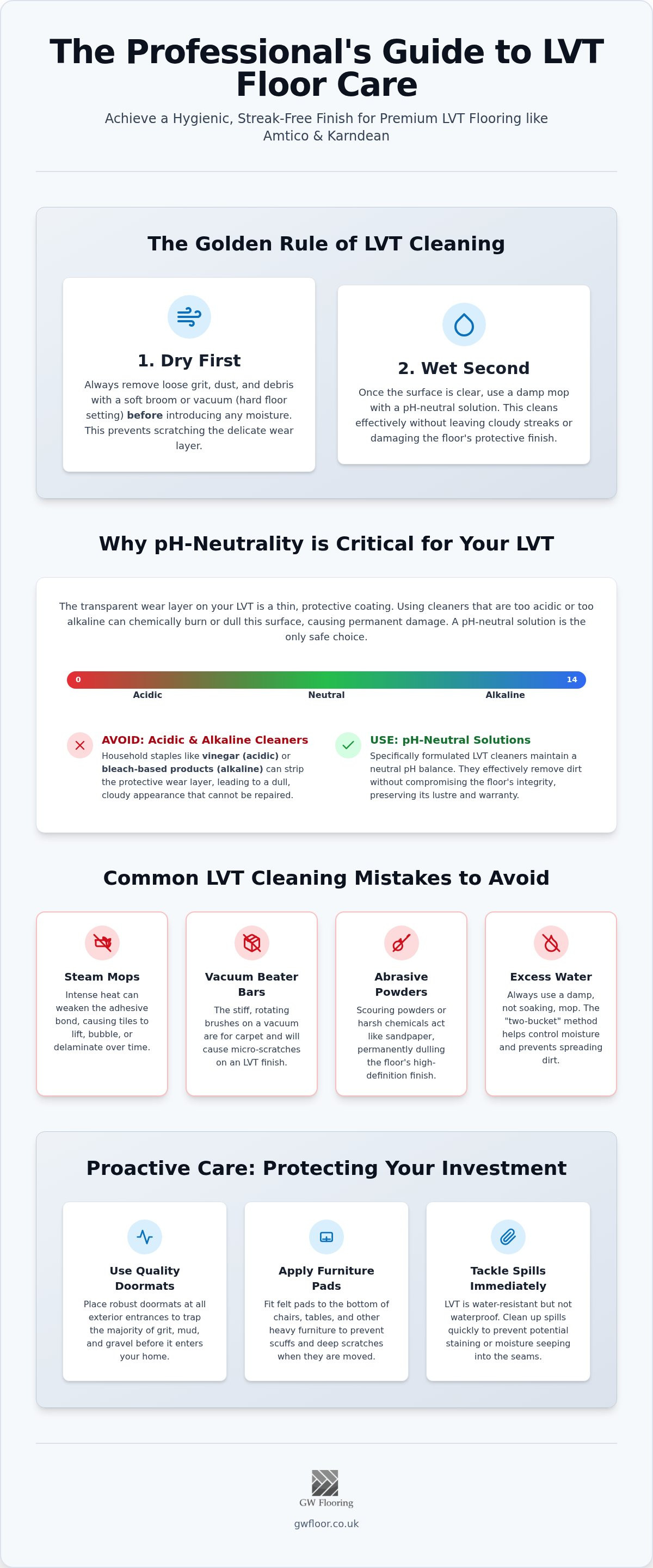
Never use a steam mop on your LVT. Whilst they are popular for stone or ceramic, the intense heat can penetrate the seams and delaminate the adhesive bond, causing your tiles to lift or bubble. Stick to the traditional methods we've refined over the last two decades.
Step 1: The Daily Dry Sweep
Grit is the natural enemy of any resilient floor. We recommend using a soft-bristled broom or a microfibre dust mop every single day to capture fine debris. If you prefer a vacuum, ensure it's set to "hard floor" mode to disengage the beater bar. These rotating brushes are designed to agitate carpet fibres but will quickly scratch the delicate finish of your vinyl. Focus your efforts on "grit entry points" like front doors and garden exits, where Essex mud and gravel are most likely to hitch a ride into your home.
Step 2: The Weekly Damp Mop
Once the surface is free of loose grit, it's time for a damp mop. Use the "two-bucket" method: one bucket for your pH-neutral cleaning solution and one with clean water for rinsing your mop. This prevents you from simply spreading dirty water back across your tiles. Use lukewarm water rather than boiling water; excessive heat can soften the vinyl over time. If you're unsure about which products to use, our team at GW Flooring can recommend the exact solutions we use during our professional installations.
Step 3: Drying and Buffing
Don't leave your floor to air-dry. Evaporating water leaves behind minerals and cleaning agents that create those frustrating cloudy streaks. Instead, use a clean, dry microfibre cloth to buff the surface immediately after mopping. This simple extra step removes water spots and restores that distinctive showroom shine. Buffing is particularly effective for maintaining the original lustre of wood-effect planks, as it highlights the textured grain without leaving a dulling film behind.
Choosing the Right Chemicals: The Science of pH-Neutrality
Selecting the correct solution is just as vital as the technique you use. Many homeowners assume that any floor soap will do, but the chemistry of your cleaner directly interacts with the factory-applied wear layer. To keep your floor in peak condition, you must understand the pH scale. LVT requires a pH-neutral cleaner, typically falling between 6 and 8 on the scale. When you use highly acidic or alkaline substances, you aren't just cleaning the surface; you're slowly chemically stripping the protection away.
Chemical damage doesn't always happen overnight. It's often a gradual process that begins with a slight loss of lustre. If you notice your floor has developed a persistent cloudiness, a strange yellow tint, or a tacky feel that attracts footprints, it's likely a sign of chemical build-up or wear layer erosion. Avoiding these issues is the most effective way to learn how to clean luxury vinyl tile floors for the long term.
Why Vinegar and Bleach are the Enemies of LVT
There's a persistent myth that "natural" cleaners like white vinegar or lemon juice are the safest options for a home. Whilst vinegar is excellent for glass, its high acidity (usually around pH 2 or 3) is disastrous for vinyl. It eats into the protective coating, leaving the photographic layer beneath vulnerable to fading. Similarly, bleach is a harsh alkaline that can cause permanent discolouration and make the core of the plank brittle. We've seen many beautiful floors in Rayleigh ruined by well-intentioned "green" cleaning hacks that simply aren't compatible with modern materials.
Identifying a High-Quality LVT Cleaner
When you're browsing the aisles, look for products specifically labelled as "pH-neutral" and "no-rinse". No-rinse formulas are a lifesaver for busy Essex households because they don't leave behind the soapy film that causes streaks. We recommend professional-grade brands like Bona or StoneTech, which are the same products often used by expert flooring fitters during the final handover of a project.
To keep your warranty intact and your finish clear, ensure your cleaning cupboard is free from the following culprits:
- Ammonia: Can cause the vinyl to crack and yellow over time.
- Bleach: Strips colour and compromises the structural integrity of the planks.
- Wax-based soaps: These leave a dull, sticky residue that actually traps more dirt.
- Abrasive scouring powders: These create micro-scratches that permanently dull the showroom shine.
Preventative Maintenance: Protecting Your Investment
We often tell our clients that 80% of your floor’s longevity is determined before you even touch a mop. Whilst knowing how to clean luxury vinyl tile floors is essential, stopping the damage before it occurs is the hallmark of a savvy homeowner. In Essex, our climate presents unique challenges. Muddy winters in Rayleigh bring in abrasive grit, whilst our bright summers can put significant thermal stress on your flooring. A proactive approach ensures your LVT remains as stunning as the day it was fitted.
The most effective defence is a robust barrier matting strategy. Place high-quality walk-off mats at every external entrance to trap moisture and debris. This simple step prevents the micro-scratches that eventually make your floor look dull and cloudy. By catching grit at the door, you reduce the frequency of deep cleaning and preserve the factory finish for years longer than average.
Furniture Protection and Movement
Protecting the subfloor bond is vital for a floor that stays level and easy to clean. We mandate the use of heavy-duty felt pads on all chair and table legs to prevent indentation and surface scratches. Be extremely careful with rugs and mats; never use rubber or latex-backed products. These materials can cause a chemical reaction called plasticiser migration, which leads to permanent yellow staining on your vinyl that no cleaner can remove. When moving heavy appliances like fridges or washing machines, always slide them over plywood sheets rather than directly on the LVT. This prevents tearing the surface or compromising the adhesive groundwork beneath.
Managing Sunlight and Heat
South-facing rooms in Rayleigh often receive intense direct sunlight. Over time, these UV rays can cause even premium tiles to fade or discolour. We suggest using blinds, curtains, or UV-filtering window films during peak hours to preserve the vibrant photographic layer of your planks. Additionally, if you have underfloor heating, it is crucial to operate it within the manufacturer's recommended temperature limits. Rapid heat fluctuations can cause the vinyl to expand and contract. This is why we place such a heavy emphasis on professional subfloor preparation; a stable foundation is the only way to manage these thermal shifts without the tiles lifting.
If you are planning a new project and want a floor built to last, view our range of LVT options and discover how our installation process sets you up for long-term maintenance success.
The Link Between Installation Quality and Cleaning Ease
Most homeowners focus on the mop or the bucket, but the real secret to an effortless routine is the "invisible work" performed years earlier. We've spent over 20 years in Rayleigh refining our installation techniques because we know that a floor is only as cleanable as its foundation. If your subfloor wasn't prepared with meticulous care, mastering how to clean luxury vinyl tile floors becomes an uphill battle against the very structure of the room.
DIY installations or rushed jobs often suffer from "peaking" or "gapping" between the tiles. These tiny crevices act as permanent grime reservoirs, trapping dirty water, dust, and bacteria where no microfibre cloth can reach. Over time, these gaps darken and ruin the aesthetic of your home, regardless of how often you scrub. Professional fitting ensures a seamless, tightly bonded surface where dirt simply has nowhere to hide.
Why a Level Subfloor is Essential for Cleaning
A perfectly flat floor allows your mop to glide effortlessly across the surface without resistance. When we use professional screeding and plyboarding, we're eliminating the "telegraphing" of imperfections from the concrete or timber below. If the subfloor is uneven, your cleaning tools will catch on high spots and miss the low points. This leads to frustrating streaks and patches of dirt that seem impossible to remove. Choosing the right home flooring options in Rayleigh always starts with this foundational groundwork, ensuring your daily maintenance remains frictionless.
Restoring an Older LVT Floor
Sometimes, even the most disciplined routine can't overcome years of improper chemical use or heavy Essex foot traffic. If your floor has lost its original showroom shine and looks permanently dull, it might require a "strip and refresh." This process involves using a professional-grade solution to remove old layers of residue and build-up before applying a fresh, protective sealer. We recommend calling in a professional for this task rather than attempting a DIY deep clean. The wrong concentration of stripper can permanently damage the wear layer, whilst an expert hand can restore that vibrant finish you first fell in love with.
We take genuine pride in helping homeowners realize their vision for a beautiful, low-maintenance living space. If you're struggling with a floor that feels impossible to keep clear, or if you're ready for a new installation that's built for longevity, our team is ready to assist. Contact GW Flooring today for a professional assessment of your existing LVT and let's restore the pride in your home.
Preserve Your Floor's Showroom Shine for Decades
You've invested in a premium surface, and now you have the professional framework to protect it. By prioritising pH-neutral chemistry and a "dry first, wet second" routine, you've mastered how to clean luxury vinyl tile floors like a seasoned specialist. The long-term beauty of your Amtico or Karndean tiles relies on these simple daily habits and the high-quality "invisible work" of the foundation we've discussed throughout this guide.
We take immense pride in our 20 years of Rayleigh family-run expertise. As specialists in Amtico and Karndean installation, we've seen first-hand how expert subfloor preparation makes every cleaning task significantly easier. If you're ready to transform your Essex home with a floor that's built for both aesthetic impact and effortless maintenance, our team is ready to partner with you. Book your free "showroom to you" assessment with GW Flooring today and let us help you realise your vision. Your floor is more than just a surface; it's the foundation of your home's style.
Frequently Asked Questions
Can I use a steam mop on my luxury vinyl tile floors?
No, you should never use a steam mop on luxury vinyl tile. The intense heat and pressurised moisture can penetrate the seams and weaken the adhesive bond, eventually causing tiles to lift or buckle. Stick to lukewarm water and a well-wrung microfibre mop to protect your investment. This preserves the integrity of the meticulous subfloor preparation we provide during our professional installations across Essex.
How do I remove scuff marks from my LVT flooring?
Most scuff marks from rubber-soled shoes or furniture can be removed with a damp microfibre cloth and a drop of pH-neutral cleaner. For more stubborn marks, a soft white pencil eraser or a tennis ball rubbed gently over the spot often does the trick. Always avoid abrasive scouring pads, as these will permanently scratch the wear layer and dull the finish of your floor.
Is it safe to use a vacuum cleaner on LVT?
It is safe to use a vacuum cleaner, provided you disengage the beater bar or brush roll before starting. Rotating brushes are designed for carpets and can leave fine scratches on the surface of your tiles. Use the "hard floor" setting to ensure only suction and soft wheels touch the planks. This is a critical part of how to clean luxury vinyl tile floors safely.
What is the best way to clean textured stone-effect LVT?
Textured stone-effect tiles require a slightly more meticulous approach because dirt can settle in the riven surface. Use a high-quality microfibre mop that can reach into the graining, and ensure you aren't using excessive water. If dirt builds up in the texture, a soft-bristled nylon brush can be used with a pH-neutral solution to gently agitate the area before wiping it completely dry.
How often should I deep clean my luxury vinyl tiles?
We recommend a deep clean every three to six months, depending on the level of foot traffic in your Rayleigh home. This involves using a manufacturer-recommended deep cleaner to remove any microscopic layers of grime that daily mopping might miss. For older floors that look tired, a professional "strip and refresh" can restore the original lustre and provide a fresh, protective seal for the future.
Will pets scratch my LVT floors, and how do I prevent it?
LVT is highly resilient, but pet claws can still cause micro-scratches over time if they aren't managed. Keep your pets' nails trimmed and place rugs or mats in high-speed "turn zones" where dogs might lose traction. Because we specialise in Amtico and Karndean, we can confirm these brands offer excellent scratch resistance, but preventative care remains the best way to maintain that showroom look for decades.
Can I use Zoflora or similar disinfectants on my vinyl floor?
You can use Zoflora if it is correctly diluted, but we generally advise sticking to dedicated pH-neutral LVT cleaners. Many general disinfectants contain chemicals that can leave a sticky residue or a cloudy film on the protective wear layer. If you must use a disinfectant, ensure it doesn't contain bleach or high levels of alcohol, as these can cause the vinyl to become brittle or discoloured.
What should I do if my LVT floor looks cloudy or dull?
A cloudy appearance is usually caused by a build-up of soap residue or the use of incorrect chemicals like floor wax. To fix this, use a dedicated LVT stripping solution to remove the film and return to a strict pH-neutral routine. This is a common issue when learning how to clean luxury vinyl tile floors, but it is easily corrected with the right professional-grade products and techniques.


