What if the most critical safety feature in your building isn't a fire alarm or a handrail, but the way your floor meets the wall? If you've ever struggled to scrub grime out of a ninety-degree corner or worried about water seeping under your skirting boards, you'll know that traditional joins are often a weak point. This is where cap and cove flooring becomes essential. It isn't just a design choice; it's a structural hygiene system designed to eliminate those hard-to-reach crevices where bacteria and moisture thrive.
We understand that maintaining a pristine environment whilst meeting strict UK health and safety standards can feel like a constant uphill battle. Our team has seen how poor installations lead to damaged subfloors, but the right approach ensures a fully sealed, waterproof room that lasts well over a decade. In this guide, we'll explain how cap and cove flooring creates a seamless transition from floor to wall, the vital role of meticulous subfloor preparation, and why this system is the gold standard for commercial safety flooring.
Key Takeaways
- Learn how cap and cove flooring creates a seamless transition from floor to wall, eliminating the awkward corners where bacteria and grime typically gather.
- Understand the "tanking" process that creates a completely watertight environment, which is essential for wet rooms and high-hygiene commercial zones.
- Discover why the longevity of your safety floor depends on the "invisible work" of meticulous subfloor preparation before a single roll of vinyl is laid.
- Compare the functional advantages and long-term maintenance savings of coved finishes against traditional domestic skirting boards for busy environments.
- Find out how to partner with a seasoned Essex craftsman who offers a frictionless, mobile showroom experience to help you realise your specific vision.
What is Cap and Cove Flooring? The Essentials
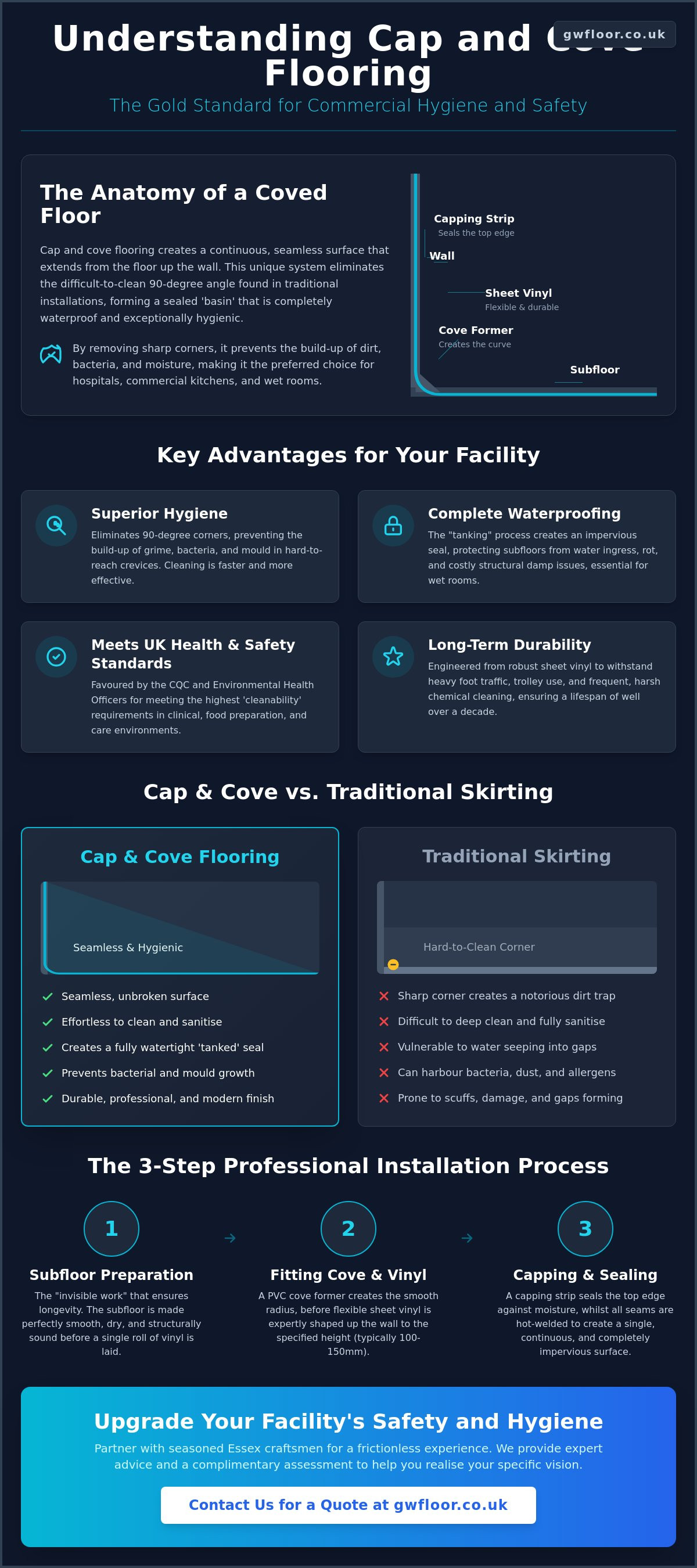
Cap and cove flooring is much more than a simple floor covering; it's a precision-engineered installation system designed for durability and clinical cleanliness. In a standard setup, your flooring stops where the wall begins. With a cap and cove system, we extend the floor material up the face of the wall, typically to a height of 100mm or 150mm. This creates a continuous, unbroken surface that wraps around the room's perimeter. It is a technique we frequently use in hospitals, commercial kitchens, and wet rooms to ensure that water and dirt have nowhere to hide. By turning the floor into a shallow "basin," we protect the building's structure from the ground up.
The Anatomy of a Coved Floor
To achieve that smooth, sweeping curve where the floor meets the wall, we install a cove former at the base of the wall before the flooring goes down. This is a small, triangular profile, usually made of PVC, that provides a solid foundation for the vinyl to bend over. Without this hidden support, the flooring would eventually crack or puncture at the join. Because the join is curved rather than a sharp ninety-degree angle, cleaning becomes effortless. You can simply sweep or mop right up the wall without grit getting trapped in a corner. This system relies on high-quality materials like Sheet vinyl flooring, which is flexible enough to follow the contours of the cove former whilst remaining tough enough to withstand heavy foot traffic and frequent chemical cleaning.
Why "Capping" Matters for Longevity
The "cap" part of the system refers to the capping strip, a protective trim that seals the top edge of the vinyl where it finishes on the wall. This isn't just for aesthetics. A properly installed capping strip ensures that moisture, grease, and dust cannot seep behind the material. If water gets behind the vinyl, it will eventually weaken the adhesive and damage the subfloor; a disaster that can lead to costly repairs. We typically choose between weldable capping strips, which allow for a completely seamless finish, or clip-on profiles for a more decorative look. It's this attention to the invisible parts of the job that defines a professional installation. A neat, level capping line acts as a professional border, giving the room a disciplined and finished appearance that helps your space meet the highest hygiene standards.
The Benefits of Coved Flooring for Hygiene and Safety
Choosing the right finish for your facility is about more than just aesthetics; it's about creating a space that is fundamentally easier to manage. Traditional flooring installations often leave a small gap or a sharp ninety-degree join where the floor meets the wall. These areas are notorious dirt traps. Over time, moisture and organic matter settle into these crevices, providing a breeding ground for bacteria and mould that no amount of surface mopping can fully reach. By installing cap and cove flooring, you eliminate these hidden pockets entirely. The smooth, sweeping radius allows cleaning equipment to glide from the floor surface directly up the wall, ensuring every square centimetre is sanitised.
Water ingress is another major concern for Essex business owners, particularly in environments like wet rooms or commercial laundry areas. When we "tank" a room using coved safety flooring, we create a completely watertight seal. This prevents liquid from seeping under the floor material and rotting the subfloor or causing structural damp. It's a proactive approach that saves you from the stress and expense of long-term water damage. If you're currently planning a renovation, our team can provide a complimentary assessment to help you determine the best layout for your specific space.
Meeting UK Health and Safety Standards
Compliance is a top priority for any professional environment. Environmental health officers and the Care Quality Commission (CQC) have strict expectations for "cleanability" in GP surgeries, dental clinics, and food preparation areas. They favour coved finishes because they meet the highest hygiene requirements for clinical and sterile environments. By working with experienced commercial safety flooring contractors Essex, you ensure your facility is ready for inspection at any time. We focus on the precision of the weld and the height of the upstand to guarantee your floor meets all relevant HSE behaviour and safety guidelines.
Long-term Durability in High-Traffic Zones
Commercial spaces are tough on floors. Between heavy foot traffic, equipment trolleys, and the frequent use of harsh chemical cleaning agents, a standard floor can quickly show signs of wear at the edges. Coving provides a reinforced base that protects the bottom of your walls from impact damage. This is why it remains the industry standard for industrial flooring contractors who specialise in labs and factories. The vinyl material used in cap and cove flooring is specifically engineered to resist staining and degradation, ensuring your investment looks professional and performs reliably for over a decade.
Cap and Cove vs. Traditional Skirting: Key Differences
Traditional skirting is a separate component, usually timber or MDF, attached to the wall base. It serves a decorative purpose but creates a visible seam at the floor level. In contrast, cap and cove flooring treats the floor and wall as a single, continuous unit. While skirting boards often shrink or warp over time, leaving gaps where dust and moisture congregate, a coved system remains perfectly sealed. This structural difference is why coving is the preferred choice for any environment where sanitation isn't just a preference, but a strict requirement.
Subfloor preparation becomes even more critical when moving away from traditional skirting. Skirting boards are quite forgiving; they can hide uneven edges or small gaps between the floor and the wall. Cap and cove flooring offers no such luxury. Because the vinyl material follows the exact contour of the floor and wall, any lumps or bumps in the subfloor will be magnified. We spend a significant portion of our time ensuring the foundational groundwork is flawless before we even think about the radius curve. This level of precision is why coving requires specialist fitters rather than a general handyman.
Aesthetic vs. Functional Design
You don't always have to choose one over the other, but the setting usually dictates the best fit. In domestic hallways or front-of-house retail spaces, traditional skirting provides a warm, familiar aesthetic that complements various interior styles. However, in high-moisture zones like commercial kitchens or clinical areas, the functional benefits of coving far outweigh the look of timber. Some modern designs now integrate both, using coving for the "wet" areas and transitioning to traditional skirting in office zones to maintain a professional yet inviting atmosphere.
Cost-Effectiveness and Maintenance
Although the initial installation for a coved system involves more technical labour, the long-term savings are substantial. You'll spend significantly less on deep-cleaning services because there are no corners for grime to hide in. More importantly, coving protects your building from the structural rot caused by water seeping into the subfloor. When you're ready to start your project, follow our guide for choosing commercial flooring specialists in Essex to ensure you're hiring a team that understands these technical nuances. Investing in quality now prevents the headache of premature replacements later.
The Professional Installation Process: Why Foundations Matter
The finished look of cap and cove flooring is undeniably sleek, but its performance relies entirely on what we do before the vinyl even leaves the roll. We operate on the philosophy that a floor is only as good as the subfloor underneath it. If the base is uneven or poorly prepared, the cove former won't sit flush against the wall, and the entire system will eventually fail. This is why we dedicate a significant portion of our time to the "invisible work" of foundational groundwork. We don't believe in shortcuts; we believe in doing the job once and doing it right.
Subfloor Preparation and Screeding
A successful floor installation always begins with a clinical assessment of the subfloor. We meticulously check for moisture levels because trapped dampness can cause adhesives to fail or lead to unsightly bubbling under the safety vinyl. To achieve the precision required for coving, we use high-quality smoothing compounds and screeding to create a perfectly level surface. This ensures the cove former has a consistent, solid contact point with both the floor and the wall, preventing any "springiness" or gaps that could compromise the room's hygiene.
Expert Fitting: Capping Strips and Cove Formers
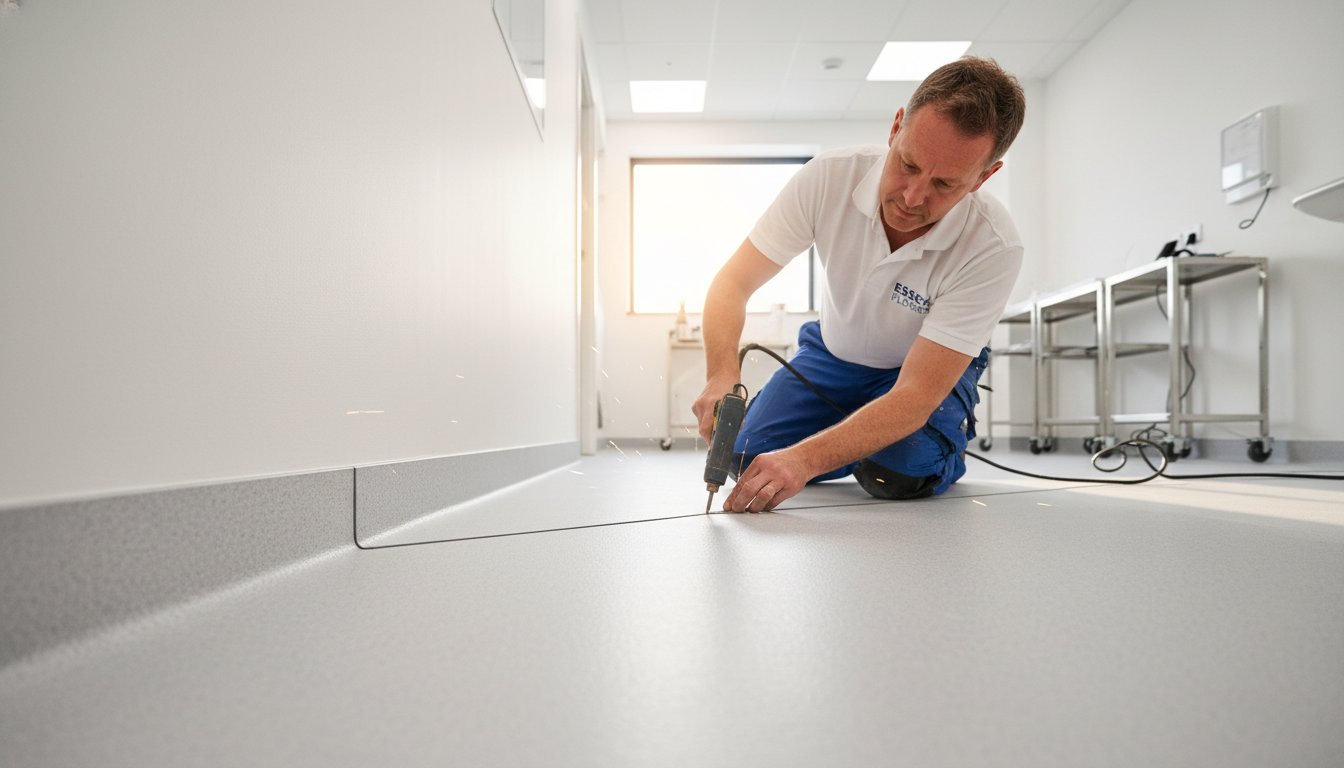
Once the subfloor is prepared, we apply the cove former at the wall-floor junction using specialist adhesive. This creates the essential radius curve that makes cleaning so effortless. Fitting the vinyl itself requires a seasoned hand; we must run the material up the wall without stretching or thinning it, as any loss of thickness compromises the floor's waterproof properties. Internal and external corners are the true test of a craftsman's skill. We use precise mitring techniques to ensure these joins are tight, sealed, and hygienic.
To create a truly continuous surface, we heat weld every seam. This process involves melting a colour-matched weld rod into the joins at high temperatures, effectively fusing the sheets into one single, impermeable unit. Finally, we install and seal the capping strip at the top edge to prevent any moisture from seeping behind the upstand. This final inspection ensures every millimetre of your cap and cove flooring is watertight and ready for use. If you want a floor that stands the test of time, book your professional installation assessment with our expert Essex team today.
Finding the Right Commercial Flooring Specialists in Essex
Selecting a contractor for your facility is a decision that impacts your operations for years to come. Because cap and cove flooring is a technical system rather than a simple floor covering, you need a partner who understands the nuances of the installation. We bring over 20 years of experience to every project, ensuring that the "invisible work" of subfloor preparation is never overlooked. As a family-run business, we take immense pride in handling our own fitting. We don't use sub-contractors; the craftsman you speak with during your assessment is the same person who will be meticulously welding your seams and mitring your corners.
Our portfolio spans a wide variety of sectors across the county. Whether you are looking for clinical finishes in a GP surgery or robust commercial bar flooring that can withstand constant spills and heavy foot traffic, we have the technical knowledge to deliver. We understand that Essex business owners value integrity and reliability, which is why we focus on high-quality materials and disciplined installation methods that prevent the common failures associated with rushed work.
Why Experience with Safety Flooring is Crucial
Generalist fitters often make critical mistakes when attempting cap and cove flooring for the first time. They might struggle with the precision required for external mitres or fail to maintain a consistent temperature during the hot welding process, leading to weak spots in the seal. These errors aren't just cosmetic; they compromise the hygiene and waterproof integrity of the entire room. At GW Flooring, we ensure a perfect finish every time by sticking to proven techniques. We know exactly how to handle complex layouts and architectural features, ensuring your upstands are level and your capping strips are perfectly sealed against the wall.
Our "Showroom to You" Service for Essex Businesses
We know that busy business owners in Rayleigh and Chelmsford don't always have the time to visit a traditional shop. Our "showroom to you" service is designed to make the process as frictionless as possible. We bring a comprehensive range of safety vinyl samples directly to your property, allowing you to see colours and textures in your own light and space. This personalised approach ensures the final result aligns perfectly with your vision.
During our visit, we provide a free, no-obligation assessment of your subfloor and current layout. This direct communication with a seasoned craftsman allows you to ask technical questions and receive honest, practical advice on the spot. If you are ready to upgrade your facility with a floor that is built to last 10+ years, reach out to our team today to organise your local site visit.
Secure a Seamless Future for Your Essex Facility
Investing in cap and cove flooring is a commitment to the long-term health and safety of your environment. We have explored how this seamless transition from floor to wall eliminates bacteria traps and creates a truly watertight finish. However, the secret to a floor that remains high-performing for over a decade lies in the invisible work. Our Rayleigh-based, family-run team brings over 20 years of local Essex expertise to every project, focusing on the meticulous subfloor preparation that generalist fitters often overlook. We take genuine pride in our craft and ensure every weld is clinical and every corner is perfectly rounded.
We don't believe in shortcuts; we believe in providing a frictionless experience that helps you realise your specific vision without the stress of future repairs. Whether you are managing a clinical space, a dental surgery, or a busy commercial kitchen, we are here to help you navigate the technical requirements with ease. Take the first step toward a more hygienic and durable workspace by speaking with a seasoned craftsman who understands the Essex landscape. Book your free "showroom to you" assessment in Essex today and let us help you transform your facility with confidence.
Frequently Asked Questions
Can cap and cove flooring be installed over existing tiles?
We don't recommend installing directly over existing tiles because they don't provide the stable, porous surface required for a permanent bond. For a professional finish, we typically remove the tiles or apply a high-quality smoothing compound to create a level base. Meticulous subfloor preparation is the only way to ensure the cove former sits flush against the wall without future movement or lifting.
Is cap and cove flooring only for hospitals and commercial kitchens?
Whilst these are common settings, this system is ideal for any space requiring high hygiene standards. We frequently install cap and cove flooring in dental surgeries, veterinary clinics, school toilets, and changing rooms. Any environment that faces frequent spills or requires rigorous sanitising will benefit from the seamless, easy-to-clean transition between the floor and the wall.
How high does the flooring usually go up the wall?
The standard height for a coved upstand is usually between 100mm and 150mm. This provides a sufficient splash zone to protect your walls from moisture and cleaning equipment. We can adjust this height to meet specific project requirements or to align with existing wall features, ensuring the final result looks balanced and purposeful within your space.
Is it possible to have cap and cove flooring in a domestic bathroom?
Yes, it's an excellent choice for domestic wet rooms or bathrooms, particularly for homeowners prioritising accessibility and ease of maintenance. By creating a watertight "tanked" environment, we protect your home from potential leaks and damp. It's a practical solution that offers a clean, modern aesthetic whilst providing the same durability found in our commercial installations.
What is the difference between a cove former and a capping strip?
A cove former is the hidden profile installed at the junction of the floor and wall to create the radius curve. It provides the structural support needed for the vinyl to bend upwards. The capping strip is the visible trim that seals the top edge of the flooring on the wall. It prevents dirt and moisture from getting behind the material, ensuring a long-lasting and professional seal.
How do you clean and maintain cap and cove flooring?
Cleaning is straightforward because there are no sharp corners to trap grime. You can simply sweep away loose debris and then mop the surface using a neutral detergent. Because cap and cove flooring creates a continuous surface, you can mop right up the upstand without worrying about water seeping into the joins or damaging the wall base.
Does cap and cove flooring require special cleaning equipment?
No specialist machinery is required for day-to-day maintenance in smaller areas. A standard mop and bucket system works perfectly for most bathrooms or clinics. In larger commercial environments, you can use a mechanical scrubber-dryer to maintain the surface. The key is to avoid abrasive tools that could scratch the safety vinyl's protective wear layer.
Can I install cap and cove flooring myself as a DIY project?
We strongly advise against a DIY approach for this type of installation. Achieving a watertight finish requires specialist skills like internal and external mitring, as well as hot welding the seams to fuse the sheets together. Our team brings years of experience to handle these technical challenges, ensuring your floor complies with UK safety standards and lasts for many years.


