
The most stunning floor finish is effectively just a very expensive, oversized blanket if it doesn't allow heat to move efficiently into your living space. We understand the anxiety that comes with choosing the best flooring for underfloor heating UK, especially when you're balancing the desire for a premium aesthetic against the fear of rising energy bills or floor coverings that might warp and lift. You want a home that feels as warm as it looks, without the technical jargon of thermal conductivity causing a headache.
We agree that your investment deserves to last for decades, not just a few seasons. In this 2026 expert guide, we'll show you exactly which materials offer the highest thermal efficiency and how to navigate the strict 27°C temperature limits for luxury vinyl and engineered wood. We'll also explain why our philosophy of meticulous subfloor preparation is the secret to a high-quality finish that protects your heating system. From understanding tog ratings to selecting the right materials, we're here to help you realise a vision for your home that is both beautiful and perfectly functional.
Key Takeaways
- Learn how high-density materials like Luxury Vinyl Tiles (LVT) maximise thermal conductivity to keep your home warm whilst keeping energy bills manageable.
- Understand why LVT is the professional recommendation for the best flooring for underfloor heating UK thanks to its superior stability and modern aesthetic.
- Master the "2.5 Tog Rule" to ensure your favourite carpet and underlay combination doesn't act as an unintended insulator against your heating.
- Discover why foundational subfloor preparation is the most critical factor in preventing "hotspots" and protecting your flooring from long-term damage.
- Explore the benefits of a personalised assessment in Rayleigh and Essex to see how different textures and colours look in your own home's natural light.
Understanding Thermal Conductivity and UFH Efficiency
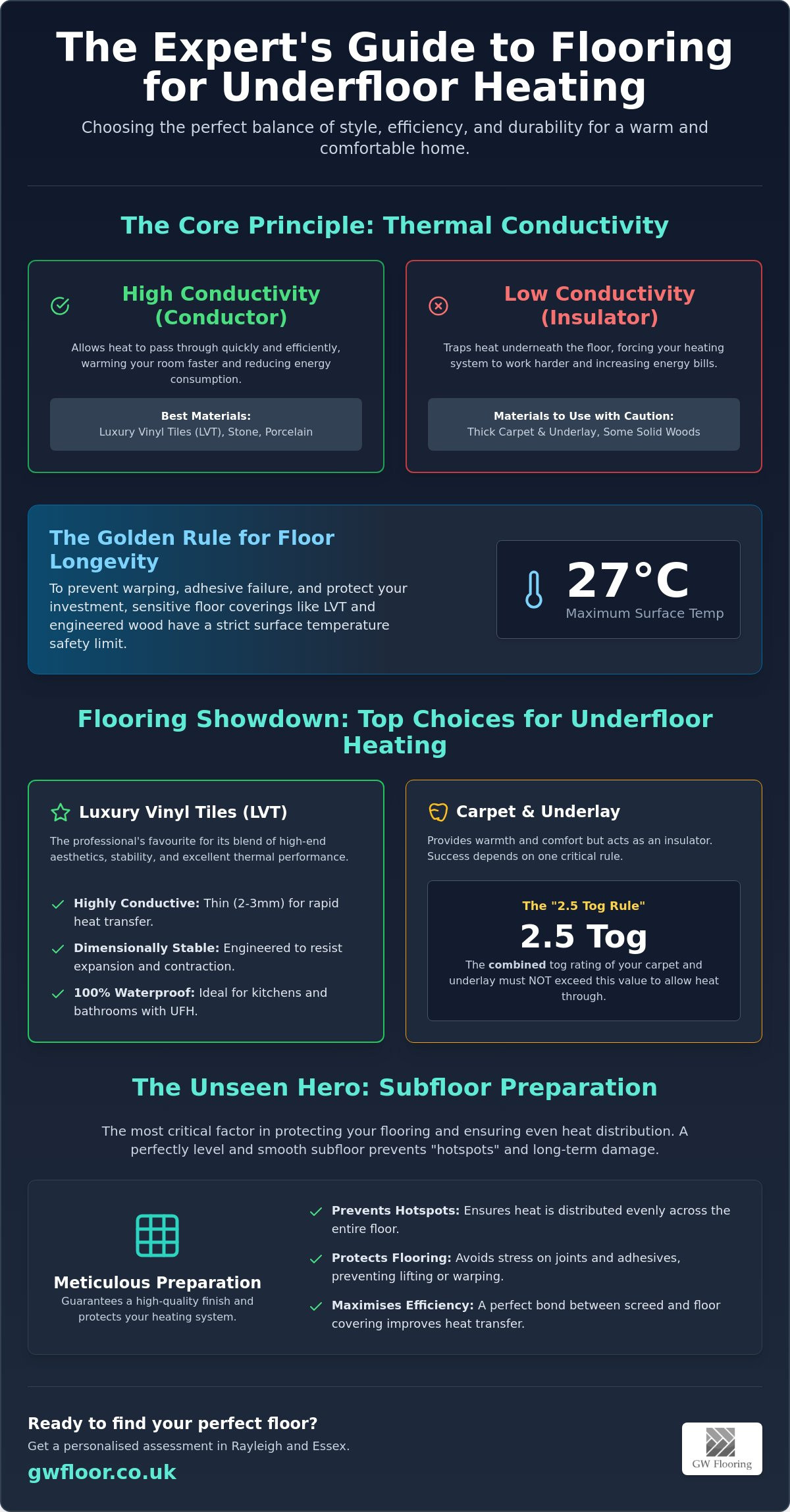
Thermal conductivity isn't just a technical term; it's the bridge between your heating system and your comfort. In simple terms, it measures how quickly heat moves from the pipes or wires beneath your floor up to your feet. When we discuss the best flooring for underfloor heating UK, we're looking for materials that act as a conductor rather than an insulator. High-density materials like stone, porcelain, and Luxury Vinyl Tiles (LVT) are the most efficient choices because they have low thermal resistance, allowing warmth to pass through with minimal effort.
Whilst efficiency is the goal, we must also prioritise the longevity of your floor. Most sensitive floor coverings, including LVT and engineered wood, have a strict surface temperature safety limit of 27°C. Exceeding this can lead to warping or adhesive failure. Our role as craftsmen is to ensure your Underfloor heating is calibrated to stay within these bounds, protecting your investment whilst keeping your toes cosy. This balance is achieved through precise installation and high-quality subfloor preparation.
How Floor Materials Affect Your Energy Bills
Selecting a highly conductive floor allows your system to operate much more efficiently. As of June 2026, all new UK installations must operate with a maximum flow temperature of 55°C. When you choose a material with high thermal conductivity, your system doesn't need to work as hard to reach your desired room temperature. This significantly reduces the "ramp-up" time, meaning your home feels warm minutes after the system clicks on rather than hours. In the context of 2026 energy costs, thermal efficiency is the measure of how effectively your flooring converts every penny of energy spent into usable, ambient warmth for your living space—to ensure your boiler is working just as effectively, you can read more about boiler and gas services.
The Role of Thermal Mass in Home Comfort
Thermal mass refers to a material's ability to absorb, store, and slowly release heat. This creates a "flywheel effect" that maintains a steady temperature in your home even after the heating has cycled off. While laminate offers a "quick heat" that vanishes shortly after the system stops, high-density LVT or stone provides a "steady warmth" that lingers. This makes a massive difference in different parts of the home. In a draughty hallway, you'll appreciate a floor that retains its temperature, whereas in a cosy lounge, the consistent output creates a more stable environment. We always recommend considering the thermal mass of your chosen material to ensure your best flooring for underfloor heating UK matches the specific needs of each room.
Luxury Vinyl Tiles (LVT): The Modern Favourite for UFH
Luxury Vinyl Tiles (LVT) have transformed from a practical alternative into a first-choice solution for homeowners across the country. As professional fitters, we frequently recommend LVT as the best flooring for underfloor heating UK because it combines high-end aesthetics with remarkable technical stability. Unlike natural timber, which reacts to temperature changes by expanding or contracting, LVT is engineered to remain perfectly flat. This stability is vital when you consider that your floor will be subjected to regular heat cycles throughout the winter months.
Thickness plays a major role in how quickly your rooms warm up. Most high-quality LVT ranges are only 2mm to 3mm thick, which allows for rapid heat transfer. The Energy Saving Trust notes that vinyl is highly suitable for underfloor heating due to this efficiency. By choosing a thinner, high-density tile, you ensure the warmth reaches the surface almost instantly. You get the visual warmth of a rustic oak or the cool elegance of slate without the sluggish thermal response of thicker, less conductive materials.
Comparing Premium LVT: Amtico vs Karndean for Heating
Both Amtico and Karndean are industry leaders specifically because their products are designed to withstand the rigours of UFH systems. When we install these luxury brands, we always use a specialised high-temperature adhesive. This prevents the tiles from shifting or "lifting" as the system warms up. It's a meticulous part of the process that ensures your floor looks as good in ten years as it does on day one. For a deeper dive into the specific aesthetics and durability of these brands, you can read our Amtico vs Karndean comparison guide.
Why LVT Beats Laminate and Natural Wood
While laminate is a popular budget choice, it often struggles with moisture in heated bathrooms or kitchens. LVT is completely waterproof, making it a safer long-term investment for these high-traffic areas. More importantly, LVT doesn't suffer from "gapping", a common issue with engineered wood where the planks pull apart as the air dries out during the heating season. If a single tile is ever damaged by a heavy impact, it's a simple task to replace that specific piece rather than lifting the entire floor. If you're ready to see how these materials feel underfoot, we can bring our mobile showroom to you for a personal consultation.
Can You Use Carpet with Underfloor Heating? The Tog Rating Rule
There is a persistent myth that you cannot enjoy the plush comfort of a carpet if you have underfloor heating installed. We're here to tell you that this simply isn't true. Whilst hard surfaces like LVT are often cited as the best flooring for underfloor heating UK due to their conductivity, carpets are perfectly compatible if you follow one simple technical guideline: the 2.5 Tog Rule. This rule dictates that the combined thermal resistance of your chosen carpet and its underlay must not exceed 2.5 tog. If you go beyond this limit, your flooring acts as an unintended insulator, trapping the heat beneath the surface and forcing your boiler or heat pump to work much harder than necessary.
Wool carpets are a particular favourite for many Essex homeowners, especially in bedrooms where that soft, morning feel underfoot is non-negotiable. However, wool is a natural insulator, which means it often carries a higher tog rating than synthetic alternatives. When we help clients select wool options, we carefully balance the pile weight with a specialist underlay to stay within safety limits. This ensures you get the luxury you desire without sacrificing the efficiency of your heating system or risking damage to the subfloor from trapped heat.
Choosing the Right Underlay for Maximum Heat
The underlay is often the "invisible work" that determines the success of your installation. Standard thick underlays might feel great, but they act like a heavy blanket that blocks warmth from rising. To stay compliant with Part L of the Building Regulations, which focuses on energy conservation, we recommend specialist low-tog UFH underlays. These are specifically engineered with a lower density or perforated design to allow heat to move freely through the pile. We strongly advise against using felt or thick rubber crumb underlays, as these are far too restrictive for modern heating systems.
Hessian-Backed vs. Action-Backed Carpets
The backing of your carpet is just as important as the fibres on top. Hessian-backed carpets are often preferred by fitters because the natural, open weave allows for superior air circulation and heat transfer. This helps the room reach its target temperature much faster than carpets with dense, synthetic backings that might stifle the system. If you're planning a renovation, our Professional Carpet Fitters in Essex guide provides more detail on how we handle these technical installations. Selecting the best flooring for underfloor heating UK means looking at every layer, from the screed to the very last thread of the carpet pile.
The Critical Role of Subfloor Preparation and Screeding
Even the best flooring for underfloor heating UK will eventually fail if the groundwork is neglected. Underfloor heating (UFH) introduces unique thermal stresses that standard floors simply don't face. As the temperature rises and falls, the materials beneath your feet expand and contract at different rates. Without a perfectly level and stable foundation, you risk creating "hotspots"—areas where heat is trapped or unevenly distributed. These hotspots don't just waste energy; they can cause your beautiful new floor to buckle, crack, or delaminate over time.
For water-based systems, the process of screeding over the pipes is a non-negotiable step. We use high-quality screeds to encase the pipes, creating a smooth, highly conductive surface that radiates heat evenly across the entire room. If you're working with timber subfloors, we always emphasise the importance of plyboarding. This provides the necessary rigidity to prevent "bounce" and movement, ensuring your heating pipes or electric mats aren't subjected to mechanical stress every time someone walks across the room.
When installing water-based systems, it is essential that the plumbing is handled by professionals to prevent leaks beneath your new floor. We are a trusted plumbing & Heating company providing reliable, high-quality services across London and Kent.
Why LVT and Screeding Go Hand-in-Hand
Luxury Vinyl Tiles are a fantastic choice for UFH, but they are also notoriously "unforgiving." Because LVT is relatively thin, any tiny imperfection, grain of sand, or ridge in the screed will eventually "telegraph" through to the surface, becoming visible under your room's lighting. We bring over 20 years of experience in technical subfloor groundwork to every project, ensuring your base is glass-smooth before a single tile is laid. We also conduct rigorous moisture testing. Laying LVT over screed that hasn't fully cured is a recipe for disaster, as trapped moisture can destroy the adhesive bond and lead to costly repairs.
Preventing Flooring Failure and "Lifting"
Professional installation involves much more than just laying planks; it's about managing thermal expansion. We incorporate precise expansion gaps and use specialised high-temperature adhesives designed specifically for UFH environments. This allows your floor to "breathe" as it warms up without the risk of lifting. Crucially, the system must be "commissioned"—run through a specific, gradual heat cycle—before the final floor covering is applied. This process stabilises the subfloor and ensures the environment is ready for the finish. For more details on our meticulous approach to groundwork, see The Essential Guide to Professional Floor Installation.
If you're unsure whether your current subfloor is suitable for a new heating system, we can help. Book a subfloor assessment with our team to ensure your project is built on a foundation that lasts.
Selecting Your Perfect Floor in Rayleigh and Essex
Choosing the best flooring for underfloor heating UK shouldn't be a decision made under the artificial glare of a warehouse showroom. We believe the most effective way to select your new floor is in the very environment where it will live. Our "showroom to you" service brings a curated selection of premium samples directly to your doorstep in Rayleigh or across Essex. This allows you to see how the intricate textures of Amtico or the natural grains of Karndean interact with your home's unique natural light and existing decor.
We take pride in organising the entire journey for our clients. From the initial technical subfloor assessment and moisture testing to the meticulous screeding and final fitting, our team manages every detail. This end-to-end responsibility means you don't have to juggle multiple tradespeople or worry about whether your screed is compatible with your chosen LVT adhesive. We handle the invisible work so you can focus on the aesthetic transformation of your home.
The Advantage of Local Essex Expertise
Rayleigh and the surrounding Essex towns often present specific subfloor challenges. We frequently encounter older properties where moisture levels or uneven foundations require a seasoned eye and a disciplined approach to preparation. As a family-run business, we offer a level of meticulous care that national chains simply cannot match. We treat every home with the respect it deserves, ensuring the foundational groundwork is completed to the highest standard. Supporting local independent craftsmen means you're working with people who take genuine pride in their reputation within the community.
Booking Your Home Assessment
Getting started is a straightforward, low-friction process. When you book a home assessment, we bring the latest collections from high-end manufacturers directly to you. This personalised approach ensures you're not just picking a product from a catalogue, but working with a creative partner to realise a specific vision for your living space. We'll provide a professional measure and a clear, no-nonsense quote that covers everything from subfloor prep to the final finish. Book your free home flooring assessment in Rayleigh today!
Final Homeowner Checklist
Before you commit to your new installation, we recommend running through this final checklist to ensure your home is ready for the best flooring for underfloor heating UK:
- Verify Tog Ratings: Ensure your combined carpet and underlay tog is below the 2.5 limit.
- Check Temperature Limits: Confirm your chosen LVT or engineered wood is rated for the 27°C safety threshold.
- Assess the Subfloor: Has a professional checked for moisture and levelness?
- Review Lighting: Have you viewed your samples in both morning and evening light in the specific room?
- Plan the Commissioning: Ensure your heating system is ready for its initial gradual heat cycle before the flooring arrives.
Achieving a Flawless Finish for Your Heated Home
Selecting the best flooring for underfloor heating UK is a journey that starts from the ground up. We've explored how high-density materials like LVT maximise efficiency, whilst understanding that even the most luxurious carpet works perfectly if you respect the 2.5 tog limit. The common thread in every successful installation is the quality of the foundational groundwork and the precision of the screeding process.
We don't believe in shortcuts. With over 20 years of local Essex experience, we've built our reputation on being specialists in subfloor preparation and screeding. As premium Amtico and Karndean approved fitters, we ensure your investment is handled with the meticulous care it deserves. It's our passion to help you realise a home that feels as warm as it looks.
Browse our luxury flooring collections and book a free home visit to start your transformation. We're ready to help you choose a floor that brings lasting comfort and style to your space.
Frequently Asked Questions
Is LVT better than engineered wood for underfloor heating?
LVT is generally considered superior to engineered wood because it offers faster heat transfer and greater stability. Whilst engineered wood is compatible, its thicker profile can act as a slight insulator, slowing down the time it takes for your room to reach the desired temperature. LVT is also completely waterproof, making it a more versatile choice for kitchens and bathrooms where underfloor heating is common.
What is the maximum tog rating for carpet with underfloor heating?
The combined tog rating of your carpet and underlay must not exceed 2.5 for the system to operate efficiently. If you choose a combination that goes beyond this limit, the floor covering will block the heat from rising into the room. We always recommend checking the individual tog ratings of both products before purchase to ensure they fall within this safety threshold.
Do I really need to screed my floor before laying LVT over heating?
Yes, professional screeding is vital to create a glass-smooth surface and protect the underlying heating elements. Because LVT is a relatively thin material, any tiny ridges or imperfections in the subfloor will eventually show through the finished surface. Screed also acts as a conductive layer, helping to distribute warmth evenly across the entire floor area without leaving cold spots.
Can I use underfloor heating with any type of vinyl flooring?
You should only use high-quality Luxury Vinyl Tiles (LVT) or vinyl specifically rated for use with underfloor heating. Some cheaper, standard vinyl rolls can discolour or even soften when subjected to consistent heat. Always verify that the manufacturer has approved the product for UFH environments and ensure you use a specialised high-temperature adhesive during the installation process.
How long should I wait to turn on my heating after new flooring is fitted?
You must wait at least 48 hours before turning the system on, and even then, you should increase the temperature by only 1°C or 2°C per day. This gradual process, known as commissioning, allows the adhesives and subfloor materials to settle and bond correctly. Turning the heat on too early or too high can cause the adhesive to fail, leading to the floor lifting or bubbling.
Will underfloor heating damage my carpets over time?
Underfloor heating won't damage your carpets as long as the system stays within the recommended temperature limits and the 2.5 tog rule is followed. Modern systems operate at a gentle, consistent heat that is actually less abrasive than the high-intensity heat from traditional radiators. In fact, keeping the base of the carpet dry can help reduce the presence of dust mites in your home.
What is the best flooring for electric underfloor heating vs. water systems?
LVT is widely regarded as the best flooring for underfloor heating UK for both electric and water-based systems due to its excellent thermal conductivity. For electric mats, the thin profile of LVT allows for almost instant warmth. Water systems, which are often buried in a thicker screed, benefit from the high thermal mass of LVT, providing a steady and consistent heat output throughout the day.
Can I install my own flooring over an underfloor heating system?
We strongly recommend against DIY installation over underfloor heating because the technical requirements are much higher than a standard fit. Professional installers use specialised moisture sensors and high-temperature adhesives that are essential for a long-lasting finish. A mistake during a DIY project could inadvertently damage the heating pipes or wires, leading to an incredibly expensive and disruptive repair process.


